Japan's Gaming Arcades: From Retro Classics to Rhythm Games (2026 Guide)
June 26, 2026
Discover Japan's legendary game centers — UFO catchers, rhythm games, purikura booths, and retro cabinets all under one roof.
Walk into any Japanese city and you'll likely hear it before you see it: the cascading beeps of rhythm games, the mechanical clunk of crane arms, the roar of a crowd watching a fighting game tournament. Japan's arcades — known locally as gēmu sentā (ゲームセンター) — are unlike anything else in the world. While arcades faded into nostalgia in most countries, Japan kept them alive, vibrant, and evolving. In 2026, they remain one of the best ways to experience Japanese pop culture up close.
Why Japanese Arcades Still Thrive
The short answer: Japanese arcades offer experiences you simply cannot get at home.
Console games have gotten incredibly good, yet game centers keep pulling people in because they're social spaces. You go with friends, you compete side by side with strangers, and you chase a plush toy in a crane machine for twenty minutes straight. The experience is tactile, communal, and full of that special tension only a public stage can provide.
Japanese game centers have also evolved smartly. They've become entertainment complexes — multi-floor buildings where floors are dedicated to different game types. One floor is pure crane machines stacked floor-to-ceiling. Another is a cathedral of rhythm game cabinets. Below that, a dark and loud fighting game arena. And somewhere in the middle, a glittering purikura (print club) photo booth room that smells faintly of hairspray and excitement.
Many chains operate 24 hours, making them a popular destination after a night out in the city. Families visit on weekday afternoons, competitive players grind through the evenings, and date nights frequently end with a round of purikura.
The Major Game Types
UFO Catchers (Crane Games)
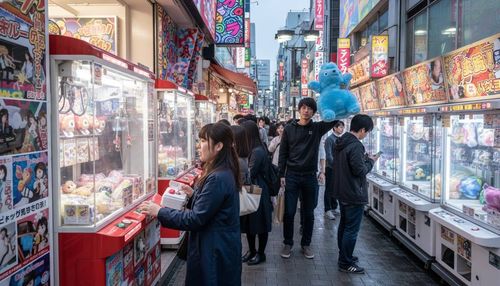
The crane machine — called UFO catcher after the iconic Sega brand — is the undisputed king of the Japanese arcade floor. The prizes are extraordinary: limited-edition plushies, branded merchandise, anime goods, snack collaborations, and seasonal items you cannot buy anywhere else. Skilled players develop genuine technique, learning how to position the claw for maximum grip. Stores staff the machines attentively and will often reposition a difficult prize if you ask politely (especially if you've already spent a few rounds trying).
Budget around ¥200–¥500 per attempt, and don't be surprised if you end up spending much more than planned.
Rhythm Games
Japan is the global home of rhythm game culture. Taiko no Tatsujin (drum-based), Dance Dance Revolution, beatmania IIDX, maimai, CHUNITHM, and Sound Voltex — these are not casual diversions. Dedicated players practice for years, earning high ranks and collecting online leaderboard scores. Watching a skilled player on a cabinet like maimai (the circular, mirror-faced game where you swipe and tap around the edge of a screen) is genuinely mesmerizing.
Most rhythm game cabinets use an IC card system (typically ¥200–¥300 per credit) where your progress and scores are saved across play sessions and even across different arcades in the chain.
Fighting Games
Japan is the spiritual home of competitive fighting games. Arcades are where many top players developed their skills, and the atmosphere around a 2v2 or head-to-head cabinet can feel like a mini-tournament. Challengers insert a coin and tap the start button to challenge the winner. Etiquette is taken seriously — respect for your opponent is expected, and excessive taunting is frowned upon. If you're a beginner, just enjoy the atmosphere; no one will judge a newcomer giving it a genuine try.
Purikura (Print Club Photo Booths)
Few arcade experiences feel more uniquely Japanese than the purikura booth. Step inside a curtained cabin, strike your best pose, and the machine captures a series of photos. Then you move to a touchscreen station where you spend several minutes decorating your shots with stamps, text, backgrounds, and digital effects before printing a sheet of sticker-sized photos.
The beauty standards built into purikura machines (automatic skin smoothing, eye enlarging) have long been a cultural talking point, but the experience itself is pure fun, especially with friends. Most booths cost ¥400–¥600 for a full session.
Retro Cabinets
For the historically curious gamer, many arcades maintain a dedicated retro section with original cabinets from the 1980s and 1990s. These machines still run their original boards, and playing a classic shoot-em-up or beat-em-up on the actual hardware — with proper joystick and buttons — is a completely different sensation from emulation. Some specialist retro game centers go much further, offering walls of classic cabinets spanning decades.
Major Arcade Chains
Round1 (ラウンドワン) is the largest chain and arguably the most comprehensive. Round1 complexes are enormous, often combining arcades with bowling alleys, karaoke, sports facilities, and batting cages. Their arcade floors are expansive and well-maintained. Round1 locations are common in suburban malls, so they're accessible even outside city centers.
SEGA arcades have long been a flagship presence in Japan's gaming culture, particularly in Akihabara. SEGA's arcades tend to skew toward crane machines and rhythm games with strong brand presence.
Taito Station (タイトーステーション) is operated by Taito, the company behind Space Invaders, and carries a strong retro identity alongside modern offerings. Their locations are usually centrally situated, clean, and well-organized.
Namco (Bandai Namco Amusement) operates arcades often found inside shopping centers, with a family-friendly orientation that still includes competitive game floors.
Best Locations in Japan
Akihabara, Tokyo
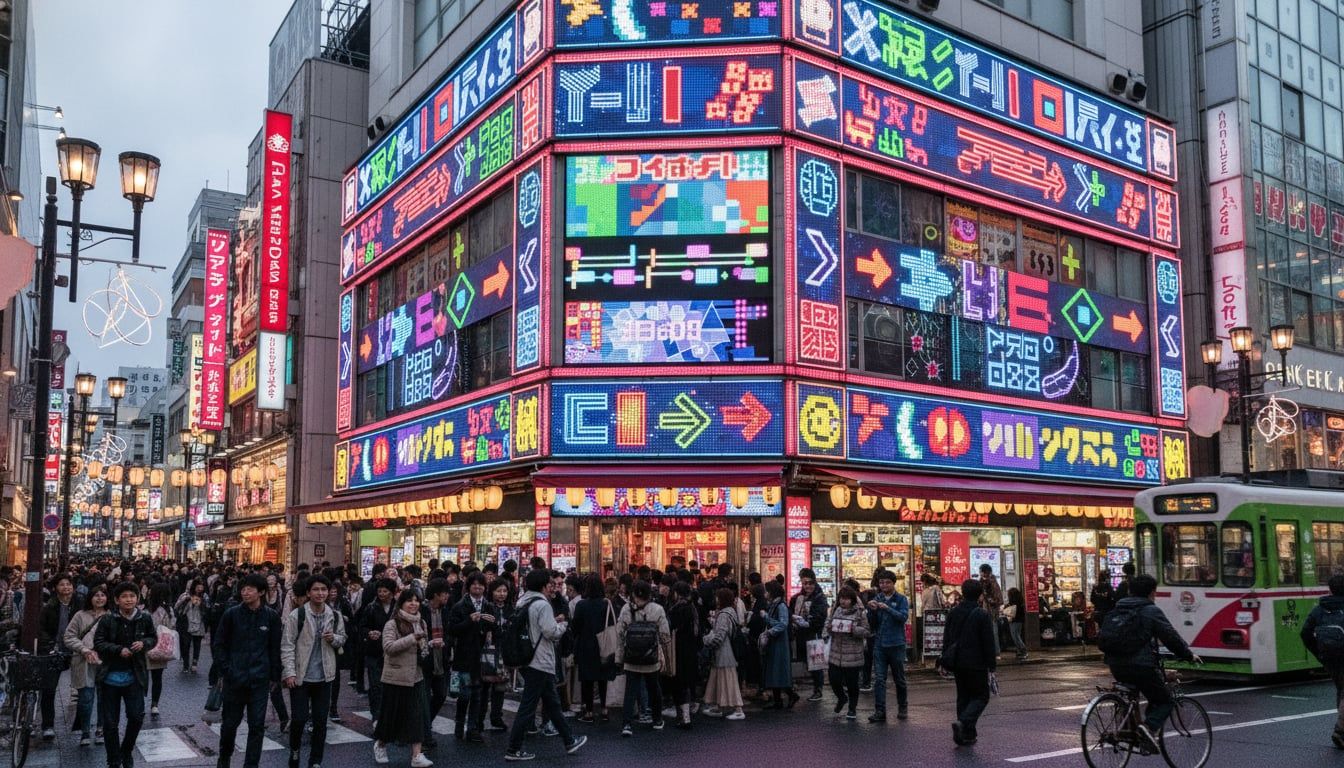
Akihabara is the undisputed capital of Japanese arcade culture. The neighborhood is dense with multi-floor game centers, often stacked above electronics and manga shops. The gaming crowd here skews enthusiast: you'll find serious rhythm game players, crane machine specialists, and retro collectors. Don't miss the upper floors of buildings on Chuo-dori — some of the best crane machine hauls and retro corners are tucked away up there.
Shinjuku, Tokyo
Shinjuku has some of the biggest standalone game centers in Japan. The Kabukicho and east exit areas have multiple large arcades, many open late into the night. The mix here is more mixed-demographics: tourists, locals, couples, competitive gamers. The sheer scale of Shinjuku's arcades is impressive even to veterans.
Osaka — Den Den Town (Nipponbashi)
Osaka's answer to Akihabara, Den Den Town (Nipponbashi), has a tight cluster of arcades alongside its anime, manga, and electronics stores. The atmosphere is slightly more relaxed than Akihabara, and prize machines often feature Osaka-specific or Kansai-region merchandise that you won't find in Tokyo.
Shibuya and Ikebukuro, Tokyo
Both neighborhoods have significant arcades drawing a younger crowd. Shibuya's arcades lean trendy; Ikebukuro's cater to an intense hobbyist demographic with a strong doujin and gaming culture.
Practical Guide
How payments work: Most games cost ¥100 per play, though newer and more complex cabinets (especially rhythm games) charge ¥200–¥300. Bring coins — most machines do not take IC cards or bills directly, though bill changers (ryōgaeki, 両替機) are available at the entrance or scattered around the floor.
IC cards for rhythm games: Games in the SEGA (Aime), Konami (e-AMUSEMENT), and Bandai Namco ecosystems use specific IC cards. You can often buy them at the counter for ¥300–¥500 as a one-time purchase. Linking your card to an online account saves your scores and unlocks content.
Peak hours: Weekday evenings from 18:00 and weekends all day are the busiest times. For a quieter experience with easier access to popular machines, try a weekday afternoon between 12:00 and 16:00.
Etiquette: Leave your bag in a coin locker if the arcade has them — large bags in tight cabinet rows are a nuisance. Don't hover over someone's shoulder while they're mid-game. On crane machines, each attempt is yours alone; don't provide unsolicited coaching to strangers. On fighting game cabinets, following the challenge protocol (insert coin, press start to challenge) is the accepted norm.
Kids and age restrictions: Most arcades are all-ages during the day, but some floors with gambling-adjacent machines (medal games) have age restrictions. Children under a certain age must be accompanied by an adult after specific evening hours — this varies by chain and prefecture.
FAQ
Do I need to speak Japanese to enjoy Japanese arcades? Not at all. The vast majority of game interfaces are visual and intuitive. Rhythm game menus can be navigated by button-feel and pattern. Crane machines need zero language skill. The only minor barrier might be the purikura decoration step, but most modern booths have English or icon-based interfaces.
How much should I budget for an arcade session? A casual one-to-two hour visit costs most people between ¥1,000 and ¥3,000. If you get serious about crane machines or rhythm games, costs can climb quickly. Setting a mental limit before you start is a good idea — those crane prizes are designed to be just barely out of reach.
Can I take photos inside arcades? Generally yes in common areas and of prize machines, but photographing or recording other players — especially in competitive game areas — is considered rude and sometimes prohibited. Always check posted rules and use common sense.
What's the best arcade for first-timers in Tokyo? The Akihabara area is the most iconic starting point, with a high density of options in walking distance. Taito Station Akihabara and the various SEGA locations there are well-maintained and easy to navigate. Shinjuku's large game centers are a close second if you're already based in the west side of Tokyo.
Frequently Asked Questions
What types of games can I play in Japanese arcades?
Japanese arcades offer a wide variety of games, including UFO catchers (crane games), rhythm games like Taiko no Tatsujin and maimai, competitive fighting games, purikura photo booths, and dedicated retro cabinets. These multi-floor entertainment complexes often dedicate entire floors to different game types.
How do payments work in Japanese arcades?
Most games cost ¥100 per play, though newer and more complex cabinets, especially rhythm games, may charge ¥200–¥300. You'll need coins, as most machines do not take IC cards or bills directly, but bill changers (ryōgaeki) are readily available.
Where are the best places to find arcades in Japan?
Akihabara in Tokyo is considered the capital of Japanese arcade culture, dense with multi-floor game centers. Other excellent locations include Shinjuku, Shibuya, and Ikebukuro in Tokyo, and Den Den Town (Nipponbashi) in Osaka.
What are UFO catchers and how much do they cost?
UFO catchers are crane machines offering extraordinary prizes like limited-edition plushies, anime goods, and snack collaborations. Budget around ¥200–¥500 per attempt, but it's common to spend more than planned chasing a prize.
What is purikura and how much does it cost?
Purikura are unique Japanese photo booths where you take a series of photos, then decorate them with digital stamps, text, and effects before printing sticker-sized photos. Most booths cost ¥400–¥600 for a full session.
Explore More
- The Akihabara Otaku Guide: Electronics, Anime & Beyond
- Japan Retro Gaming Guide: Famicom, Arcades & Hidden Gems
- Nipponbashi: Osaka's Otaku Culture District
- Japan Arcade Prize Games Guide: UFO Catchers & How to Actually Win — a deep dive into crane games, prize types, and winning techniques
- Japan Karaoke Guide: Chains, Prices & How to Sing Like a Local — the perfect next stop after a night at the arcade