Yakisoba, takoyaki, kakigori, and more — your guide to the best street food at Japanese festivals and how yatai stalls work.
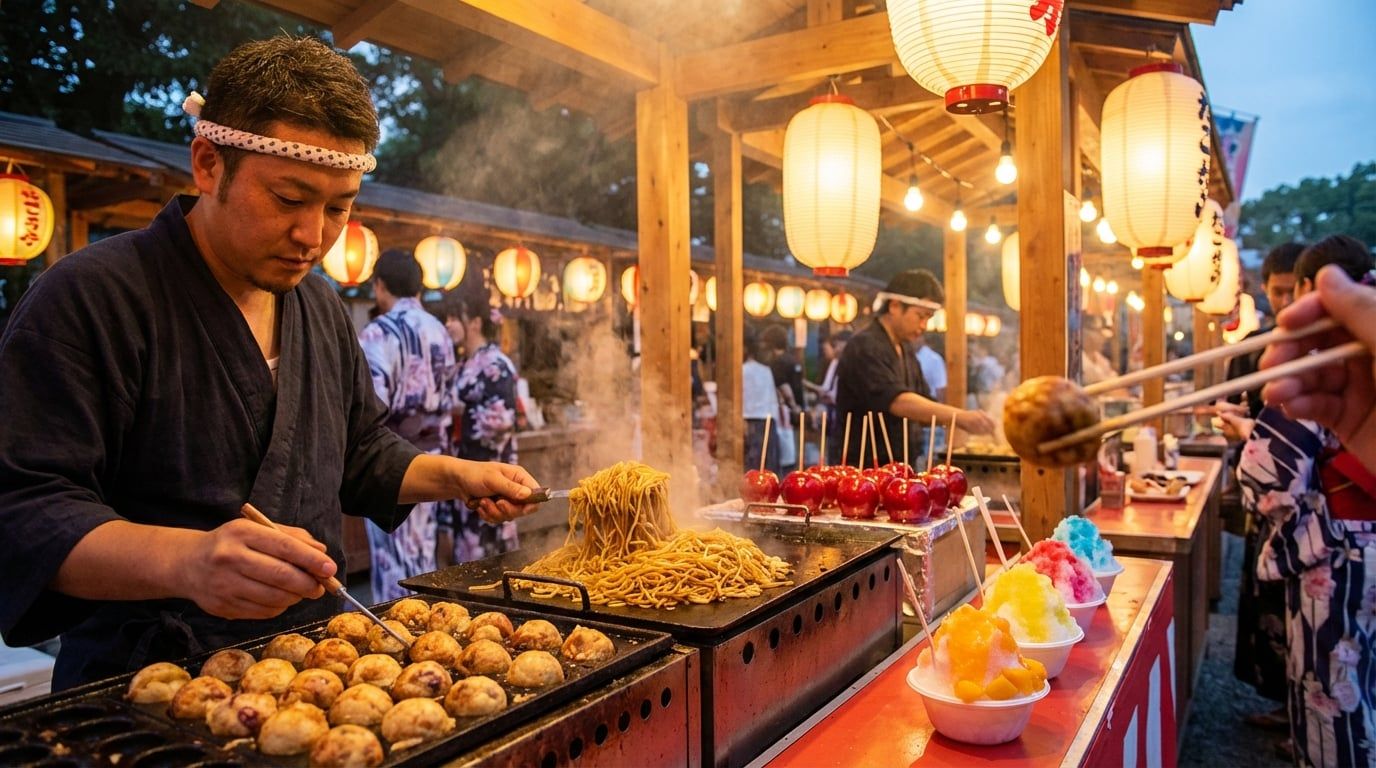 Image for illustrative purposes only.
The smell hits you before you see anything. Grilled squid sizzling over charcoal, sweet sauce caramelizing on hot iron griddles, smoke curling up between paper lanterns. You have arrived at a Japanese festival, and your stomach already knows what to do.
Matsuri food is its own category of Japanese cuisine — bold, portable, and meant to be eaten standing up in a crowd. The rows of yatai (food stalls) lining shrine paths and blocked-off streets are half the reason people come to festivals in Japan in the first place. Here is what to eat and how it all works.
Must-Try Festival Foods
The Savory Classics
Yakisoba (fried noodles, Y500-700) — Thick wheat noodles stir-fried on a massive flat griddle with cabbage, pork, and a tangy brown sauce. Topped with pickled ginger and bonito flakes. This is the undisputed king of festival food.
Takoyaki (octopus balls, Y500-600) — Batter poured into hemispherical molds, each hiding a chunk of octopus inside. Finished with mayonnaise, takoyaki sauce, and dancing bonito flakes. Osaka claims them as its own, but every festival in Japan serves them.
Okonomiyaki (savory pancake, Y600-800) — A thick, cabbage-loaded pancake cooked to order, layered with sauce, mayo, and seaweed powder. Some stalls let you watch the cook flip it on the griddle — half the entertainment.
Yakitori (grilled chicken skewers, Y200-400) — Bite-sized chicken pieces threaded onto bamboo skewers and grilled over charcoal. Order them with tare (sweet soy glaze) or shio (salt). At Y200 a skewer, these are the best budget option at any matsuri.
Ikayaki (grilled squid, Y400-500) — A whole squid pressed flat on a grill, brushed with soy sauce, and handed to you on a stick. Chewy, smoky, and unmistakably festival food. The smell alone will pull you toward the stall.
Karaage (fried chicken, Y400-600) — Juicy chicken pieces marinated in soy, ginger, and garlic, coated in potato starch, and deep-fried until the crust shatters. Served in a paper cup with a lemon wedge. Japanese fried chicken at its finest.
The Sweet Side
Kakigori (shaved ice, Y300-500) — A mountain of finely shaved ice drenched in flavored syrup — strawberry, melon, blue hawaii, or condensed milk. In the heat of a summer festival, nothing else comes close.
Wataame (cotton candy, Y300-500) — Spun sugar wrapped around a stick, often sold in bags printed with anime characters. Kids carry these like trophies. The bags themselves have become collectible.
Ringo-ame (candy apples, Y300-500) — Small apples coated in a hard, glossy shell of red candy. Crack through the sweet exterior to reach the tart fruit inside. A festival icon.
Choco-banana (chocolate-dipped banana, Y300) — A whole banana on a stick, dipped in chocolate and rolled in sprinkles or crushed nuts. Simple, satisfying, and impossible to eat gracefully.
Baby castella (mini sponge cakes, Y400) — Tiny, round sponge cakes baked in special molds, sold by the bagful. Soft, warm, and lightly sweet. You will finish the bag faster than you planned.
To Drink
Ramune (marble soda, Y200) — A fizzy lemon-lime soda in a glass bottle sealed with a marble. Press the marble down to open it. The bottle design has not changed in over a century, and figuring out how to drink without the marble blocking the flow is a rite of passage.
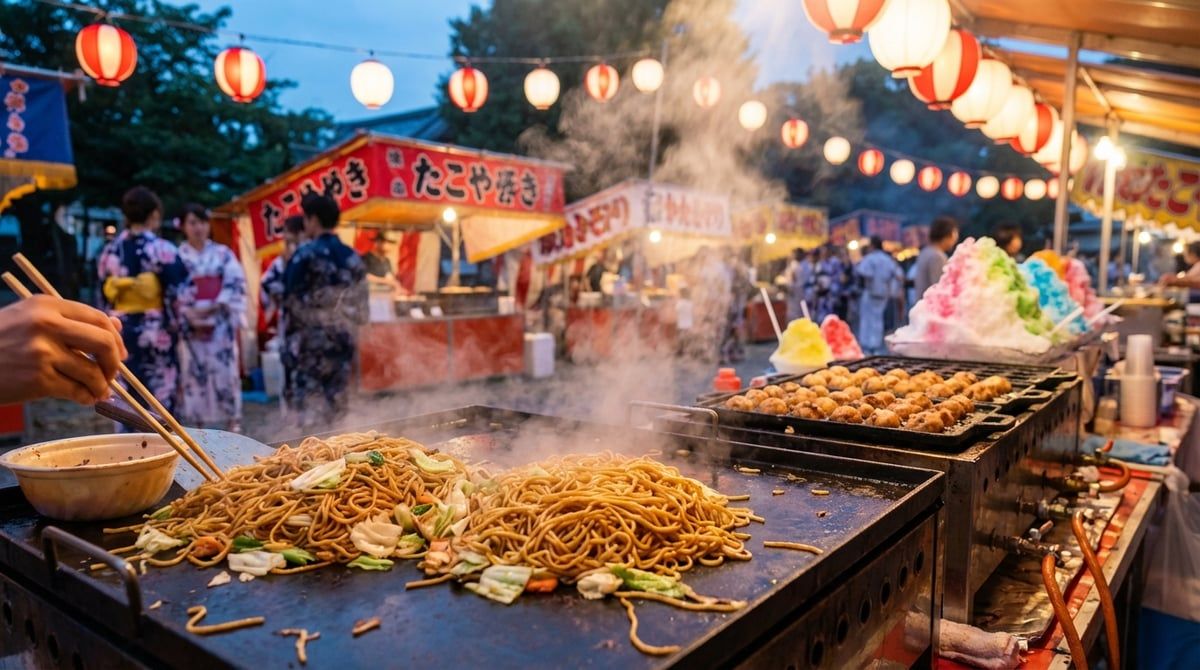 Image for illustrative purposes only.
How Yatai (Food Stalls) Work
Festival food stalls follow a simple system. Walk up, check the menu (usually a handwritten sign with pictures), and pay before you receive your food. Cash is king — most yatai do not accept credit cards or mobile payments, so bring plenty of coins and small bills.
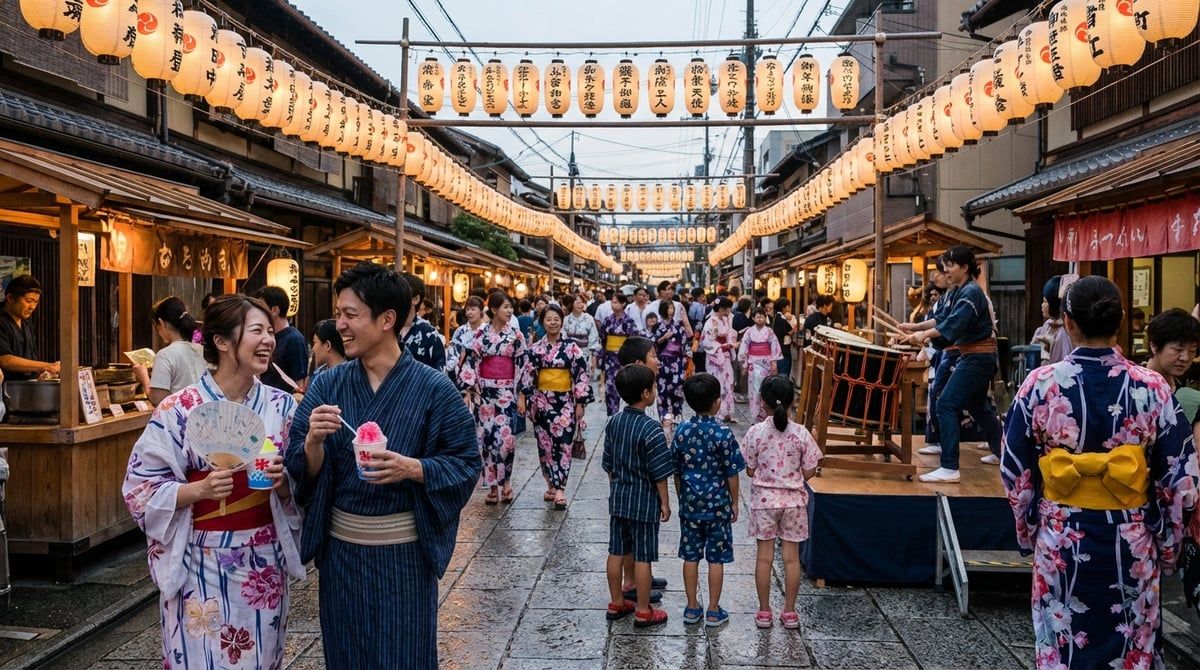 Image for illustrative purposes only.
There are no seats. You eat standing, walking, or sitting on whatever curb or stone wall you can find. Bring a handkerchief or small towel — napkins are scarce. Look for the trash bins near stall clusters and carry your garbage until you find one.
For practical tips on navigating festivals, including timing and etiquette, check our dedicated guide.
Regional Festival Specialties
Not every festival serves the same lineup. Some of the best matsuri food is regional.
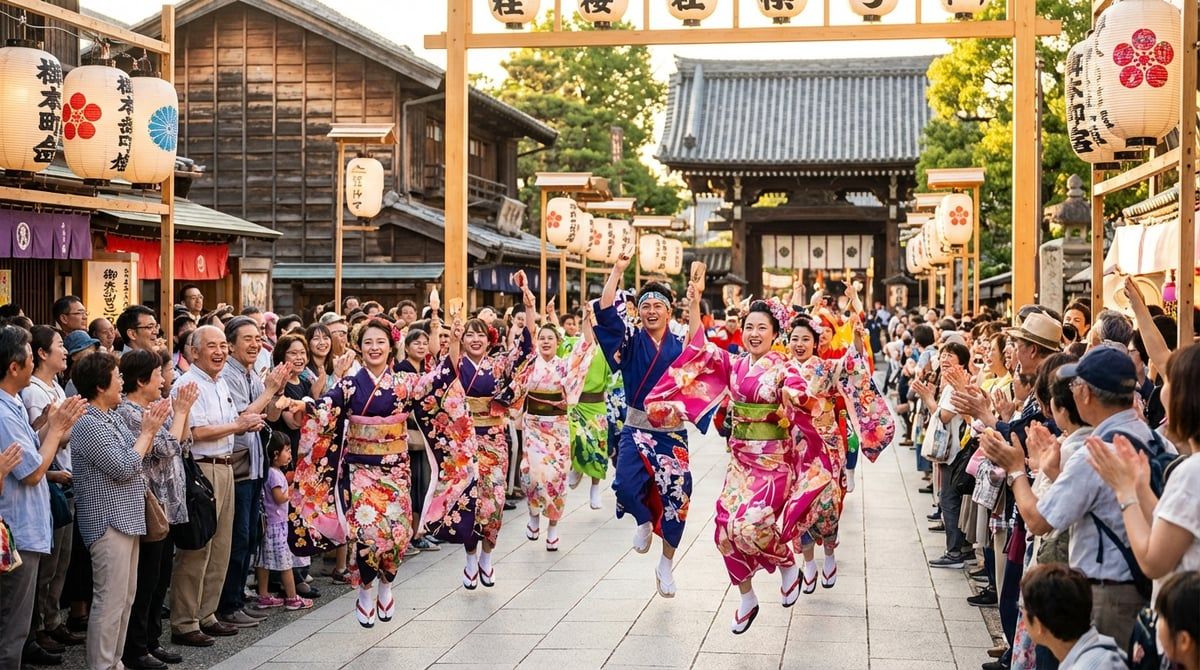 Image for illustrative purposes only.
Osaka — The street food capital delivers kushikatsu (deep-fried skewers) and next-level takoyaki at its major festivals. Double-dipping the kushikatsu sauce is famously forbidden.
Hokkaido — Summer festivals feature Genghis Khan (jingisukan), a dome-grilled lamb dish named after the Mongol emperor. Soup curry also appears at Sapporo events — rich, spiced broth with chunky vegetables.
Sendai — The Tanabata Festival city is famous for gyutan, thick-cut grilled beef tongue seasoned with salt and lemon. Tender, smoky, and unlike any beef skewer you have had before.
Tokushima — During the Awa Odori dance festival, sudachi citrus shows up everywhere — squeezed over grilled fish, mixed into drinks, and even flavoring ice cream.
Tips for Festival Eating
Bring cash. Y3,000-5,000 in small bills and coins will cover a solid festival meal for one person. ATMs near festival grounds may have long lines.
Arrive hungry. The variety is overwhelming, and portions are designed for grazing. Plan to try four or five different stalls rather than filling up at one.
Go early or late. Peak hours (6-8 PM at evening festivals) mean long lines at popular stalls. Arriving just after opening or during the main event — when everyone else is watching — gives you shorter waits.
Try something new. Beyond the classics, look for stalls selling hashimaki (chopstick-wrapped okonomiyaki), jaga-butter (buttered potato), or age-ice (deep-fried ice cream). The weird ones often become your favorites.
Festival food is not refined. It is loud, greasy, sweet, smoky, and eaten with your hands while fireworks go off overhead. That is exactly what makes it unforgettable.
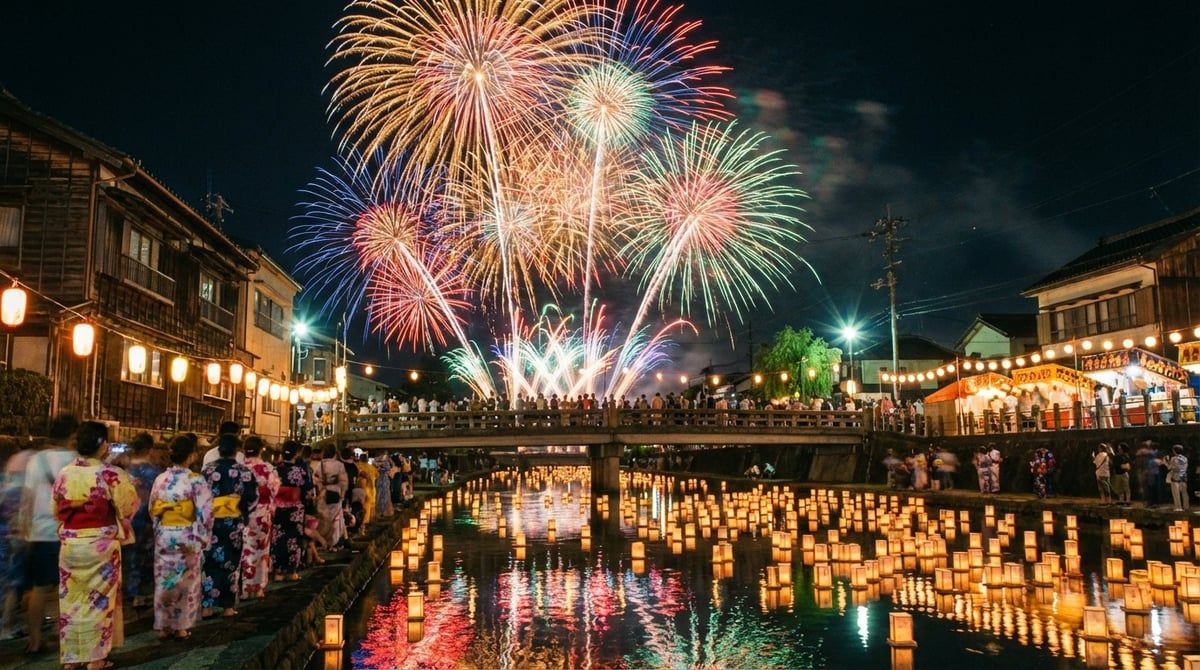 Image for illustrative purposes only.
Frequently Asked Questions
What kind of food can I find at Japanese festivals?
Japanese festivals offer a wide variety of yatai street foods, including savory classics like yakisoba, takoyaki, and yakitori, as well as sweet treats like kakigori, wataame, and choco-banana. You can also find drinks like Ramune soda.
How do yatai (food stalls) work at Japanese festivals?
At yatai stalls, you typically walk up, check the menu, and pay before receiving your food. Cash is king, as most stalls do not accept credit cards or mobile payments.
How much cash should I bring for festival food?
It is recommended to bring Y3,000-5,000 in small bills and coins to cover a solid festival meal for one person. ATMs near festival grounds may have long lines.
Are there seats available at Japanese festival food stalls?
No, there are typically no seats at yatai stalls. You eat standing, walking, or sitting on whatever curb or stone wall you can find.
What are some regional food specialties found at Japanese festivals?
Regional specialties include kushikatsu and next-level takoyaki in Osaka, Genghis Khan (dome-grilled lamb) and soup curry in Hokkaido, and gyutan (grilled beef tongue) in Sendai. Tokushima festivals feature sudachi citrus in many dishes.
What are some tips for eating at a Japanese festival?
Arrive hungry to try a variety of dishes, and consider going early or late to avoid peak hours and long lines. Always bring cash, and don't be afraid to try something new beyond the classics.
Explore More Festival Guides
Continue your Japan festival journey with these related guides: