Japan Arcade Prize Games Guide 2026: UFO Catchers, Crane Games & How to Actually Win
August 26, 2026
Everything you need to know about Japan's UFO catchers and prize game arcades — how they work, which chains have the best prizes, and real techniques for winning.
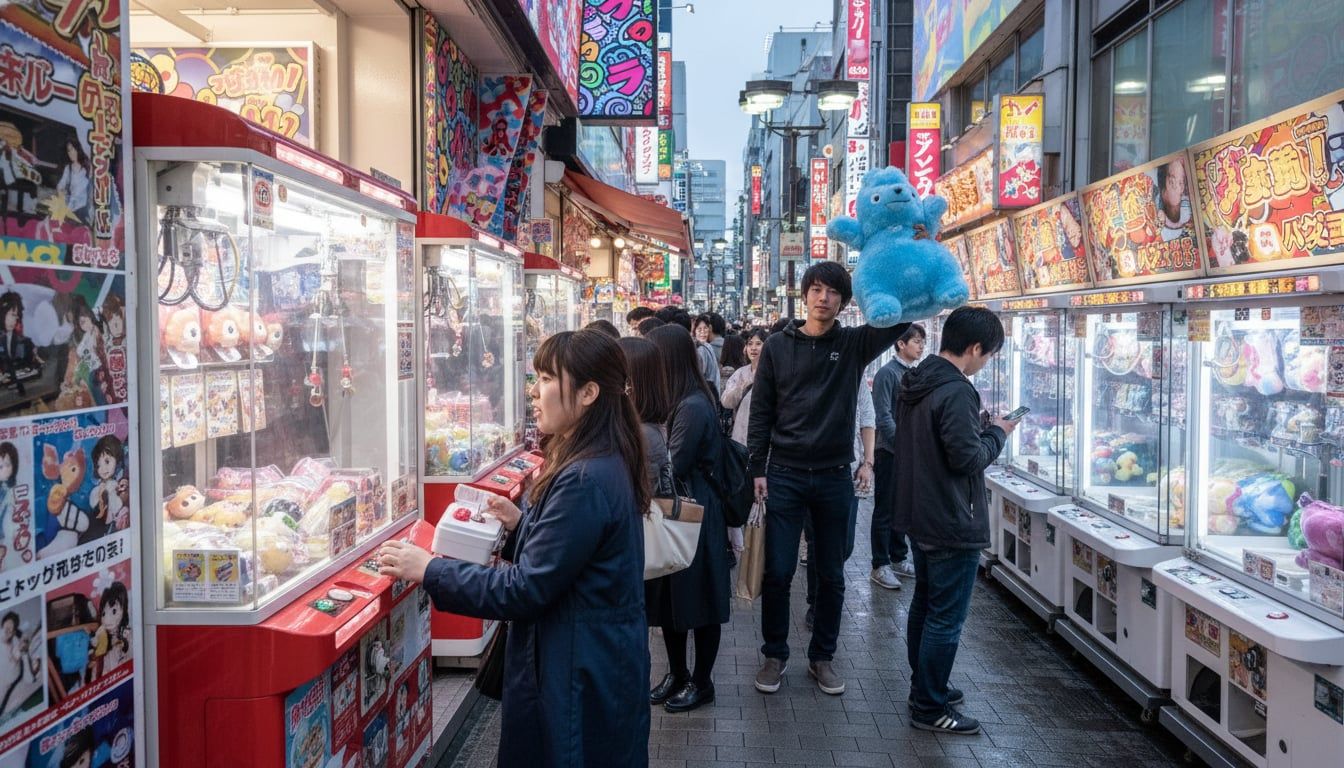
You push open the door to a Tokyo arcade and suddenly the world explodes — rows of claw machines glowing under bright lights, the plastic clack of prizes tumbling into collection chutes, upbeat music competing with the electronic jingles of a hundred machines, and inside every glass case, anime figures and giant plushies staring out at you like they're begging to be taken home. Welcome to the distinctly Japanese art form known as prize game arcades.
Unlike the rigged and dusty claw machines of Western malls, Japanese prize games are a legitimate hobby with dedicated players, genuine strategy, and prizes valuable enough that entire shops exist to resell what people win. This guide explains how the scene actually works, which chains to visit, and the techniques that separate tourists from seasoned regulars.
What Makes Japanese Prize Games Different
First, some context. The machines you see in Japanese arcades (called UFO catchers or crane games, though 'UFO catcher' is technically a Sega trademark) are not the brutal, nearly-impossible traps of American arcades. Japanese law classifies them as amusement rather than gambling, which limits prize values to around 1,000 yen (about USD 7) at retail. In practice, this means the machines have to be at least theoretically winnable — operators who never let anything be won would get complaints and lose business.
That doesn't mean the machines are easy. But it does mean that with the right setup, the right technique, and the right amount of persistence, you can walk out with prizes that feel worth the effort.
Second, the prizes are incredible. Japanese prize machines are stocked with exclusive versions of anime figures, plushies, snacks, household goods, and pop-culture merchandise that you sometimes cannot buy in any retail store. Winning a prize game figure of your favorite character is the only way to own that specific sculpt. For collectors, that's part of the draw.
The Major Arcade Chains
Japan has several large arcade chains, each with its own flavor. All of them have dedicated prize game floors.
GiGO (formerly Sega GiGO)
GiGO is the chain you'll probably visit first. After Sega exited the arcade business in 2022, their locations were rebranded as GiGO. The Akihabara and Shinjuku locations are among the best-stocked prize game arcades in Japan, with entire floors dedicated to crane games. GiGO locations are known for using the official UFO Catcher machines, which are the classic Sega design most people picture when they think of claw games.
Taito Station
Taito Station is the other giant in the arcade space. Their prize game selection is competitive with GiGO, and they frequently run exclusive collaborations with major anime franchises. The flagship Taito Station in Akihabara has five full floors of arcade content, with prize games spanning at least two of them.
Namco / Bandai Namco
Namco's arcades (sometimes branded as 'Namja Town' at larger venues) tend to have the widest prize variety, including Bandai Namco's own property merchandise — Dragon Ball, One Piece, Gundam. Their presence in Osaka at Dotonbori and Umeda is particularly strong.
Adores and Round1
Adores runs a chain of dedicated prize game arcades, and Round1 is a larger entertainment complex that usually includes a prize game floor alongside bowling, karaoke, and other activities. Round1 locations are great when you want a full day of mixed entertainment.
How Japanese UFO Catchers Actually Work
Unlike the simple "drop the claw and hope" machines you may be familiar with, Japanese prize games use a wide variety of mechanisms. Understanding which type you're dealing with is the first step toward winning.
Three-Prong Claw (Sansū)
The classic claw, usually seen on large plushies. The claw has three prongs and generally weak grip strength. Strategy: aim for lifting the prize off its support, not carrying it across the cabinet.
Two-Prong Claw (Nisū)
Two large prongs, often used for boxed figures. You're usually trying to push or flip the box off a plastic bar, not grab and carry it.
Push Machines
Some machines don't use claws at all. Instead, they have a pusher that nudges the prize toward the edge of a platform. Your goal is positioning — placing the prize so each push moves it closer to falling.
String Cut Machines
A string holds the prize in place, and the claw's job is to cut or release the string. Precision matters more than claw strength.
Slider / Rail Machines
Some figure boxes sit on rails that can be pushed along to fall off the end. You use the claw to nudge the box forward millimeter by millimeter.
Actually Winning: Core Techniques
The single biggest rookie mistake is treating every machine the same. Before dropping a single coin, spend two minutes observing what other players are doing — or just studying how the prize is positioned.
The Golden Rule: Ask Staff for Help
This is the part tourists often miss. If you've spent a few rounds on a prize and it feels impossible, you can ask an arcade staff member for help. In Japanese arcades, staff are trained to help customers get close to winning. They will often reposition the prize to a more winnable configuration after you've spent some money on it. The magic phrase is "sumimasen, chotto otetsudai kudasai" (excuse me, please give me a little help), though pointing at the machine and showing the staff the situation works just as well.
This is not exploiting a loophole. It's part of how the system is designed. Arcade staff want you to win (within reason) because winners become regulars.
Read the Prize Angle
Before spending money, look at how the prize is sitting. If it's propped against a plastic bar, you probably need to flip or slide it off, not carry it. If it's resting flat on the surface, you might need to lift and drop. If it's wedged in a corner, the machine is probably a trap — try a different one.
Understand Claw Strength Timing
Many Japanese claw machines have variable strength. The claw might grip tightly on the first drop but be weaker on subsequent drops within the same session. This is programmed intentionally to give you occasional winning chances. Watch other players to see if you can spot the pattern.
Target the Weak Spot
For figure boxes, identify which corner is closest to the exit slot. You want to push that corner, not grab the box entirely. Each successful push should move it 1-3cm toward the edge.
Budget, Don't Binge
Set a budget before you start. 1,000 yen (about USD 7) is enough for a serious attempt at most single-prize games. If you hit 1,500 yen with no meaningful progress, walk away. There will always be another machine and another prize.
What You Can Actually Win
Contemporary Japanese prize games stock an astonishing range of prizes. Here's what you'll commonly see:
Anime plushies — Oversized plushies of Pikachu, Hello Kitty, Demon Slayer characters, and many more. These are often the most visually impressive prizes and the easiest to identify at a glance.
Prize figures — Lower-priced anime figures produced specifically for prize machines. Quality has improved dramatically over the last decade. Many prize figures now rival the quality of retail figures from a few years ago. See our Japan figure collector guide for more on this category.
Snacks and food — Giant chocolate bars, novelty candy, instant ramen variety packs. Great for sharing with friends back home.
Household goods — Mugs, blankets, clocks, plates featuring anime characters or popular brands like Sanrio.
Limited edition collaborations — Special releases tied to anime premieres, game launches, and seasonal events. These are the prizes worth actively hunting — they're often impossible to find outside arcade machines.
Where to Go: Top Spots for Prize Games
Akihabara (Tokyo) — The undisputed prize game capital. GiGO Akihabara, Taito Station Akihabara, and several other arcades cluster around Chuo-dori. You could spend an entire day here and not see everything. For the full otaku district experience, pair this with our Akihabara guide.
Shinjuku (Tokyo) — GiGO Shinjuku Kabukicho is massive and stays open until midnight or later, making it perfect for a post-dinner visit. Slightly less crowded than Akihabara.
Ikebukuro (Tokyo) — The prize game scene here caters more to otome (female-oriented) fandoms. Sunshine City's arcade has excellent selections of prizes from popular otome games and BL anime.
Nipponbashi Den Den Town (Osaka) — Taito Station Den Den Town and the nearby GiGO are the main draws. Pair with our Nipponbashi otaku culture guide for a full day of Osaka otaku exploration.
Dotonbori (Osaka) — The big Namco arcade on Dotonbori has an energetic tourist-friendly atmosphere and strong prize game selection on the upper floors.
Nagoya Sakae district — The GiGO and Taito Station in Sakae are the centerpieces of Nagoya's arcade scene. Less crowded than Tokyo or Osaka.
When to Go
Weekday afternoons are quietest. Weekends and evenings are busier but more atmospheric. Avoid major holidays unless you love crowds — most arcades get packed during Golden Week, Obon, and New Year.
Most arcades open around 10:00-11:00 AM and close between midnight and 2:00 AM. Some 24-hour locations exist in Shinjuku, Shibuya, and central Osaka, but prize games are usually confined to standard hours since staff support is needed.
A Word on Reselling
You may notice that some "serious" players walk out with armfuls of prizes, often the exact same figure multiple times. These are usually resellers who flip prize figures on auction sites and to secondhand shops like Surugaya. There's nothing illegal or wrong about this — prize figures are legal merchandise once won. It does mean that particularly desirable prize figures can be expensive to secure if you're buying secondhand, because resellers compete for them.
If you see something you love, consider playing for it yourself rather than counting on secondhand availability later. Some exclusives do show up resold, but prices can be 3-5 times what it would cost to win them directly.
The Unspoken Rules
A few pieces of arcade etiquette that tourists often miss:
Don't touch other players' machines. If someone is playing or has set down their bag near a machine, don't interrupt or hover too closely.
Ask staff politely. When seeking help, a smile and a small bow go a long way. Staff appreciate being treated respectfully.
Don't photograph inside prize machines or of other players without permission. General arcade shots are fine, but zoomed-in photos of specific prize setups can irritate staff (who worry you're cataloging for reselling schemes).
Clean up after yourself. If you open snacks you've won, put the wrappers in the trash before leaving the arcade floor.
The Bigger Picture
Prize game arcades sit at a strange intersection of Japanese pop culture — part gambling, part skill, part performance art. Watching a seasoned player work a machine with quiet focus, then walk out with exactly the prize they came for, feels like watching a magic trick. Watching a complete beginner win by pure luck and light up with surprise feels even better.
Either way, it's a uniquely Japanese experience — low-stakes enough to be fun, complex enough to reward study, and embedded with prizes that reflect the best of the country's pop culture output. Next time you're near an arcade and you spot something you love in a claw machine, don't walk past. Drop a hundred yen. Try a thing. See what happens.
Frequently Asked Questions
Are Japanese UFO catchers or crane games rigged?
No, Japanese prize games are not considered rigged. Japanese law classifies them as amusement, limiting prize values to around 1,000 yen, which means machines must be theoretically winnable.
Which are the major arcade chains to visit for prize games in Japan?
The major arcade chains for prize games in Japan include GiGO, Taito Station, Namco/Bandai Namco, Adores, and Round1. Each offers a wide selection of crane games and unique prizes.
What kind of prizes can you win in Japanese arcade games?
You can win a wide variety of prizes, including exclusive anime plushies, prize figures, snacks and food, household goods, and limited-edition collaboration merchandise often unavailable elsewhere.
What is the most important tip for winning a Japanese UFO catcher?
The most important tip is to ask arcade staff for help; they are trained to assist customers by repositioning prizes to a more winnable configuration after you've spent some money.
How do Japanese crane games differ from Western claw machines?
Japanese crane games are not designed to be nearly impossible traps; they are theoretically winnable due to legal classifications and offer valuable, often exclusive, merchandise. They also feature a wider variety of mechanisms beyond simple three-prong claws.
How much should I budget for playing Japanese prize games?
It's recommended to set a budget, with 1,000 yen (about USD 7) typically being enough for a serious attempt at most single-prize games. If no meaningful progress is made after 1,500 yen, it's advisable to move on.
Related Guides
- Akihabara Otaku Guide — Tokyo's premier prize game district
- Nipponbashi Otaku Culture Guide — Osaka's arcade scene
- Japan Figure Collector Guide — For collectors who want premium figures too
- Japan Retro Gaming Guide — Classic arcade games beyond the prize floor
- Japan Gacha Capsule Toy Guide — Another low-commitment collectible hobby