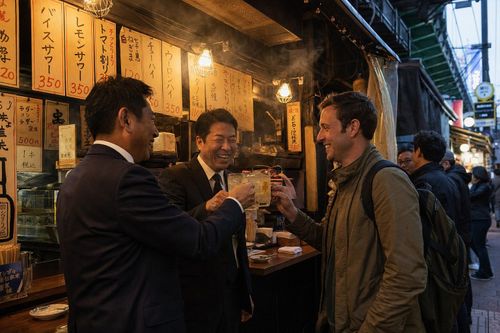
Standing at Golden Gai's entrance facing 280 bars? Here's how to walk into a 6-seat Tokyo alley bar without panicking — etiquette, prices, alleys.
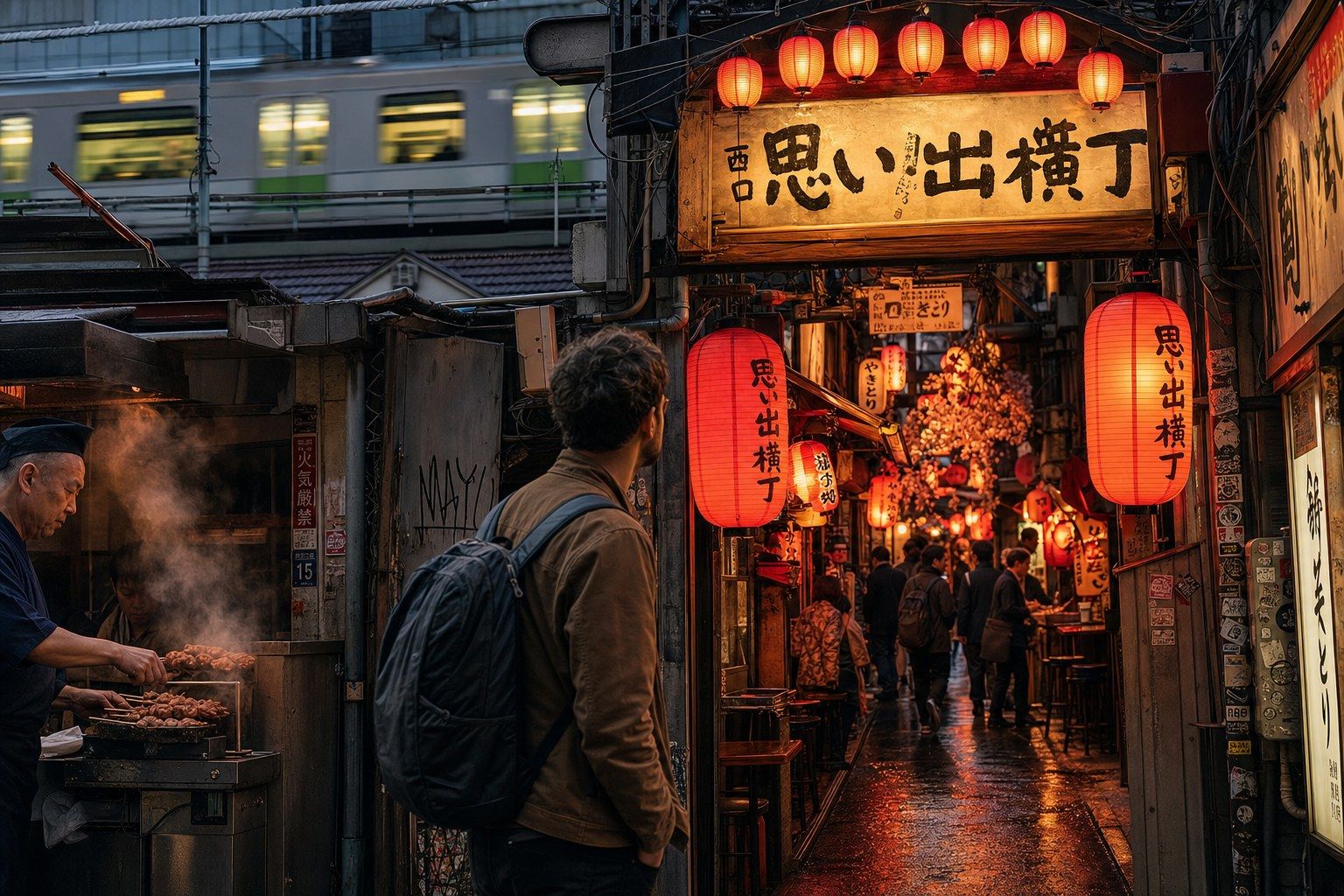 Image for illustrative purposes only.
You step off the Shinjuku JR West Exit, follow the smell of charcoal smoke, and there it is: a narrow alley barely wider than your shoulders, paper lanterns burning red, six bars on the left, six more on the right, and absolutely no idea which curtain to push aside. Welcome to yokocho (横丁) — Tokyo's tiny, intimate, slightly intimidating alley bars where most counters seat four to ten people and the owner has often been pouring drinks since before you were born.
From the outside, yokocho looks like a movie set. From the inside, it looks like someone's tiny living room with a fridge full of highballs. The gap between those two views is what makes first-timers freeze at the entrance. This guide closes it.
What Is a Yokocho, and Why Are They So Tiny?
Yokocho literally means "side street," but in modern Tokyo it refers to dense clusters of postwar wooden bars — relics of the 1940s–50s black-market era that somehow survived bubble-era redevelopment. Most stalls are 3 to 4 meters wide. Owners are usually the only employee: bartender, cook, accountant, and resident historian.
The big four in Tokyo:
| Yokocho | Best for | Vibe |
|---|---|---|
| Omoide Yokocho (Shinjuku) | Eaters & first-timers | Open-front yakitori grills, smoky, super welcoming |
| Golden Gai (Shinjuku) | After-dinner drinkers | 280 themed bars, more intimate, more intimidating |
| Nonbei Yokocho (Shibuya) | Solo introverts | 38 micro-bars, 3–8 seats, quieter |
| Hoppy Street (Asakusa) | Lazy afternoon drinking | Daytime-friendly, motsu-nikomi specialists |
The Tokyo locals' move is almost always: Omoide first for food, Golden Gai second for drinks. Trying to "speedrun" all four in one night is the surest way to look like an obnoxious tourist. (If counter-drinking culture is new to you, our Japanese izakaya guide explains the bigger picture.)
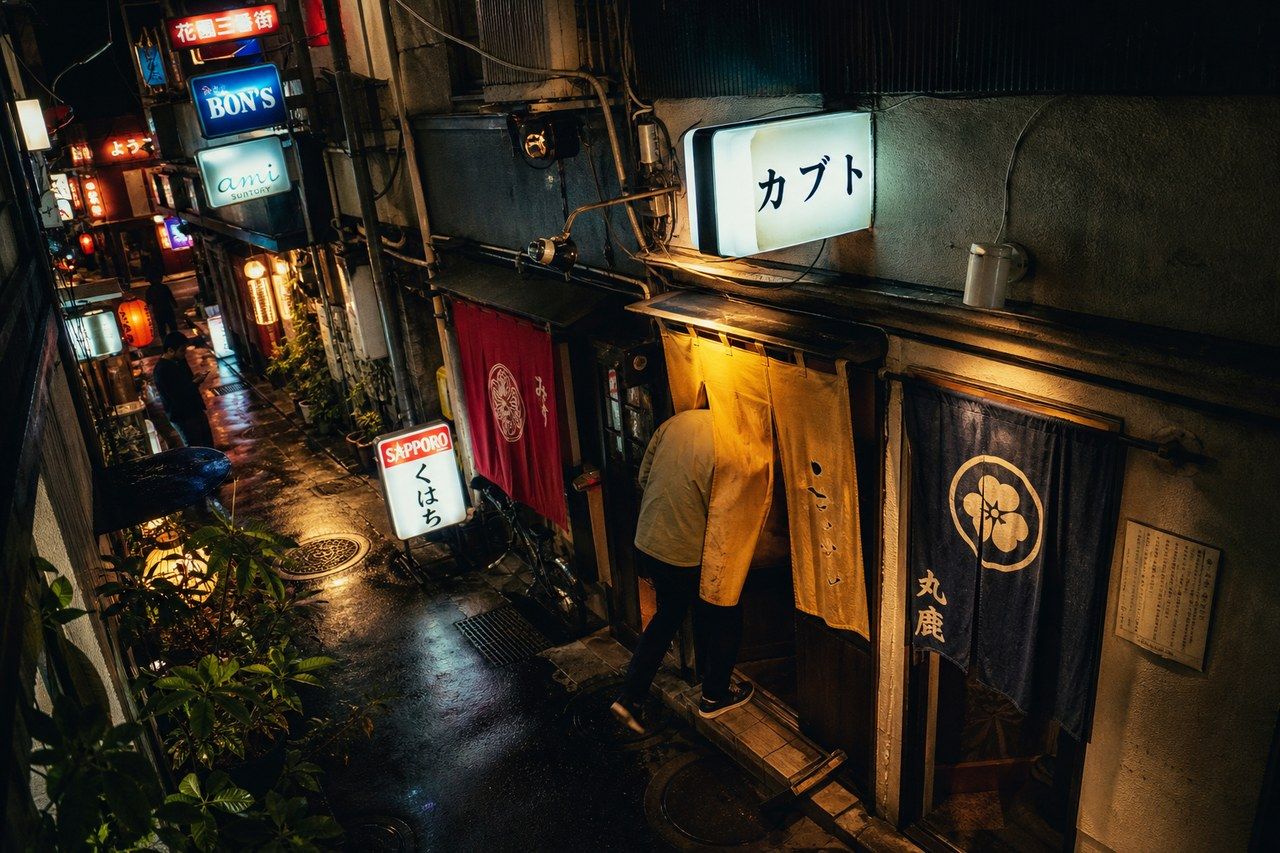 Image for illustrative purposes only.
Why Does My Bill Have a Charge I Didn't Order? (The Otoshi Explained)
Sit down at almost any yokocho bar and a small dish — pickled cucumber, edamame, sometimes a tiny stew — will arrive without you asking. That's otoshi (お通し), and yes, you're paying for it. Usually ¥500 to ¥1,500 per person.
This is the single biggest complaint foreigners have about yokocho. It is not a scam. It is not a foreigner-only tax. Every Japanese customer at the bar paid the same charge. It functions as a seat fee — Japan has no tipping culture, and labor costs need to be recovered somewhere.
Reframe otoshi as "Japan's honest version of a service charge" — you pay it once, up front, and there's no ambiguous 18–22% tip math at the end. Far less anxiety than an American check. Similar to 기본찬 (banchan) in concept, but charged ¥500–¥1,500. Set expectation early. Concept không có ở hẻm Việt Nam. ¥500 ≈ 83,000 VND, coi như phí ghế ngồi. 类似上海部分酒吧的座位费,¥500 ≈ 25 RMB。
If you want to know the cost before sitting, just ask: "Otōshi ikura desu ka?" (お通しいくらですか — "How much is the cover?"). No bar owner will be offended.
How Do I Tell Which Bars Welcome Foreigners?
Roughly 80% of Golden Gai bars are foreigner-friendly. The remaining 20% post signs you'll learn to read in five seconds:
- 常連様のみ (jōren-sama nomi) = Regulars only
- 一見さんお断り (ichigen-san okotowari) = No first-timers / no walk-ins
- 紹介制 (shōkai-sei) = Introduction required
If you see any of those, walk past with zero hard feelings — that bar simply isn't for tonight. What to look for instead: an English chalkboard outside, posted prices in yen, a friendly "Welcome" sign, or an English menu visible through the door. Those are the green flags.
노가리골목과 비슷한 단골 문화 — 외국인 환영 바만 들어가면 무리 없음.
Safe-bet, foreigner-friendly bars to start with:
- Albatross (Golden Gai) — Antique decor across multiple floors, occasional rooftop seating, English-fluent staff
- Deathmatch in Hell (Golden Gai) — Horror-metal theme, every drink is ¥666
- Bar Plastic Model (Golden Gai) — Vintage toys, vinyl records, chill
- La Jetée (Golden Gai) — French cinema bar, owner speaks French
- Champion (Golden Gai) — ¥500 drinks, karaoke, party crowd
- Okamoto (Hoppy Street, Asakusa — open since 1959) — Famous motsu-nikomi, English menu
If you prefer your drinking standing up at a counter instead of squeezing into a 6-seat alley bar, check our tachinomi standing-bar guide — a cheaper, lower-pressure entry point into Japan's local drinking culture.
심야식당(深夜食堂)의 그 분위기를 찾는다면 Golden Gai가 정답 — 드라마 배경 그대로. Golden Gai 即《深夜食堂》取景地周边氛围参考。 Golden Gai mang đậm không khí phim "Quán ăn đêm" (Midnight Diner).
What Most Tourists Don't Know
Three things even seasoned Tokyo visitors miss:
1. Photography in Golden Gai requires permission. The Golden Gai Business Promotion Association has formally banned alley photography without consent — too many tourists were treating bars as a photo backdrop. Inside a bar, always ask: "Shashin ii desu ka?" (写真いいですか). At Omoide Yokocho and Nonbei the rules are looser, but still ask before photographing people.
2. Never follow a street tout (kyaku-hiki) into a bar near Kabukicho. Tokyo Metropolitan Police logged 360+ bottakuri (bar-scam overcharge) complaints in 2025 around Shinjuku, with reported losses exceeding ¥140 million. The Canadian government has issued a formal travel advisory naming Kabukicho and Golden Gai specifically.
The rule is simple: never enter a bar a stranger led you to on the street. Walk into bars you found yourself, with posted prices visible.
Cite the Canadian advisory + 2025 Shinjuku police stats — US readers do this research themselves.
3. There's an unwritten time limit. When a queue forms outside, the unspoken expectation is 30 to 45 minutes per bar. On a quiet night, 60 to 90 minutes is fine. The native cadence is 2 to 3 bars per night, not 6. Sip slowly, talk to the owner, then move on.
How Much Does a Yokocho Night Actually Cost?
At ¥3,000 a full Golden Gai night gets you what a single Manhattan cocktail costs in NYC. The value gap is brutal.
| Item | Omoide Yokocho | Golden Gai | Nonbei Yokocho |
|---|---|---|---|
| Cover (otoshi) | Usually none | ¥500–¥1,500 | ¥500–¥1,000 |
| Beer | ¥500–¥600 | ¥700–¥1,000 | ¥400–¥700 |
| Highball | ¥400–¥500 | ¥700–¥1,000 | ¥400–¥600 |
| Yakitori (per skewer) | ¥150–¥300 | drinks only | varies |
| Per-bar total | ¥2,000–¥3,000 | ¥2,000–¥3,000 | ¥1,800–¥2,800 |
| 2-bar night | ¥4,000–¥6,000 | ¥6,000–¥9,000 | ¥4,000–¥6,000 |
¥3,000 ≈ 약 30,000원. 신주쿠 술집 한 끼보다 저렴. ¥3,000 ≈ 150元,比上海酒吧便宜。 ¥3,000 ≈ 500,000 VND — giá hợp lý cho 1 tối đi 2 quán.
Bring cash. Most yokocho bars are cash-only, and the closest 7-Eleven ATM (which accepts international cards) is a 3 to 5 minute walk from Golden Gai's entrance. Pull ¥10,000–¥20,000 before you arrive. (Our Japan payment guide covers IC cards, ATM fees, and which credit cards actually work in Japan.) 7-Eleven ATMs accept Visa, Mastercard, UnionPay, and most international debit cards.
What Do I Say When There's No Menu?
Many Nonbei bars have no printed menu — just whatever's behind the counter. Memorize these five phrases and you'll glide through any yokocho:
- Osusume wa nan desu ka? (おすすめは何ですか) — "What do you recommend?"
- Onaji mono o kudasai (同じものをください) — "Same as them, please" (point at a neighbor's plate)
- Otōshi ikura desu ka? (お通しいくらですか) — "How much is the cover?"
- Okaikei onegaishimasu (お会計お願いします) — "Bill, please"
- Gochisousama deshita (ごちそうさまでした) — "Thanks for the meal" (when leaving — this one earns you a smile every time)
이 5개 phrase만 외워도 충분. 발음은 한글로: 오스스메 와 난데스카 / 오나지모노 오 쿠다사이 / 오토오시 이쿠라 데스카 / 오카이케이 오네가이시마스 / 고치소우사마 데시타.
7 Etiquette Rules That Save You From Looking Lost
- No big bags or suitcases. Golden Gai alleys are barely 2 people wide. Drop luggage at your hotel or a coin locker at Shinjuku Station first.
- No long phone calls. The bar has 6 seats; everyone hears everything. Keep calls under 30 seconds or step into the alley.
- Always ask before photographing. Inside the bar and in the alley.
- Don't pour your own drink. When someone offers, hold your glass with both hands. Pour theirs back.
- Pay at the counter, not the table. No tipping, ever.
- One drink, one move-on is fine. Nobody expects you to stay all night. Finish, pay, thank the owner, leave.
- Pace yourself: 2–3 bars max per night. This is the locals' rhythm. Speed-running breaks the magic.
When Tokyo Rains, the Alleys Glow Brighter
Late June marks the tail end of Kanto's rainy season — and yokocho regulars consider it peak alley weather. The lanterns reflect off the wet pavement, the smoke from the yakitori grills curls slower in the humid air, and the alleys feel even more like a film set than usual. Locals don't go home when it rains in Tokyo. They duck into the alleys.
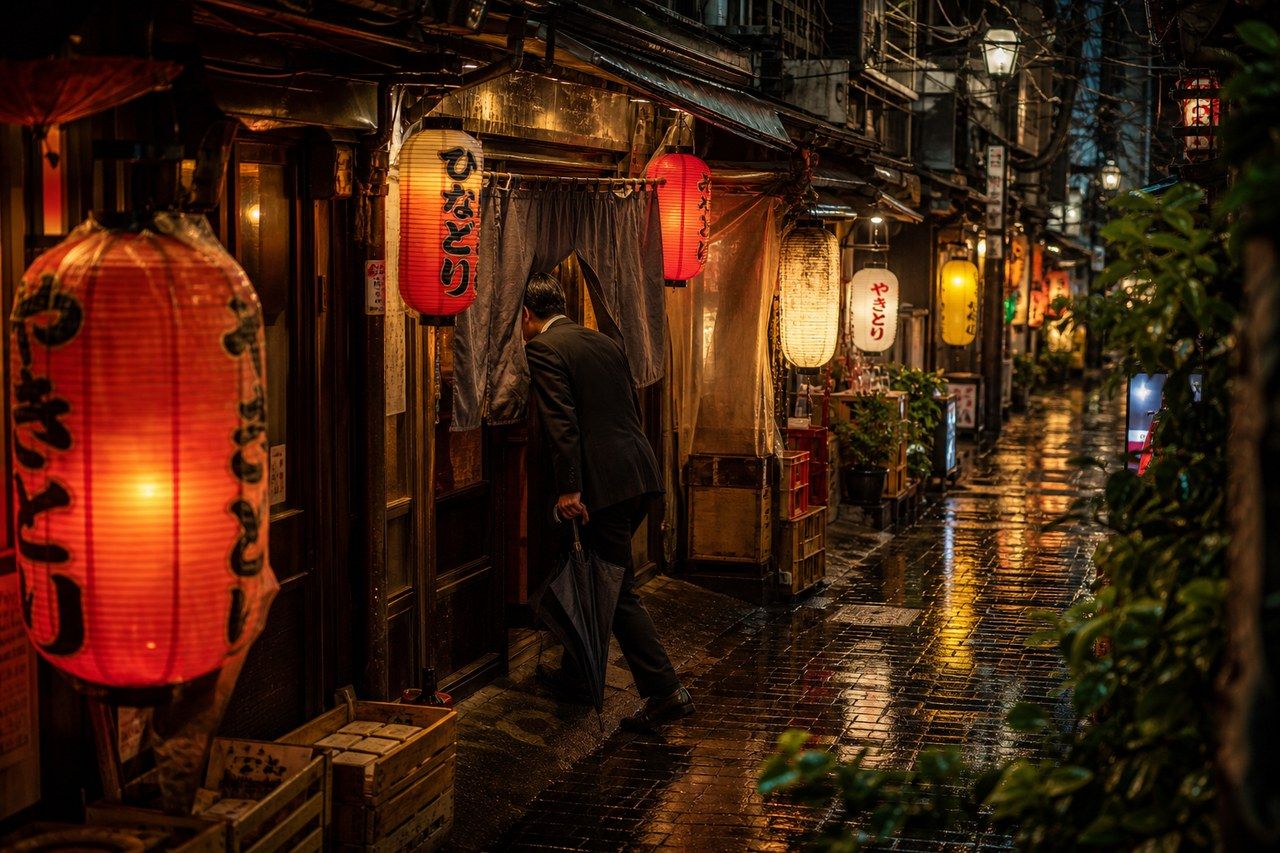 Image for illustrative purposes only.
Practical Info
| Item | Detail |
|---|---|
| Omoide Yokocho | West Exit, Shinjuku Station — 2 min walk |
| Golden Gai | Kabukicho 1-chome — 5 min walk from Shinjuku East Exit |
| Nonbei Yokocho | Hachiko Exit, Shibuya Station — 3 min walk |
| Hoppy Street | West of Sensoji Temple, Asakusa — 5 min from Asakusa Station |
| Hours | Most open 17:00–01:00; Golden Gai sweet spot 20:00–21:00 |
| Budget per night | ¥4,000–¥9,000 for 2–3 bars |
| Payment | Cash preferred; nearest ATM at 7-Eleven (5 min from each) |
| Best night | Tuesday–Thursday (Friday/Saturday queues are brutal) |
| Reservation | Not possible — all walk-in |
Wrapping Up
The trick to yokocho is realizing the alleys are not a tourist attraction; they're someone's living room with paying guests. Walk slowly. Read the door signs. Pay the otoshi without complaining. Order what the regular next to you is having. Tip nothing, ever. Say gochisousama when you leave.
Do that, and Tokyo's tiniest bars open up to you like nothing else in the city.
And if you find yourself craving more after Tokyo — Osaka has its own alley culture waiting. Hozenji Yokocho in Namba and the Shinsekai backstreets near Tennoji are warmer, cheaper, and famously more welcoming to first-timers. Many Tokyo regulars consider Osaka's alleys the better drinking scene. Roughly three hours by Shinkansen, and you're standing under a different set of red lanterns.
Frequently Asked Questions
What is a yokocho?
A yokocho (横丁) is a dense cluster of tiny postwar bars and izakayas packed into a narrow alley. Most bars seat 4 to 10 people, and the owner usually doubles as bartender and cook. Tokyo's most famous examples are Omoide Yokocho, Golden Gai, Nonbei Yokocho, and Hoppy Street.
Are foreigners welcome at Golden Gai?
Yes. Roughly 80% of Golden Gai's 280 bars are foreigner-friendly. About 20% post signs in Japanese (常連様のみ / 一見さんお断り) meaning "regulars only" — skip those and try the next door.
What is otoshi and why am I being charged for it?
Otoshi (お通し) is a small dish — usually ¥500 to ¥1,500 — served automatically when you sit down. It is a legitimate cover charge that every Japanese customer pays, not a scam or foreigner-only tax. Japan has no tipping, and otoshi covers seat costs.
How much does a night in Tokyo's yokocho cost?
Plan ¥4,000 to ¥9,000 per person for 2 to 3 bars. Omoide Yokocho and Nonbei tend to run ¥4,000–¥6,000; Golden Gai with cover charges runs ¥6,000–¥9,000.
Can I take photos in Golden Gai?
Photography in the Golden Gai alleys requires permission from the area's business promotion association, and photos of bar interiors require the owner's consent. Always ask "Shashin ii desu ka?" before pointing a camera.
Is Omoide Yokocho or Golden Gai better for first-timers?
Omoide Yokocho is friendlier for first-timers — open-front yakitori grills, no cover charges at most stalls, and easier to point at food. Golden Gai is better as a second stop after dinner, for drinking and bar-hopping.
Do yokocho bars accept credit cards?
Most do not. Cash is dominant. Bring ¥10,000 to ¥20,000 in yen; the nearest 7-Eleven ATM accepts international cards and is about a 5-minute walk from Golden Gai, Omoide Yokocho, and Nonbei Yokocho.
Is Kabukicho safe at night?
The main yokocho alleys are safe, but Kabukicho's outer streets have ongoing tout-scam (bottakuri) problems. Tokyo police logged 360+ overcharge complaints in 2025. The rule: never follow a street tout into a bar. Only enter places you found yourself with prices clearly posted.