Your complete guide to Shibuya — the famous scramble crossing, Shibuya Sky, Hachiko statue, Center-gai, shopping, cafes, and where to eat and drink.
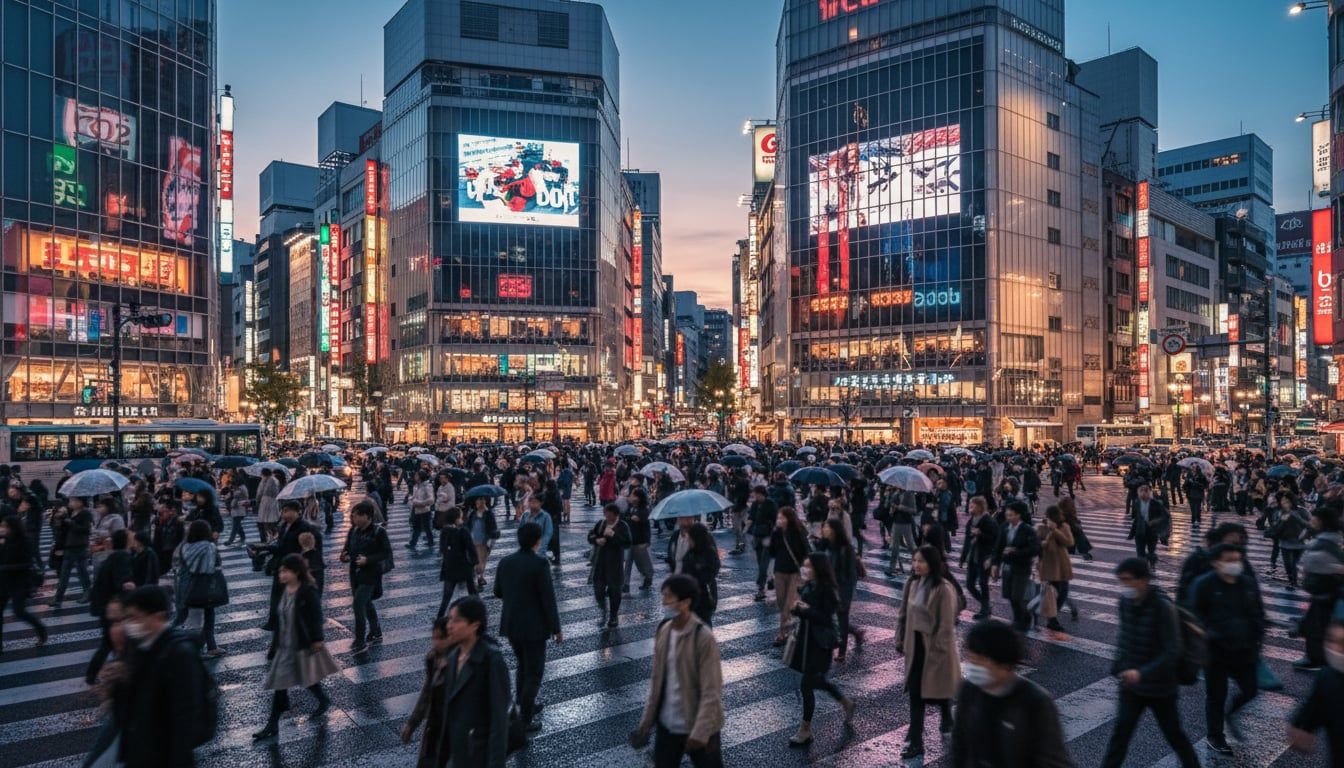
There is a moment — standing at the edge of Shibuya Scramble Crossing, waiting for the light to turn green — when you feel the whole city hold its breath. Then the signal changes and several hundred people pour out from all six directions at once, filling the intersection in a choreographed flood of umbrellas, shopping bags, and phone cameras. It takes about 45 seconds. Then the crowd sorts itself back to the sidewalks and the cars roll forward, and the whole thing begins again.
Shibuya is one of those places that delivers exactly what the photos promise, and then keeps going. Behind the crossing is a neighborhood of layered worlds: fashion shopping built around the tastes of Japanese youth culture, rooftop bars and observation decks above the chaos, a tangle of alleyways that smell of grilled meat and whisky highballs after dark, and a bronze dog waiting patiently by the station where he has always waited.
This guide covers all of it — where to watch the crossing, what to do beyond it, where to eat, where to drink, and what most tourists miss entirely.
What You'll Find in This Guide
- Quick Facts
- Getting Here & Navigating Shibuya Station
- Shibuya Scramble Crossing: Where to Watch & When
- Hachiko: The Dog, the Statue, the Story
- Center-gai & Shibuya 109: Youth Fashion Central
- Shopping in Shibuya: From Malls to Vintage
- Shibuya Sky: Tokyo's Best Paid Observation Deck
- Food & Drink: Nonbei Yokocho, Dogenzaka & Beyond
- What Most Tourists Don't Know
- Practical Information
- Related Guides
Quick Facts
| Best for | Iconic crossing, youth fashion, shopping, observation decks, nightlife |
| Getting there | JR Yamanote Line, Tokyo Metro Ginza/Hanzomon/Fukutoshin lines, Tokyu lines |
| Main exits | Hachiko Exit (crossing, Center-gai, Hachiko statue), East Exit (Shibuya Stream, Aobadai) |
| Best time to visit | Evenings for the crossing atmosphere; weekday afternoons for shopping without crowds |
| Budget | Shibuya Sky ¥2,000; ramen/meals ¥800–¥1,800; drinks ¥600–¥1,200 |
| How long to spend | Half-day for highlights; full day+ if you include Shibuya Sky + Miyashita Park + evening |
| Nearest station | Shibuya Station (all lines converge here) |
Getting Here & Navigating Shibuya Station
Shibuya Station is one of Tokyo's major hubs and the junction point for multiple rail companies operating on different fare systems. This sounds complicated, and for about the first ten minutes inside the station it is. Once you identify your exit, it becomes simple.
Getting to Shibuya:
- JR Yamanote Line: The backbone of tourist Tokyo, connecting Shibuya directly to Shinjuku, Harajuku, Ikebukuro, Ueno, and Akihabara
- Tokyo Metro Ginza Line: Asakusa, Ginza, Omotesando
- Tokyo Metro Hanzomon & Fukutoshin Lines: Omotesando, Ikebukuro, Shiodome
- Tokyu Den-en-toshi Line: Sangenjaya, Futako-Tamagawa (good for quieter residential neighborhoods)
- Tokyu Toyoko Line: Nakameguro, Yokohama, Kamakura access
Exit Guide:
| Exit | Where it takes you |
|---|---|
| Hachiko Exit (JR) | Hachiko statue, Scramble Crossing, Center-gai, Shibuya 109 — the main exit for almost everyone |
| East Exit | Shibuya Stream, Cerulean Tower, Aobadai area |
| Miyamasuzaka Exit / Mark City | Dogenzaka, love hotel hill, Daikanyama access via elevated walkway |
One honest note about orientation: The 2027 Shibuya Station redevelopment has been ongoing for several years. Floor layouts, exit names, and underground concourses shift periodically. When in doubt, follow signs for "Hachiko Exit" (scramble crossing side) or "East Exit" (Shibuya Stream side) — these are stable reference points regardless of construction progress. Google Maps in walking mode handles the underground routes accurately.
Shibuya Scramble Crossing: Where to Watch & When
The Shibuya Scramble Crossing (渋谷スクランブル交差点) is the most photographed intersection in the world and one of the few tourist attractions that genuinely meets its own hype — because it isn't really a tourist attraction. It's a working pedestrian crossing that just happens to be magnificent. Around 3,000 people cross in every 90-second cycle during peak hours.
Best Spots to Watch the Crossing
From street level is the default, and there's nothing wrong with it. Stand anywhere on the four surrounding corners and you'll feel the organized chaos of the crossing from the inside. The sensory experience — the shuffle of footsteps on the painted lines, the chirp of the crossing signal, the tide of strangers momentarily sharing a purpose — is something photographs cannot fully transmit.
From above gives you the famous aerial view, and you have several options:
-
Starbucks Shibuya Tsutaya: The most famous and most crowded option. The Starbucks on the second floor of the Tsutaya building has a window facing the crossing directly. Arrive early (the store opens at 7:00 AM) or be prepared to wait for a window seat. One drink minimum, no seat time limits posted — but in practice, seats turn over faster than you'd expect.
-
Mag's Park (QFRONT building): The rooftop terrace on top of the QFRONT building at the crossing's edge. This is a retail/restaurant building — access the rooftop via escalators inside. The angle is slightly different from the Starbucks and the outdoor air makes it feel less cramped. Free to access the terrace; drinks/food available from the rooftop venues.
-
Shibuya Sky (Scramble Square building): The gold standard for crossing views. Shibuya Sky's outdoor observation deck sits on the 46th floor of Scramble Square, directly adjacent to the crossing. At this height the crossing looks like a circuit board briefly animated. The full section on Shibuya Sky is below — but the crossing view alone justifies the admission.
-
L'Occitane Café (SHIBUYA109-2 building): A lower-key option with good crossing sightlines, a café menu, and far fewer people fighting for window seats than at Starbucks.
Best time to see the crossing at its most photogenic: Evening rush hour — roughly 6:00–9:00 PM on weekdays — when the neon advertising screens are fully lit and the crossing is at maximum density. Rain makes it extraordinary: a sea of illuminated umbrellas reflecting light from every direction. Weekend evenings are slightly less crowded than weekday rush hour but still impressive. Daytime on a Tuesday morning is quiet, but the crossing still runs; you can cross it comfortably and see what it looks like from the street when it isn't overwhelming.
Hachiko: The Dog, the Statue, the Story
Before you've even reached the crossing, you'll likely pass — or be directed toward — the bronze dog near the Hachiko Exit. This is Hachiko (ハチ公), and the statue is one of the most visited spots in all of Tokyo, which is somewhat remarkable for a sculpture of a medium-sized Akita dog on a modest pedestal outside a train station.
The story is simple and genuinely moving: Hachiko was an Akita dog who belonged to Professor Hidesaburo Ueno in the 1920s. Every day, Hachiko would accompany the professor to Shibuya Station in the morning and return to meet him in the evening. In 1925, Professor Ueno died suddenly at work and never returned home. Hachiko continued to arrive at Shibuya Station every evening for the next nine years, waiting for his owner. He died in 1935, still coming to the station.
The original statue was installed in 1934, while Hachiko was still alive. He attended the unveiling. The current statue is a 1948 postwar replacement after the original was melted down for metal during WWII.
Today the statue is a meeting point — "Meet at Hachiko" is one of the most common phrases exchanged by Tokyo residents — and a quiet moment worth pausing for amid the energy of the surrounding neighborhood. The best time for a photo without a crowd is early morning, before 8:00 AM.
Center-gai & Shibuya 109: Youth Fashion Central
Walk directly away from the station through the crossing and you'll enter Center-gai (センター街) — a pedestrianized shopping street that is the commercial and social core of Shibuya's youth culture. The street is narrow, dense, and loud: fast fashion retailers, purikura (print club photo booth) studios, fast food chains, mobile game arcades, and the persistent energy of Japanese teenagers and young adults treating this street as their living room.
Center-gai is not a place for quiet contemplation. It is a place to be in the middle of something, which it delivers without reservation.
At the mouth of Center-gai, angled toward the crossing, stands Shibuya 109 (渋谷109, pronounced "ichi-maru-kyu") — the mall that defined Gyaru (glamorous girl) fashion for a generation and continues to be a barometer of where Japanese youth fashion is moving. The interior runs to about ten floors of small boutiques, each with its own aesthetic and enthusiastic staff. The fashion here moves faster than runway cycles: what's in this month is different from last month. Even if you have no intention of buying anything, a slow tour of the floors is a legitimate cultural document of contemporary Japanese youth style.
Spain-zaka (スペイン坂), a short walk west from the crossing, offers a contrast: a gently sloping cobblestone lane lined with smaller boutiques, vintage stores, and cafés with a slightly more European street feel. Less chaotic than Center-gai, better for browsing. Connect to the Maruyamacho area from here, which transitions into the Dogenzaka entertainment district.
Shopping in Shibuya: From Malls to Vintage
Beyond 109 and Center-gai, Shibuya has one of the most varied shopping landscapes in Tokyo.
Parco Shibuya
Rebuilt and reopened in 2019, Parco (パルコ) sits a few minutes' walk from the crossing and represents a more curated, design-conscious take on Shibuya retail. The floors mix local Japanese designers, select import brands, a significant gaming and pop culture floor (including a Nintendo store, Capcom store, and various anime/gaming concept shops), an excellent bookstore (Shibuya Publishing Booksellers), and a rooftop with a small outdoor bar. The building itself was designed with art installations and gallery spaces built into the retail floors — it's worth walking all the way up just to see what's showing.
Miyashita Park
Miyashita Park (ミヤシタパーク) reimagined a former public park into a vertical complex: a rooftop park with sports facilities (climbing wall, skate park, sand volleyball) runs along the top, while the lower floors contain food halls, boutiques, and restaurants. The design threads a genuine park above a commercial building in a way that works better than it has any right to. The rooftop park is free to access and worth visiting for the unusual perspective on the surrounding neighborhood.
The food hall floor in particular has a strong line-up: ramen, yakiniku, craft beer, artisan coffee, and casual international options in a space with good natural light and accessible seating. Good for lunch if you want variety and don't want to commit to a single restaurant.
Vintage & Thrift
Shibuya has a solid vintage scene — particularly in the back streets between Udagawacho and the Parco area, where shops specialize in American workwear, 1990s Japanese streetwear, and military surplus. Look for the cluster of stores along Udagawacho's upper streets — several floors of vintage stores occupy buildings that seem unremarkable from the street.
For a more immersive vintage experience, Shimokitazawa — two stops from Shibuya on the Keio Inokashira Line — is the definitive Tokyo vintage neighborhood. The entire district is built around thrift stores, independent music venues, and coffee shops, and a half-day trip there pairs naturally with a Shibuya afternoon. Take the train; it is ten minutes.
Shibuya Sky: Tokyo's Best Paid Observation Deck
Shibuya Sky (渋谷スカイ) occupies the roof and upper floors of Scramble Square, the tallest building directly adjacent to Shibuya Station. The outdoor observation deck on the 46th floor sits 229 meters above street level — open-air, with glass barriers along the edge and a platform designed specifically for photography and open-sky views rather than enclosed windows.
This detail matters: unlike indoor observatories where you press against glass, Shibuya Sky is genuinely outside. Wind on your face, actual air, the sounds of the city a quarter-kilometer below. The experience is qualitatively different.
What You'll See
The crossing is directly below and slightly north — from this height, the scramble's geometry is fully legible and the scale of the intersection relative to the surrounding city becomes clear. To the north, the skyscrapers of Shinjuku rise in a cluster roughly five kilometers away. On clear days, Mount Fuji appears to the west — a snow-capped triangle that somehow manages to be visible between and above the urban density.
At night, the city becomes a circuit board of moving light: the advertising screens at the crossing, the Yamanote Line tracing its oval, the highway expressways lined in red and white trails of traffic.
Tickets and Timing
Ticket price: ¥2,000 for adults (timed entry, booked online at shibuyasky.jp). Discounts available for children.
Book in advance. Shibuya Sky uses timed entry slots and popular windows — particularly sunset and the hour after — sell out days or weeks ahead, especially on weekends and public holidays.
Best times:
- Sunset (about 30–60 minutes before sundown): The sky transitions from blue to gold to pink to deep violet while the city lights come up below. This is the most popular slot for good reason.
- Night (after 7:00 PM): Fully dark city view, all lights active. Spectacular but loses the sky color drama.
- Day: Clear views in all directions, best for Mount Fuji visibility (winter/early spring, morning before haze builds). Less crowded than evening slots.
The rooftop experience includes a bar service where you can order drinks to take to the viewing platform. A cocktail 229 meters above Shibuya, watching the crossing 46 floors below, is genuinely not a bad way to spend an hour.
Food & Drink: Nonbei Yokocho, Dogenzaka & Beyond
Nonbei Yokocho
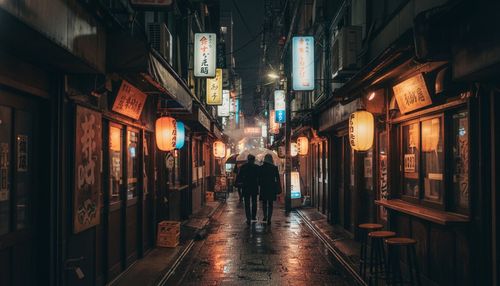
Nonbei Yokocho (のんべい横丁 — roughly "Drunkard's Alley") is Shibuya's answer to the atmospheric bar alley experience. Unlike Omoide Yokocho in Shinjuku, Nonbei Yokocho is genuinely under the radar — a narrow lane running about 80 meters, with wooden buildings and lantern-lit bars packed side by side. The bars here range from sake specialists to jazz bars to standing yakitori counters. Capacity in most establishments is under fifteen people.
The alley sits a five-minute walk from the Hachiko Exit, tucked between Shibuya Stream and the Yamanote Line tracks. It is easy to walk past without noticing, which is precisely why it retains its character while far more famous alleys get overwhelmed. Arrive after 7:00 PM for peak atmosphere. Most bars are cash-friendly; some are cash-only. Budget ¥2,000–¥4,000 for a session.
Dogenzaka Area
Dogenzaka (道玄坂) is the slope running northwest from the crossing toward Maruyamacho. The lower section is mainstream restaurants, chain izakayas, and karaoke buildings. Moving up the slope and into the side streets, the density of independent bars, craft beer spots, small cocktail bars, and izakayas increases. This is where Shibuya's later-night bar scene lives — more local than tourist-heavy, with good ramen available until very late from several shops along the slope.
The area around Maruyamacho — often called Shibuya's "love hotel hill" for its concentration of distinctive boutique hotels — also contains some of Shibuya's better hidden bars and restaurants. Don't be put off by the hotel signage; the street-level restaurants and bars here are entirely ordinary and often very good.
Shibuya Stream
Shibuya Stream is the development running along the Shibuya River (now routed underground and visible along the building's base) near the East Exit. The ground and second floors have an accessible lineup of restaurants including quality ramen, Italian, Japanese casual, and craft beer — more breathing room than the center of Shibuya, slightly better for a sit-down meal without fighting for seats. The riverside terrace seating in warmer months is a pleasant contrast to the density elsewhere.
For Coffee
Shibuya has a strong specialty coffee culture concentrated in the streets between the crossing and Daikanyama. LogRoad Daikanyama and the surrounding blocks (accessible via a flat ten-minute walk from Shibuya along the Daikanyama-bound direction) have clusters of excellent independent cafés. The % Arabica on the Daikanyama-Shibuya boundary has a queue that tells you it's worth it; the coffee is genuinely good and the location has outdoor seating on a corner with good natural light.
What Most Tourists Don't Know
The Starbucks crossing view is harder than it looks. The Tsutaya Starbucks on the second floor is one of the most-photographed café interiors in Tokyo, which means it runs at maximum capacity for most of the day and into the evening. The queues can be 30–45 minutes just to order, and window seats are claimed within seconds of opening. Alternatives with better availability and comparable views: Mag's Park rooftop terrace (free access, drinks optional), L'Occitane Café, or simply Shibuya Sky if you're willing to pay ¥2,000 for a genuinely superior perspective.
Shibuya Sky sells out days in advance. If you want the sunset slot on a Saturday, booking the day before is too late during busy seasons (Golden Week, cherry blossom season, autumn color season, New Year). Check shibuyasky.jp as soon as you know your travel dates. Tickets are not sold at the venue on busy days when online slots are full.
Hachiko at peak times is a scrum. The statue itself is small and surrounded by a dense crowd from mid-morning until late evening on weekends. If you want a photograph with the statue, early morning (before 8:00 AM) is the correct answer. As a meeting point, use it as a reference only — "meet near Hachiko" is less specific than it sounds given the density of people in that area.
Nonbei Yokocho is free to enter and easy to miss. Many visitors spend an entire Shibuya evening in the bars along Dogenzaka without discovering this alley. It is genuinely one of the most atmospheric bar-lane experiences in Tokyo, and most tourists simply walk past the narrow entrance without noticing it exists.
The Shibuya area extends well beyond the crossing. Most first-time visitors spend their time in a roughly 400-meter radius around the station. The neighborhoods of Daikanyama (ten-minute walk south), Nakameguro (two stops on the Tokyu Toyoko Line), and Omotesando (two stops on the Ginza Line) are all architecturally and culturally distinct neighborhoods that reward a half-day each — and all sit within easy reach of Shibuya as a hub. See the Tokyo Day Trips Guide for ideas on extending your radius further.
The karaoke buildings in Shibuya are excellent and underused by visitors. Center-gai and Dogenzaka have multiple major karaoke chains — Karaoke Kan (where scenes from Lost in Translation were filmed), Big Echo, and Joysound among them. Private rooms, extensive English song lists, and late-night slots that keep you occupied until the trains start running again. Our Japan Karaoke Guide covers exactly how to navigate the booking process and what to expect.
Practical Information
| Shibuya Station | JR Yamanote Line; Tokyo Metro Ginza, Hanzomon, Fukutoshin lines; Tokyu Den-en-toshi, Toyoko, Inokashira lines |
| Shibuya Sky hours | 10:00 AM – 10:30 PM (last entry 9:30 PM); timed entry, book online at shibuyasky.jp |
| Shibuya Sky admission | ¥2,000 adults; ¥1,200 ages 13–17; ¥900 ages 3–12 |
| Shibuya 109 hours | 10:00 AM – 9:00 PM daily |
| Parco Shibuya hours | 11:00 AM – 9:00 PM (restaurants 11:00 AM – 11:00 PM) |
| Miyashita Park hours | Rooftop park: 8:00 AM – 11:00 PM; shops/restaurants vary |
| Nonbei Yokocho | Evening; most bars open from 6:00–7:00 PM, close around midnight–2:00 AM |
| ATMs | 7-Eleven (inside station and throughout district), Japan Post ATM near Hachiko Exit |
| Cash | Nonbei Yokocho and smaller bars are largely cash-only; carry ¥5,000–¥10,000 for a bar evening |
| Luggage storage | Coin lockers at Shibuya Station (Hachiko Exit area and multiple underground locations); also at Shibuya Sky building |
| Best months to visit | March–April (cherry blossoms, mild weather); October–November (clear skies, best Mt. Fuji visibility from Shibuya Sky) |
Frequently Asked Questions
What is Shibuya known for?
Shibuya is best known for its iconic Scramble Crossing, vibrant youth fashion, extensive shopping, impressive observation decks like Shibuya Sky, and lively nightlife, including areas like Nonbei Yokocho. It delivers exactly what photos promise and offers a layered experience of Tokyo culture.
Where are the best places to watch the Shibuya Scramble Crossing from above?
You can get famous aerial views from Starbucks Shibuya Tsutaya, Mag's Park on the QFRONT building, Shibuya Sky (offering the gold standard view from the 46th floor), or the L'Occitane Café. Each offers a different perspective of the organized chaos.
When is the best time to experience the Shibuya Scramble Crossing?
The crossing is most photogenic during evening rush hour, roughly 6:00–9:00 PM on weekdays, when neon advertising screens are fully lit and the crossing is at maximum density. Rain makes it even more extraordinary, creating a sea of illuminated umbrellas.
How do I navigate Shibuya Station?
Shibuya Station is a major hub; for most tourist attractions, use the Hachiko Exit for the Hachiko statue, Scramble Crossing, and Center-gai. The East Exit leads to Shibuya Stream. Google Maps in walking mode is recommended for navigating the station's complex and changing layouts.
What is the story behind the Hachiko statue?
The Hachiko statue commemorates an Akita dog from the 1920s who would faithfully meet his owner, Professor Hidesaburo Ueno, at Shibuya Station every evening. After the professor's sudden death, Hachiko continued to wait at the station for nearly ten years, becoming a symbol of loyalty.
Related Guides
Shibuya is the ideal base for exploring Tokyo's southern and western neighborhoods. These guides cover everything within reach:
- Shinjuku Guide 2026: Golden Gai, Nightlife, Food & Things to Do — Shibuya's northern sister district, 12 minutes on the Yamanote Line; complementary for a two-night Tokyo itinerary that covers both
- Harajuku Fashion & Culture Guide — one stop north of Shibuya on the Yamanote Line; Takeshita Street, Omotesando, Meiji Shrine, and the street style that defined global kawaii culture
- Tokyo Day Trips Guide — Kamakura, Nikko, Hakone, and other half-day or full-day escapes from Tokyo, many accessible directly from Shibuya Station via the Tokyu lines
- Japan Karaoke Guide: Chains, Prices & How to Sing Like a Local — Shibuya's Center-gai and Dogenzaka have some of Tokyo's best karaoke buildings, including the one from Lost in Translation