Japan's summer heat is intense, but it's survivable — and even enjoyable — with the right gear, habits, and know-how.
If you've never experienced a Japanese summer, here's a quick reality check: it is not just "a bit warm." From late June through September, Japan dishes out a combination of high temperatures and crushing humidity that can catch even seasoned travelers completely off guard. The good news is that locals have spent centuries figuring out how to cope, and they've come up with some genuinely clever solutions. Let's work through this together.
Why Japanese Summer Hits Different
The heat itself — often climbing above 35°C (95°F) in cities like Tokyo and Osaka — is only half the story. The real challenge is the humidity. During peak summer, relative humidity routinely sits between 70 and 85 percent. That means your sweat has nowhere to go. The air is already saturated with moisture, so the body's natural cooling system works at a fraction of its normal efficiency.
Cities amplify this further through the urban heat island effect. Concrete, asphalt, and the waste heat from millions of air conditioners keep city temperatures several degrees warmer than the surrounding countryside, and nighttime offers only partial relief.
Understanding this from the start adjusts your expectations — and helps you plan smarter.
Month by Month: What to Actually Expect
June — The Rainy Season (Tsuyu)
June brings the rainy season, known as tsuyu (梅雨). Temperatures are not yet at their peak, typically ranging from 22 to 30°C (72–86°F), but the humidity is relentless. Expect overcast skies, frequent rain showers, and air that feels like a warm, damp towel draped over your face. A compact umbrella is non-negotiable. The upside: tourist crowds thin out slightly, and greenery everywhere looks lush and vivid.
July and August — Peak Heat
This is the main event. Temperatures regularly exceed 35°C, and heat index values (factoring in humidity) can push the perceived temperature well past 40°C (104°F). Morning heat is bearable; by noon, direct sunlight feels physically aggressive. In Tokyo, Osaka, Kyoto, and other major cities, you will see locals doing everything in their power to minimize sun exposure. You should do the same.
September — Still Hot, But Shifting
September is deceptive. The calendar says autumn, but temperatures through mid-September remain firmly summer-like, often hovering around 30–33°C. The humidity begins to ease in the second half of the month, which brings noticeable relief. By late September, morning and evening air starts to carry a welcome coolness. Hang in there.
Understanding Natsubate: Summer Fatigue
Japanese has a word for what happens when the heat grinds you down over days and weeks: natsubate (夏バテ). It describes a general state of fatigue, loss of appetite, poor sleep quality, and low energy caused by sustained exposure to summer conditions. It is not dramatic — you won't necessarily feel sick — but you'll notice you're exhausted by mid-afternoon, eating less, and sleeping poorly even in an air-conditioned room.
The antidote is the same as heat management in general: stay hydrated, eat light but nutritious meals, get adequate sleep, and don't push yourself during the hottest hours of the day. Locals often schedule demanding activities for early morning or evening and treat midday as a rest period. Following that rhythm will serve you well.
Heat Stroke: Take It Seriously
Heat stroke (nessha-byou) is a genuine medical emergency in Japan, and hospitals see significant numbers of cases each summer. Warning signs include heavy sweating followed by suddenly stopping sweating, dizziness, nausea, rapid heartbeat, confusion, and loss of consciousness. If you or someone near you shows these symptoms, move immediately to a cool, shaded place, apply cold water or ice to the neck, armpits, and groin, and call 119 (Japan's emergency number).
Prevention is straightforward but requires consistency:
- Avoid direct sunlight between 10 a.m. and 3 p.m. when possible
- Drink water before you feel thirsty — thirst is already a late signal
- Take breaks in air-conditioned spaces every hour or so when outdoors
- Wear a hat with a brim
- Reduce strenuous physical activity during peak heat
Elderly travelers, young children, and anyone with cardiovascular conditions should be especially cautious.
What to Wear
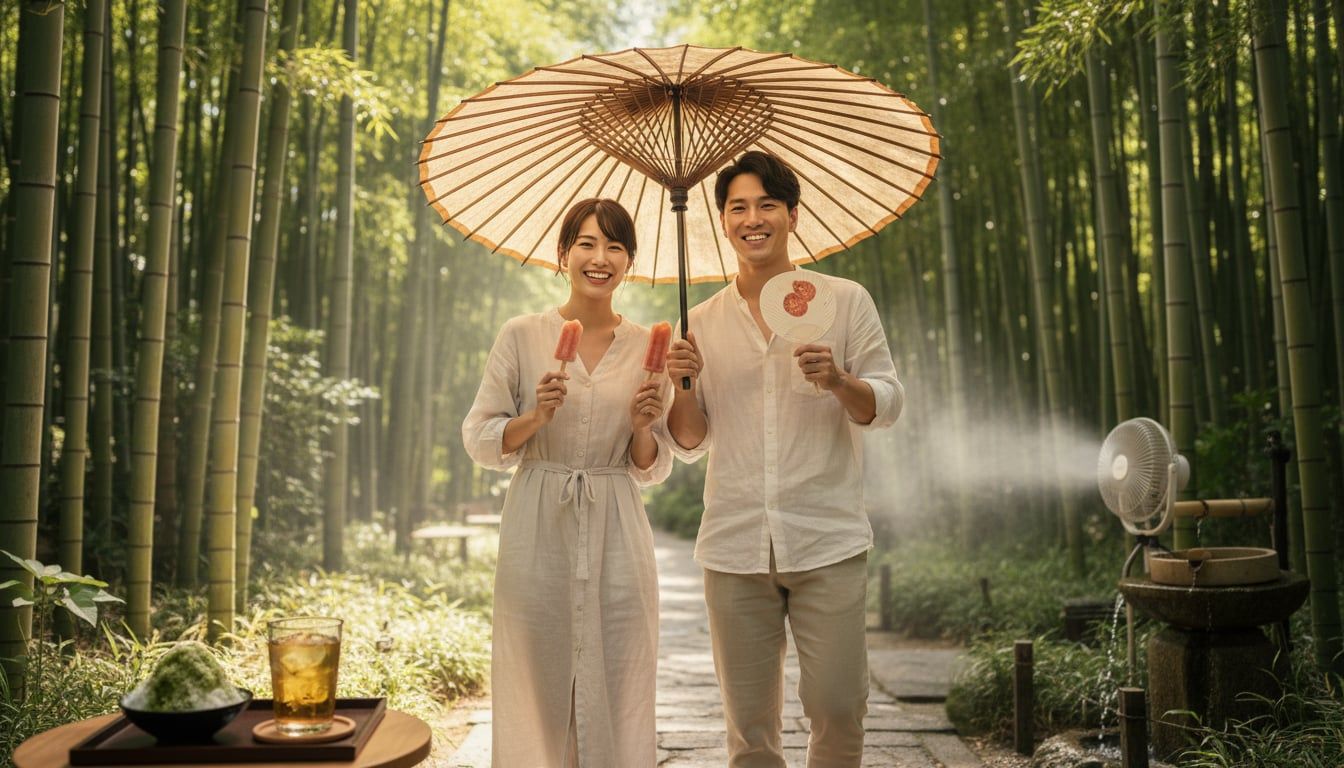
The instinct might be to wear as little as possible, but locals actually cover up strategically. Here's the logic: direct sunlight on bare skin heats you faster than light, loose fabric does. A thin linen or moisture-wicking long-sleeved shirt in a light color will keep you cooler than a tank top in full sun.
Practical clothing choices:
- Light colors reflect heat; dark colors absorb it
- Natural fabrics like linen and cotton breathe well; synthetics vary — look for fabrics marketed as setsunai (cool touch) or kino-bi (functional beauty)
- Loose, flowing cuts allow air circulation
- A wide-brimmed hat or a parasol (yes, men use them too in Japan — seriously, consider it)
- Sandals or breathable shoes — your feet will thank you
Cooling Goods You'll Actually Use
Japanese convenience stores and pharmacies stock an impressive arsenal of heat-fighting products. A few worth picking up:
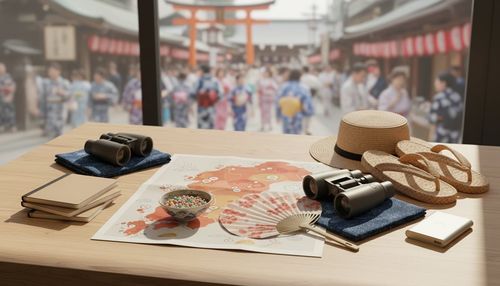
Handheld fans (uchiwa and sensu): Flat uchiwa fans and folding sensu fans are sold everywhere from 100-yen shops to department stores. They move air around your face and provide genuine relief. Battery-powered handheld fans have also become extremely popular and are available at most electronics stores and convenience stores for around 1,000–2,000 yen.
Cooling towels: Wet them, wring them out, and drape them around your neck. The evaporative cooling effect is real and immediate. Look for hiyashi (cooling) towels at pharmacies and convenience stores.
Cooling sprays: These are spray-on products designed to accelerate evaporation on your skin or clothing. Some are mentholated for an extra cooling sensation. They work best in moments when you've overheated and need quick relief.
Cooling neck wraps: Reusable wraps that you soak in water and tie around your neck. Lower-tech than the spray but surprisingly effective.
Where to Escape the Heat
Tokyo, Osaka, and other major cities are genuinely well-designed for heat refuge. You don't have to suffer through the hottest parts of the day outdoors.
Underground shopping arcades: Japan's extensive underground mall networks — Tokyo's under Shinjuku, Shibuya, and the Yaes-Chika complex; Osaka's Namba Walk and Crysta Nagahori — are fully air-conditioned and connect major train stations, letting you cover significant distances without surfacing.
Department stores: Japanese department stores are aggressively climate-controlled. The basement food halls (depachika) in particular are cool, fascinating, and full of excellent food. No one will bother you if you browse slowly.
Museums and galleries: A great excuse to slow down and take in culture. Major cities have world-class collections, and the climate control is superb. Some smaller galleries are genuinely free.
Cafes and kissaten: A coffee or cold drink in an air-conditioned cafe is practically a civic institution in Japan during summer. No rush, no pressure — sit, cool down, and recharge.
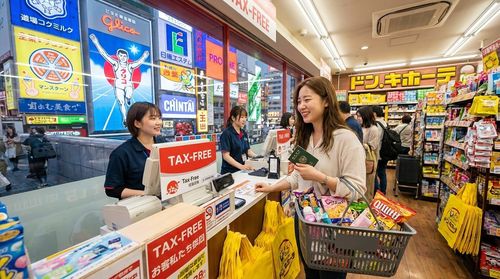
Convenience stores: Never underestimate the humble konbini as a cooling station. The air conditioning is strong, the cold drinks are plentiful, and no one expects you to buy more than a small bottle of something.
Staying Hydrated: The Vending Machine Network
Japan's vending machine infrastructure is one of the great unsung advantages of summer travel here. There are roughly 5 million vending machines across the country, meaning you are almost never more than a few minutes from cold drinks.
Aim to drink at least 1.5 to 2 liters of water or low-sugar beverages per day, more if you're spending time outdoors. A few guidelines:
- Sports drinks like Pocari Sweat and Aquarius contain electrolytes and are excellent for replenishment after sweating heavily. They're not just for athletes.
- Barley tea (mugicha) is a popular caffeine-free option that locals drink cold all summer. Look for it in bottles or make your own from tea bags.
- Avoid over-relying on alcohol or caffeinated drinks for hydration — both have diuretic effects.
- Cold drinks are typically 130–160 yen from vending machines. Always carry change, or load a Suica or Pasmo card, which work on most machines.
Summer Foods That Cool You Down
Japanese summer cuisine leans into cooling naturally, and eating the right things genuinely helps your body manage heat.
Kakigori: Shaved ice topped with flavored syrups — the Japanese summer icon. From simple street stalls to artisan shops with matcha and condensed milk or strawberry and yuzu, kakigori is everywhere in summer and deeply satisfying. Don't skip it.
Cold soba: Zaru soba, chilled buckwheat noodles served with a dipping broth, is light, refreshing, and easy on an appetite dulled by heat. A staple of summer lunch.
Cold udon: Hiyashi udon or zaru udon follows the same principle. Thick, chewy noodles served cold with dipping sauce. Many restaurants offer them from summer menus only.
Hiyayakko: Chilled soft tofu with ginger, green onion, and soy sauce. Minimal effort, maximum refreshment.
Unagi (eel): This might seem counterintuitive — unagi is rich and substantial — but it's traditionally eaten on Doyo no Ushi no Hi (the Day of the Ox in mid-summer) specifically to build stamina and fight natsubate. Locals swear by it.
The Reward: Summer is Festival Season
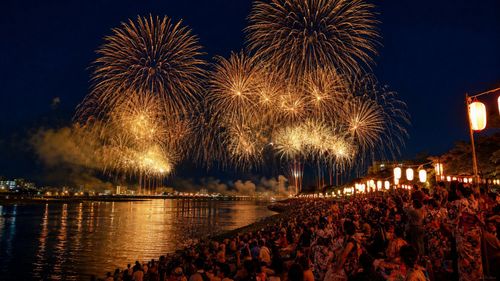
Here's the thing about Japan's summer: all this heat and humidity is the price of admission for one of the most vibrant festival seasons anywhere in the world. Matsuri (festivals) run from late June through September, filling evenings with taiko drums, illuminated floats, fireworks displays, and the smell of yakitori and shaved ice drifting through the night air.
The heat breaks a little after sundown, and that's when summer Japan truly comes alive. Fireworks festivals (hanabi taikai), including some of the largest in the world, draw enormous crowds to riverbanks and beaches. Folk dance festivals, lantern festivals, and neighborhood matsuri fill the streets with yukata-clad locals and the sound of traditional music. If you want to understand why Japanese people remain genuinely fond of summer despite everything it puts them through, one evening at a good matsuri will answer the question completely.
A Few Final Notes
Carry a small towel or handkerchief — Japanese people almost universally do, and you'll understand why within your first hour outdoors. Sunscreen is sold everywhere and should be applied liberally and re-applied often. Pharmacies stock excellent Japanese sunscreens that are lightweight and don't feel greasy.
Start your days early. The hours before 9 a.m. are genuinely pleasant in summer Japan — cool enough for comfortable walking, with soft morning light and far fewer crowds at popular sights. Wind down your outdoor activity by early afternoon, rest during the hottest window, and head back out in the evening.
Summer in Japan is demanding, but the country has been helping travelers navigate it for centuries. With a little preparation, the right gear, and the willingness to move at the heat's pace rather than fighting it, you'll find that the season has a character and richness entirely its own.
Frequently Asked Questions
Why is Japanese summer so challenging?
Japanese summer is challenging due to a combination of high temperatures, often above 35°C (95°F), and extremely high humidity, routinely between 70 and 85 percent. This humidity prevents sweat from evaporating effectively, hindering the body's natural cooling process. The urban heat island effect further amplifies temperatures in cities.
What is natsubate?
Natsubate (夏バテ) is a Japanese term for summer fatigue, describing a state of tiredness, loss of appetite, and low energy caused by sustained exposure to summer conditions. To combat it, stay hydrated, eat light but nutritious meals, get adequate sleep, and rest during the hottest parts of the day.
How can I prevent heat stroke in Japan?
To prevent heat stroke (nessha-byou), avoid direct sunlight between 10 a.m. and 3 p.m., drink water frequently even before feeling thirsty, and take regular breaks in air-conditioned spaces. Wearing a hat with a brim and reducing strenuous physical activity during peak heat are also crucial.
What kind of clothing should I wear for summer in Japan?
Opt for light-colored, loose-fitting clothing made from breathable fabrics like linen or cotton, as these reflect heat and allow air circulation. A