Cash is still king in Japan — but not everywhere. Your complete guide to yen, credit cards, ICOCA, PayPay, and tipping culture.
Cash Is Still King (But Things Are Changing)
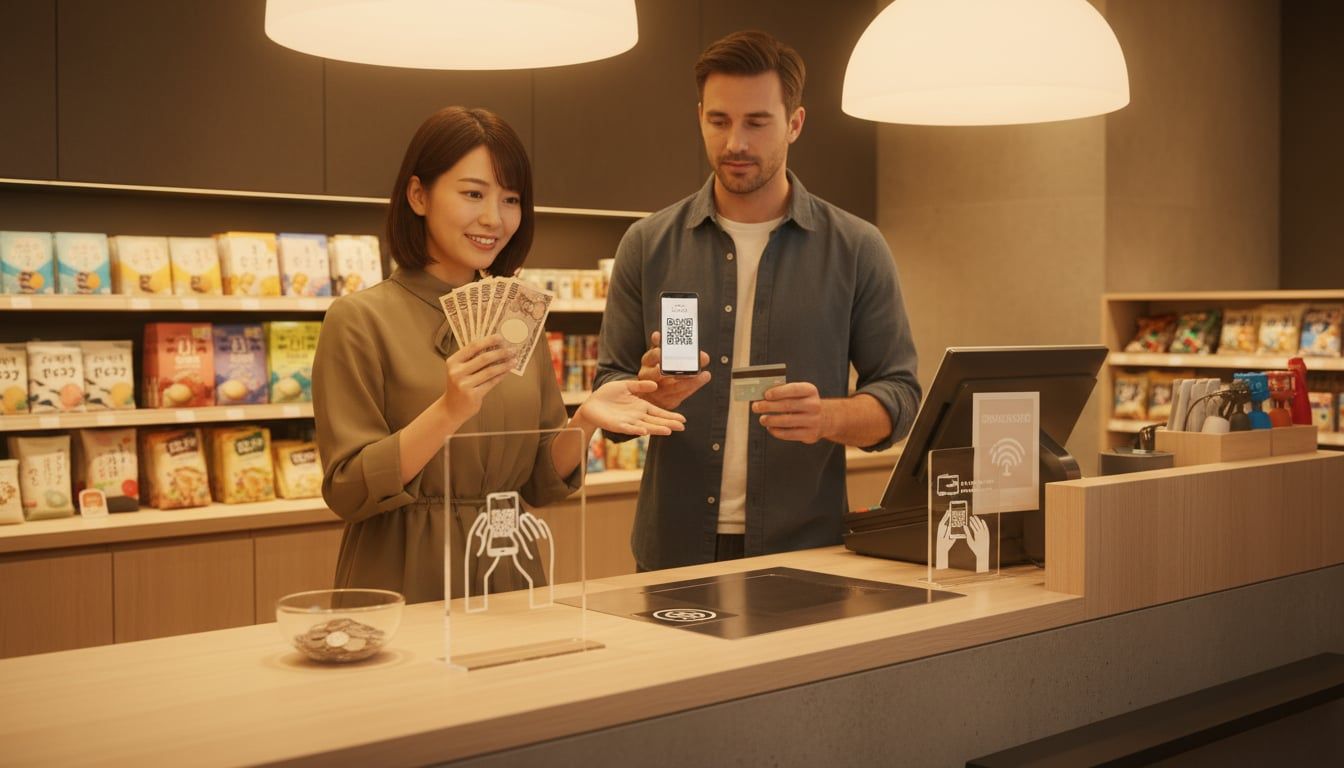
Japan has a long-standing love affair with cash, and despite rapid modernization, many places still operate on a cash-only basis. Small ramen shops, street food stalls, local izakayas, temple admission counters, and rural guesthouses often do not accept cards at all. If you walk into a cozy family-run soba restaurant in a backstreet of Kyoto with nothing but a credit card, you might walk out hungry.
That said, things have shifted noticeably since the pandemic. Major chain restaurants, department stores, hotels, and convenience stores now accept multiple payment methods. The key takeaway: always carry cash, but you will not need to rely on it exclusively.
A good rule of thumb is to keep between 5,000 and 10,000 yen on you at all times. You will also want a small stash of 100-yen and 10-yen coins for coin-operated lockers, vending machines at smaller temples, and traditional donation boxes at shrines (tossing a 5-yen coin is considered good luck).
Credit and Debit Cards
Visa and Mastercard have the widest acceptance across Japan. You can use them at most hotels, larger restaurants, department stores, electronics shops, and major train stations. American Express works at many tourist-oriented businesses but is less universally accepted. JCB, a Japanese card brand, is widely accepted domestically and worth having if you travel to Japan frequently.
Some things to keep in mind:
- Notify your bank before traveling so your card is not blocked for suspicious overseas transactions.
- Check whether your card charges foreign transaction fees. Many travel-focused cards waive this.
- Contactless payments (tap-to-pay) are increasingly supported, especially at convenience stores like 7-Eleven, Lawson, and FamilyMart.
Do not count on using your card at smaller establishments, local markets, or budget eateries. When in doubt, ask before you order: "Kaado wa tsukaemasuka?" (Can I use a card?).
IC Cards: Your Best Friend for Daily Travel
IC cards are rechargeable transit cards that work across trains, buses, convenience stores, vending machines, and coin lockers throughout Japan. The two most common are Suica (Tokyo area) and ICOCA (Osaka/Kansai area), but they are interchangeable nationwide.
You can purchase a physical IC card at major train stations for a 500-yen refundable deposit, then charge it with cash at station machines. Load 2,000 to 3,000 yen to start, and top up as needed.
Beyond transit, IC cards are accepted at an impressive range of places:
- All major convenience store chains (7-Eleven, Lawson, FamilyMart)
- Vending machines (drinks, snacks, even some restaurant ticket machines)
- Coin lockers at train stations
- Many fast food chains and coffee shops
If your phone supports it, you can also add a virtual Suica or ICOCA to Apple Wallet or Google Wallet, which means you can tap your phone instead of carrying a physical card. This is one of the smoothest ways to pay in Japan.
Mobile Payments: PayPay and Beyond
Japan has embraced QR code payments in a big way. PayPay is by far the most popular, used at over 4 million merchants across the country. You will spot the red PayPay logo at restaurants, supermarkets, taxis, and even small rural shops that do not accept credit cards.
Setting up PayPay as a tourist takes a few steps: download the app, register with your phone number, and link a credit card or charge the balance at a convenience store ATM. It is worth the effort if you are staying more than a few days, as it opens up payment at places where cards fail.
Apple Pay and Google Pay work at contactless terminals and can be linked to your IC card for seamless transit payments. LINE Pay and Rakuten Pay are also common but less practical for short-term visitors.
Getting Cash: ATMs That Work With Foreign Cards
Not all ATMs in Japan accept international cards, but two reliable options stand out:
7-Eleven ATMs (Seven Bank): Found in every 7-Eleven convenience store, these ATMs have English-language support and accept Visa, Mastercard, Maestro, Cirrus, and other major networks. Available nearly 24 hours. Withdrawal fees are typically 110 yen per transaction, plus whatever your home bank charges.
Japan Post ATMs: Located in post offices across the country, these also accept foreign cards. Hours vary by branch, so check in advance if you are in a rural area.
Most Japanese bank ATMs (Mizuho, MUFG, etc.) do not accept foreign-issued cards. Stick with 7-Eleven or Japan Post to avoid frustration.
Currency Exchange: Where to Get the Best Rate
You will need Japanese yen for most of your trip. Here is how to get the best value:
- Airport exchange counters at Narita, Haneda, Kansai, and other international airports offer decent rates and are convenient for grabbing your first batch of yen on arrival. Exchange enough for your first day or two (around 10,000 to 20,000 yen).
- City exchange shops in tourist areas like Shinjuku, Shibuya, and Dotonbori often offer slightly better rates than airports. Look for shops displaying "No commission" signs.
- Avoid hotel front desks for currency exchange. Their rates are almost always the worst.
- ATM withdrawals often give you a rate close to the interbank rate, making them one of the best options overall.
Tipping Culture: Please Do Not Tip
This is one of the most important cultural points for visitors. In Japan, tipping is not expected and can actually cause confusion or even mild offense. Restaurant servers, taxi drivers, hotel staff, and tour guides do not expect tips. The price you see is the price you pay.
Japanese service culture is built on the idea that excellent service is the standard, not something that requires extra payment. If you leave money on the table at a restaurant, your server may chase you down the street to return it, thinking you forgot your change.
If you want to show extra appreciation, a sincere verbal thank you ("Arigatou gozaimasu") or a small gift from your home country is far more meaningful than cash.
Tax-Free Shopping
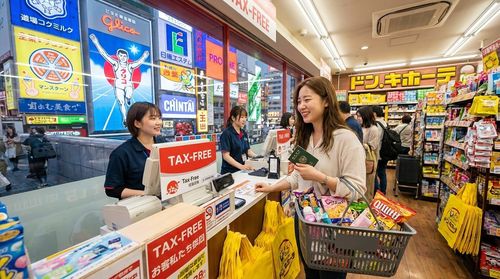
Japan offers tax-free shopping for foreign tourists on purchases above certain thresholds. The consumption tax is 10 percent (8 percent on food and beverages), and you can get it refunded at participating stores.
Here is how it works:
- General goods (electronics, clothing, accessories): minimum purchase of 5,000 yen per store per day.
- Consumables (food, cosmetics, medicine): minimum purchase of 5,000 yen per store per day.
- Bring your passport. The store will verify your tourist visa status and process the exemption at the register.
- Tax-free items purchased as consumables must be taken out of Japan and cannot be opened during your stay.
Look for the "Tax Free" logo at department stores, electronics retailers like Bic Camera and Yodobashi Camera, drugstores, and many souvenir shops.
Practical Tips at a Glance
- Carry 5,000 to 10,000 yen in cash at all times, even in Tokyo and Osaka.
- Keep a handful of coins (100-yen and 10-yen) for shrines, temples, and small vending machines.
- Set up a virtual IC card on your phone before you arrive if your device supports it.
- Use 7-Eleven ATMs for reliable foreign card withdrawals.
- Download PayPay if you are staying longer than three or four days.
- Never tip. A warm "arigatou gozaimasu" is always enough.
- Budget roughly 1,000 to 1,500 yen for a casual lunch, 3,000 to 5,000 yen for dinner, and 200 to 300 yen for a convenience store onigiri or drink.
Japan's payment landscape can feel unfamiliar at first, but once you have cash, an IC card, and maybe PayPay on your phone, you will find that paying for things is one of the easiest parts of your trip.
Frequently Asked Questions
Is cash still necessary in Japan, and how much should I carry?
Yes, cash is still essential for many small shops, street food stalls, and rural establishments. A good rule of thumb is to keep between 5,000 and 10,000 yen on you at all times, plus small coins for vending machines and shrines.
What are IC cards, and where can I use them in Japan?
IC cards like Suica and ICOCA are rechargeable transit cards that work nationwide for trains and buses. They are also widely accepted at convenience stores, vending machines, coin lockers, and many fast food chains, making them very convenient for daily use.
Which ATMs in Japan accept foreign credit and debit cards?
The most reliable ATMs for foreign cards are found in 7-Eleven convenience stores (Seven Bank) and Japan Post offices. These ATMs offer English-language support and accept major international card networks.
Is tipping expected or customary in Japan?
No, tipping is not expected and can even cause confusion or mild offense in Japan. Excellent service is considered standard, and the price you see is the price you pay; a sincere verbal "Arigatou gozaimasu" is sufficient appreciation.
Can I use mobile payment apps like Apple Pay or PayPay in Japan?
Yes, mobile payments are increasingly common. You can add a virtual Suica or ICOCA to Apple Wallet or Google Wallet for seamless transit and store payments, while PayPay is a widely accepted QR code payment app at over 4 million merchants across the country.