Japan's convenience stores are unlike anything you've seen before. Here's everything you need to know about konbini food, services, and hidden gems.
If you have ever stepped into a convenience store back home and felt underwhelmed, Japan is about to change everything. Japanese convenience stores — known as konbini (コンビニ) — are a category of their own. They are not just a place to grab a bottle of water or a bag of chips in a pinch. They are full-service hubs woven into the fabric of daily life, and for many travelers, they become one of the most memorable parts of the trip.
This guide covers everything you need to know: the big three chains, the best food to try, the surprisingly useful services on offer, and a few hidden gems that most first-timers walk right past.
The Big Three: 7-Eleven, FamilyMart, and Lawson
There are dozens of konbini chains across Japan, but three dominate the landscape.
7-Eleven Japan is the largest by number of stores, with over 21,000 locations nationwide. Despite sharing a name with the American chain, it is a completely separate operation and has set the standard for konbini quality for decades. The food quality here is consistently high, and the ATM network is particularly important for international travelers (more on that below).
FamilyMart comes in second with around 16,000 stores and is known for its warm, slightly more casual feel. Their fried chicken — called FamiChicki — has a devoted following, and their baked goods section is often a step above the competition. FamilyMart also has a strong presence inside train stations and airports.
Lawson rounds out the top three and has built a reputation for slightly more adventurous food offerings and strong dessert game. The Uchi Cafe series of sweets has earned genuine praise from food critics, not just convenience store fans. Lawson also operates Natural Lawson and Lawson 100 sub-brands targeting health-conscious shoppers and budget travelers respectively.
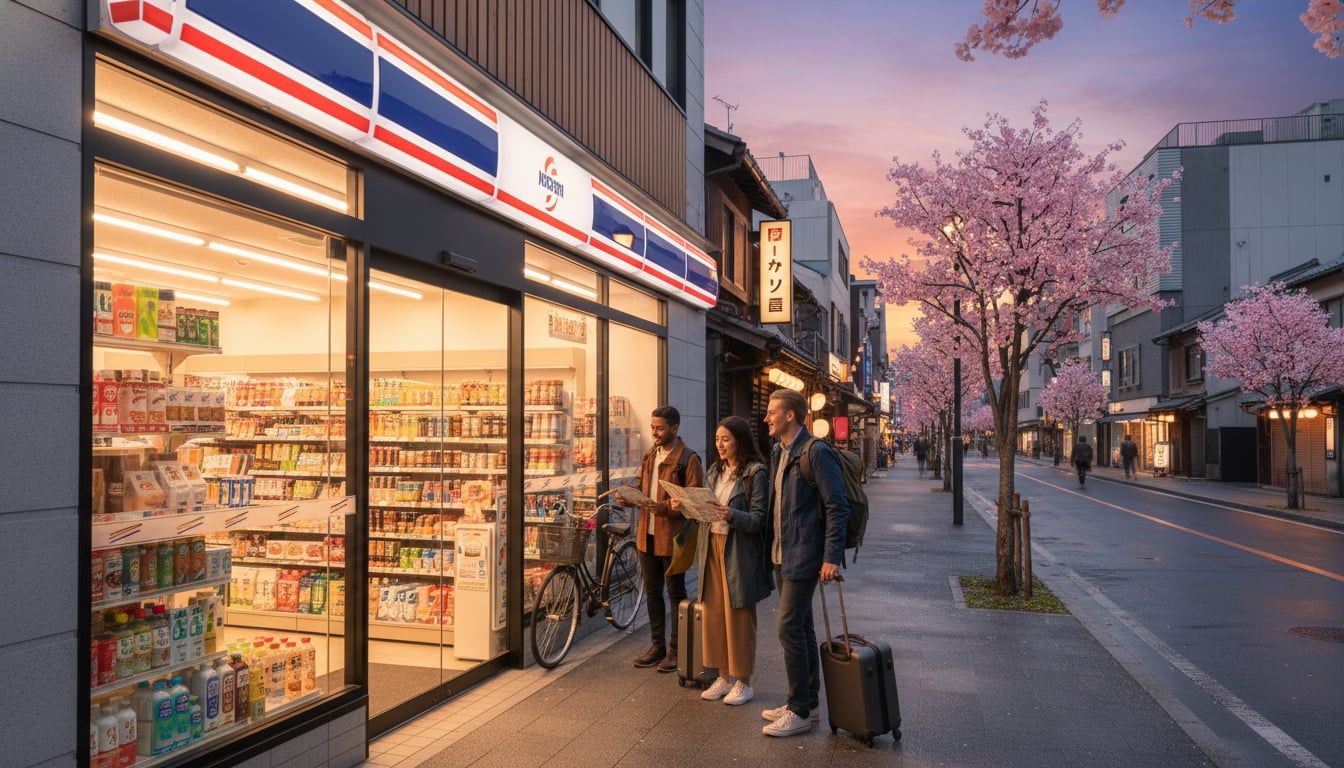
You will find at least one of these three within walking distance of virtually any hotel, station, or tourist attraction in Japan.
Why Konbini Are Different
The gap between a Japanese konbini and a convenience store in most other countries comes down to three things: food quality, service range, and reliability.
On food quality, the difference is stark. Onigiri in Japan are made fresh daily with carefully sourced ingredients. Sandwiches use soft, crustless milk bread and generous fillings. Even the pre-packaged salads taste fresh. The entire product lineup rotates constantly, with new items tested and launched on a monthly basis.
On service range, konbini in Japan function more like a combination of a small supermarket, a post office, a bank, a ticket booth, a copy shop, and a fast food counter — all compressed into a space the size of a large living room. If you need to pay a utility bill, ship a package, print a document, or buy a concert ticket at 3 a.m., konbini can do that.
On reliability, everything is held to a standard that would seem extraordinary elsewhere. The stores are spotlessly clean, the staff are trained to a consistent level, and the food safety standards are taken extremely seriously. You can eat from a konbini every day of your trip and feel completely confident about it.
Food: What to Try
Onigiri
Onigiri are rice balls wrapped in seaweed and filled with ingredients like tuna mayo, salmon, pickled plum (umeboshi), or seasoned cod roe (mentaiko). They are sold in a clever three-part wrapper that keeps the seaweed crisp until you are ready to eat — there is a satisfying ritual to peeling it correctly. Prices typically range from 120 to 200 yen. If you are new to konbini, start here.
Bento Boxes
The bento selection varies by store and time of day, but you can generally find hot and cold options. A standard bento might include rice, a main protein like teriyaki chicken or pork cutlet, and a small selection of sides. Most stores will heat your bento for free at the counter — just ask "atatamete kudasai" (温めてください).
Hot Food Counter
Near the register, you will find a heated display case holding items like fried chicken pieces (karaage), steamed pork buns (nikuman), corn dogs, and various fried snacks. These are sold individually and are cheap — usually 100 to 200 yen per item. Nikuman are especially good on cold days. 7-Eleven's nikuman has a particularly devoted fanbase.
Oden
From autumn through winter, a large pot of oden simmers near the register. Oden is a Japanese hot pot dish with items like daikon radish, fish cakes, boiled eggs, tofu pouches, and konnyaku (a firm, gelatinous ingredient) slowly cooked in a light dashi broth. You choose the items you want, they are ladled into a cup with some broth, and you pay by the piece — usually 80 to 150 yen each. It is warming, savory, and genuinely delicious.
Sandwiches
Japanese konbini sandwiches use shokupan — a pillowy, slightly sweet white bread — with the crusts removed. Common fillings include egg salad, tuna, BLT, and katsu (breaded pork). They are a reliable and affordable option any time of day.
Desserts and Sweets
This is where Lawson particularly shines. The Uchi Cafe line includes items like Baumkuchen (layered ring cakes), cream-filled eclairs, mochi-wrapped ice cream, and seasonal parfaits. FamilyMart's cream puffs (shukuriimu) are legendary among repeat visitors. Do not skip this section.
Frozen Foods
The frozen food aisle deserves more attention than it usually gets. Konbini frozen gyoza, fried rice, and udon are genuinely good — a step well above what that description might suggest. If you have access to a microwave (most hotel rooms in Japan have one), frozen konbini meals are a great late-night option.
Drinks
The drink section is a wall of options: hot and cold canned coffee, teas in every variation, sports drinks, vitamin drinks, beer, chu-hi (canned cocktails), milk, juice, and an enormous range of flavored waters. The hot drink section near the register — usually tea, coffee, and corn potage soup in winter — is worth exploring.
The real highlight, though, is konbini coffee.
Konbini Coffee
Every major chain now operates a self-serve coffee machine near the register. You pay at the register (usually 100 to 200 yen for a regular cup), receive a cup, and then make your drink at the machine. The coffee is freshly ground, properly brewed, and far better than the price suggests. FamilyMart Cafe and 7-Eleven's Seven Cafe are both excellent. On a cold morning in Japan, a 110-yen cup of fresh drip coffee from a konbini is one of life's simple pleasures.
ATMs
For international travelers, this is critical. 7-Eleven ATMs accept foreign-issued cards (Visa, Mastercard, Maestro, Cirrus, American Express, and others) and offer instructions in English, Chinese, Korean, and other languages. Transactions are available 24 hours a day. This is the most reliable ATM option for foreign cards in Japan, though some Lawson and Japan Post ATMs also work.
Always check whether your home bank charges foreign transaction or withdrawal fees. Having a small amount of cash on hand is still advisable in Japan, where many smaller restaurants and shops remain cash-only.
Services: More Than You Expect
Printing and Copying
Konbini multifunction machines (usually made by Sharp or Fujifilm) allow you to print documents from a USB drive, via a smartphone app, or directly from cloud storage. You can also scan documents and save them to a USB. Color and black-and-white printing are both available for 10 to 60 yen per page. If you need to print a travel document, museum ticket, or boarding pass, konbini have you covered at any hour.
Bill Payment
Utility bills, insurance premiums, tax payments, and online shopping invoices can all be paid in cash at the konbini register. This is a genuinely useful system that keeps konbini deeply embedded in everyday Japanese life, and it means the stores are always busy regardless of the hour.
Tickets
Through the in-store terminal machines (called Loppi at Lawson, Famiport at FamilyMart, and Multi Copy Machine at 7-Eleven), you can purchase tickets for concerts, sporting events, theme parks, and some regional attractions. Some stores also allow you to pick up pre-paid tickets or redemption codes.
Shipping
You can ship packages through Yamato Transport (kuroneko) or Japan Post at most konbini. This is useful if you have bought too much to carry and want to send items ahead to your hotel or to the airport for pickup before your flight.
Toilets
Most konbini have clean, free-to-use toilets. In Japan's larger cities, this is more useful than it sounds — public toilets in some areas are not always easy to find. The toilets in konbini are maintained to the same high standard as the rest of the store.
Payment Methods
Cash is always accepted. In Japan, cash remains king in many situations, and konbini are designed to handle it efficiently with exact-change machines built into most registers.
IC cards (like Suica or Pasmo, which are also used on trains) can be tapped to pay at all major konbini. This is the fastest and most convenient method if you already have a card loaded with yen. IC cards can be purchased and topped up at train station machines.
Credit and debit cards are accepted at most locations, and contactless payment (including Apple Pay and Google Pay linked to Suica or a compatible card) is increasingly common.
Seasonal and Limited Items
One of the quiet pleasures of konbini in Japan is the constant rotation of seasonal products. In spring, expect sakura-flavored everything — lattes, mochi, cookies, and more. Summer brings cold ramen, kakigori (shaved ice) variations, and hydration-focused drinks. Autumn is the season of sweet potato, chestnut, and pumpkin flavors. Winter centers on hot comfort foods and Christmas cakes.
Limited-edition collaborations with anime, games, or regional food brands also appear regularly. Checking what is new in a konbini is a small ritual that makes revisiting them throughout a trip genuinely enjoyable rather than repetitive.
A Few Tips for First-Timers
Point to what you want if you need something heated. Saying "atatamete kudasai" (温めてください) works, but pointing at the item and mimicking a microwave is universally understood and perfectly fine.
Pay attention to best-before dates on food. Freshness cycles are tight, and items near closing time at smaller stores may have only a few hours left. The dates are marked clearly in Japanese format (year/month/day).
Do not be surprised if the staff greet you loudly when you enter — "irasshaimase!" is a standard welcome phrase used in virtually every retail setting in Japan. You are not expected to respond.
Finally, take your time. A konbini visit in Japan is not a quick grab-and-go experience if you do not want it to be. Browse the drinks wall. Read the labels on the unfamiliar desserts. Try the hot counter. The unhurried exploration of a well-stocked konbini is one of the most distinctly Japanese travel experiences you will have, and it costs almost nothing.
Final Thoughts
Japanese convenience stores are one of the most accessible and genuinely impressive parts of traveling in Japan. They lower the barrier to navigating an unfamiliar country by being reliable, affordable, and open at all hours. Whether you are grabbing a quick onigiri between temples, printing a document you forgot at home, or discovering a limited-edition matcha dessert at midnight, konbini deliver without fail.
Make them part of your routine from your first day. You will not regret it.
Frequently Asked Questions
What are the major convenience store chains in Japan?
The three dominant konbini chains in Japan are 7-Eleven Japan, FamilyMart, and Lawson. These stores are ubiquitous, with at least one found within walking distance of most hotels, stations, or tourist attractions.
What kind of food should I try at a Japanese konbini?
Travelers should definitely try onigiri, bento boxes, hot food counter items like karaage or nikuman, and the seasonal oden. Don't forget to explore the dessert section, especially Lawson's Uchi Cafe series or FamilyMart's cream puffs.
Can I withdraw cash from a 7-Eleven ATM in Japan with a foreign card?
Yes, 7-Eleven ATMs are the most reliable option for international travelers as they accept foreign-issued cards like Visa, Mastercard, and American Express, and offer instructions in multiple languages. They are available 24 hours a day.
What unique services do Japanese convenience stores offer?
Beyond food, konbini offer a wide range of services including printing and copying documents from a USB drive or smartphone, and paying various utility bills or online shopping invoices. They function as a combination of a small supermarket, post office, bank, and ticket booth.