When to see sakura, where to go, and how to enjoy hanami like a local — your complete Japan cherry blossom guide.
There are few things in Japan that inspire as much collective excitement as cherry blossom season. Every year, from the southern islands all the way up to Hokkaido, the country pauses to appreciate sakura — the fleeting pink and white blooms that last only a week or two before drifting to the ground like snow. If you time it right, witnessing sakura in full bloom is one of the most memorable experiences Japan has to offer.
This guide covers everything you need to know: how the forecast system works, when blossoms peak across different regions, the best spots to see them, how to enjoy a proper hanami picnic, and practical tips to get the most out of your visit.
Understanding the Sakura Forecast System
Japan takes cherry blossom forecasting seriously. Each year, meteorological companies and TV stations publish detailed sakura zensen — cherry blossom front maps — that track the northward progression of blooms from late January through May.
Two key terms to know:
- Kaika (開花): The opening date, when a tree officially begins blooming. Meteorologists declare kaika when five to six flowers have opened on a benchmark tree monitored in each city.
- Mankai (満開): Full bloom, typically arriving seven to ten days after kaika. This is the peak viewing window most people are chasing.
After mankai, petals begin to fall — a stage called chiru or hanafubuki (flower blizzard) — which is beautiful in its own right but signals the end of the season. The full bloom period usually lasts about one week, though cool temperatures can extend it slightly.
When planning a trip, track forecasts from Japan Meteorological Corporation or Weather Map. Most forecasts become reliably accurate around early February, though they are refined weekly as the season approaches. Bookmarking a forecast site and checking it regularly in the weeks before you travel is the single most useful thing you can do.
Typical Timing by Region
Because Japan stretches across a wide range of latitudes, cherry blossom season unfolds over several months nationwide. Here is what to expect by region:
Okinawa — January to February The subtropical south blooms first, but the sakura here is a different variety — Kanhizakura, with deep pink tubular flowers rather than the classic pale variety. It is striking, though the mild Okinawan winter lacks the dramatic contrast of bare trees against cold blue skies.
Tokyo and the Kanto Region — Late March The capital typically reaches kaika in the third week of March, with mankai arriving before the end of the month or in the first days of April. This is one of the most visited sakura seasons in the world, so crowds at famous spots are inevitable.
Osaka and the Kansai Region — Early April Osaka tends to peak a few days later than Tokyo, usually in the first week of April. Kyoto follows a similar schedule. Early April is an excellent window if you prefer slightly smaller crowds than Tokyo.
Tohoku — Late April Sendai, Hirosaki, and other Tohoku cities see peak blooms in mid to late April. Hirosaki Castle Park in Aomori is consistently ranked among Japan's finest sakura locations, with over 2,500 trees and dramatic castle views.
Hokkaido — Early to Mid May Sapporo's famous Maruyama Park and Hokkaido University typically reach mankai in late April or early May. The late season means Hokkaido blooms while the rest of Japan has moved on, giving you a second chance if you missed the earlier window.
Best Viewing Spots in Osaka
Osaka is an underrated sakura destination. The city has several excellent parks and riverside promenades that feel far less frantic than Tokyo's most famous spots.
Osaka Castle Park The grounds surrounding Osaka Castle contain around 3,000 cherry trees. The combination of the restored castle tower and the blooming canopy overhead is genuinely impressive. The park is large enough that you can find a quieter corner even during peak season. The castle's moat reflects the blossoms on calm days.
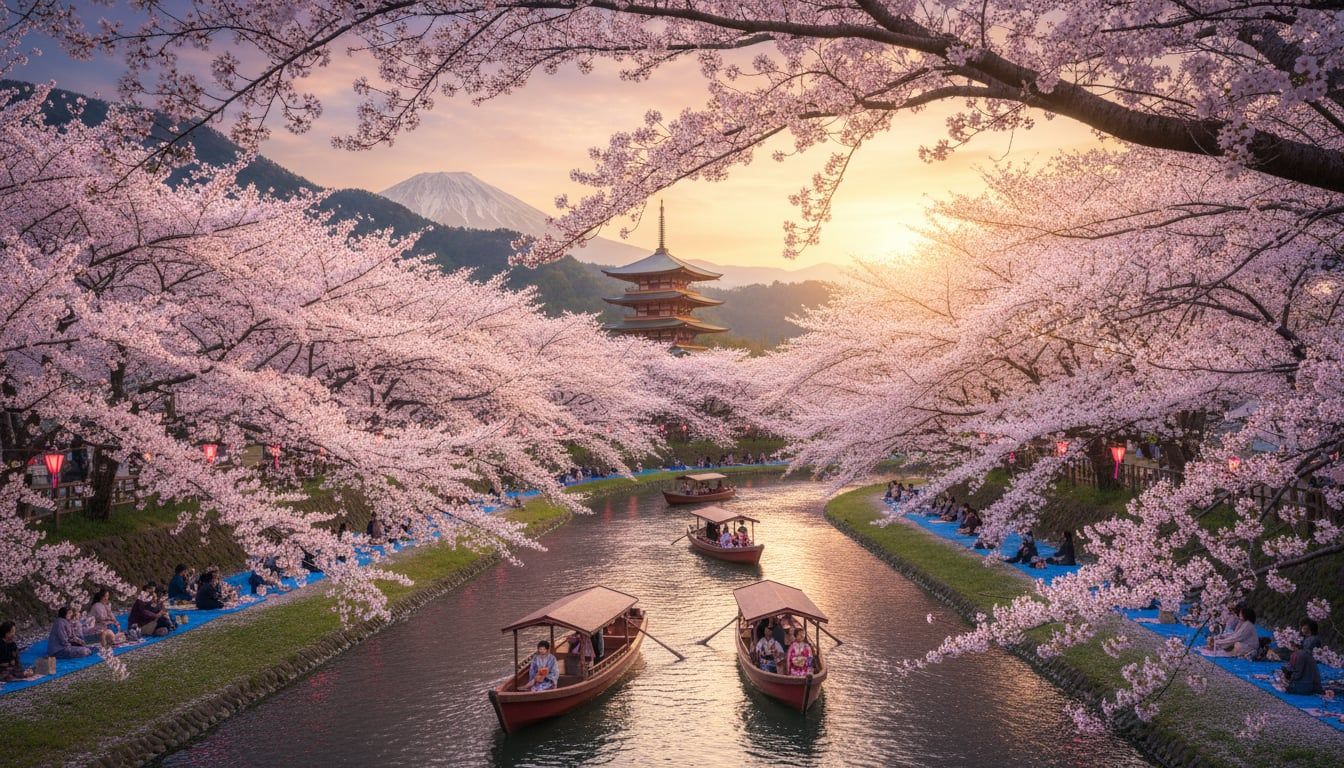
Kema Sakuranomiya Park This three-kilometer riverside park along the Okawa River is lined with roughly 4,700 sakura trees, making it one of the densest concentrations in western Japan. At peak bloom the entire path forms a tunnel of pink. Food stalls line the path during the season, and boat tours along the river offer a unique low-angle view of the overhanging branches. Accessible via Sakuranomiya Station on the JR Osaka Loop Line.
Expo Commemoration Park (Expo Park) Located in Suita, north of central Osaka, this vast park opened on the site of Expo '70. It holds over 5,000 cherry trees across multiple varieties, meaning the flowering period here extends slightly longer than single-variety spots. Less visited than the city center parks, it rewards visitors with space to spread out and enjoy a proper hanami picnic.
Best Viewing Spots in Tokyo
Tokyo has dozens of excellent locations, but these three offer a range of experiences.
Ueno Park With around 800 trees lining the central promenade, Ueno is the classic Tokyo hanami destination. It is busy — expect wall-to-wall blue tarps and office workers claiming spots from early morning — but the energy is festive and distinctly Japanese. Food stalls, beer vendors, and the occasional live performance make it an experience even for those who aren't chasing the blooms themselves.
Meguro River The narrow canal flanked by roughly 800 trees on both banks offers something different from park-based viewing. The low branches hang directly over the water, and at peak bloom the effect is extraordinary. Restaurants and cafes line the canal-side streets. It is best enjoyed on foot, walking the three or four kilometers between Nakameguro and Ikejiri-Ohashi. Arrive on a weekday and aim for late afternoon into evening.
Shinjuku Gyoen National Garden A formal garden combining Japanese, French, and English landscaping styles. Entry costs a few hundred yen, which keeps the crowds manageable. The garden holds over 1,000 trees across 65 varieties, so the blooming period extends across several weeks. Alcohol is prohibited inside, making it calmer and more family-friendly than Ueno. It is one of the few spots where you can sit quietly and simply look at the trees.
Hanami Culture: How to Enjoy It Like a Local
Hanami — flower viewing — is not just looking at trees. It is a social ritual with its own customs and etiquette that has been practiced in Japan for over a thousand years.
Claiming a Spot In popular parks, prime spots under the best trees are claimed early — sometimes the night before, often before 7 a.m. on weekends during peak bloom. It is common for one person from a group to arrive first and lay out a blue tarp (available at any home center or hardware store) while colleagues or friends come later. This is completely normal behavior and not considered rude.
What to Bring Bring a waterproof sheet or blue tarp, plenty of food and drinks, disposable chopsticks, wet wipes, trash bags (most parks have no trash cans), and extra layers. Even when daytime temperatures feel mild, evenings under the trees can be significantly colder. Comfortable shoes matter if you plan to walk between spots.
Conbini Food Convenience stores — 7-Eleven, FamilyMart, Lawson — are fully stocked for hanami season with bento sets, onigiri, karaage fried chicken, sushi platters, seasonal sakura-flavored snacks, and canned drinks. Putting together a conbini hanami spread costs a fraction of restaurant prices and tastes genuinely good. Many locals prefer this to cooking from scratch.
Drinks Beer is traditional, but non-alcoholic options are plentiful. Sakura-flavored canned drinks, hot tea from vending machines, and the ubiquitous Boss Coffee all make appearances. Convenience stores also stock sake in smaller bottles and canned chu-hi (shochu and soda) that are popular at outdoor gatherings.
Yozakura: Nighttime Illumination
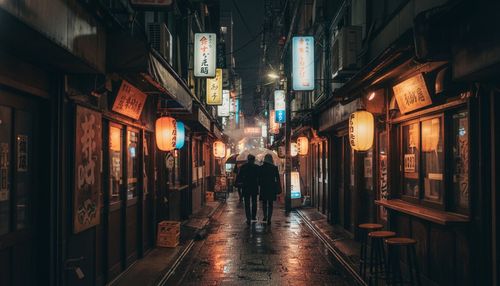
Yozakura — literally "night sakura" — refers to cherry blossoms viewed after dark, usually under artificial illumination. Many parks set up lights aimed upward into the canopy during peak bloom, turning the trees gold and pink against the night sky.
Meguro River is famous for its yozakura setup, with lanterns and LED lighting strung along the canal banks. Osaka Castle Park and Kema Sakuranomiya Park also put on evening illuminations. Ueno Park has light-up events most nights during the season.
Nighttime viewing has practical advantages: crowds are thinner than midday, the light creates a dreamlike quality, and the cool air keeps petals from dropping too quickly. Bring a warm jacket.
Practical Tips
Check Forecasts Regularly The bloom window is genuinely short. Check reliable forecast sites — Weather Map's sakura forecast is widely used — and watch for sudden warm spells or cold snaps that can accelerate or delay kaika. A warm February can push the season forward by a week.
Weekday Visits Famous spots on weekend afternoons during peak bloom are extraordinarily crowded. If your schedule allows, a Tuesday or Wednesday morning visit dramatically improves the experience.
Layers for Cool Evenings Late March and early April evenings can drop to single-digit Celsius temperatures, especially in northern Japan. Pack a windproof layer even if the daytime forecast looks warm.
Book Accommodation Early Hotels and guesthouses near famous viewing spots fill months in advance. If you are traveling during peak season, lock in your accommodation as early as possible — ideally before forecasts are even published.
Allow for Flexibility The sakura do not wait. If you arrive and blooms have already peaked, adjust your route and head north or to higher elevations where trees bloom later. Flexibility is the most valuable tool you have during cherry blossom season.
Cherry blossom season is ephemeral by nature, and that is precisely why it matters so much. The Japanese concept of mono no aware — a gentle awareness of impermanence — is woven into hanami. The blossoms are beautiful partly because they will not last. Going in with that mindset, rather than anxiously chasing the perfect bloom, tends to make the experience far more enjoyable.
Frequently Asked Questions
When is cherry blossom season in Japan?
Cherry blossom season in Japan typically runs from late January in the southern islands up to May in Hokkaido, with peak blooms varying significantly by region. The exact timing depends on the specific location and the annual sakura forecast.
How does Japan's cherry blossom forecast system work?
Japan uses a detailed "sakura zensen" (cherry blossom front) map, tracking "kaika" (opening date) and "mankai" (full bloom), which typically arrives 7-10 days after kaika. Forecasts become reliable around early February and are refined weekly.
When do cherry blossoms typically bloom in major Japanese cities?
Tokyo and the Kanto region typically see peak blooms in late March, while Osaka and Kansai peak in early April. Tohoku blooms in late April, and Hokkaido experiences its season from early to mid-May.
What is hanami and how can I enjoy it like a local?
Hanami is a traditional Japanese social ritual of flower viewing, often involving picnics under the cherry trees. To enjoy it like a local, bring a tarp, food, drinks (often from convenience stores), and trash bags, and be prepared to claim a spot early in popular parks.
Where are some of the best places to see cherry blossoms in Tokyo?
In Tokyo, popular viewing spots include Ueno Park for a classic festive atmosphere, Meguro River for stunning blossoms over water, and Shinjuku Gyoen National Garden for a calmer, more varied experience.
What are some recommended cherry blossom viewing spots in Osaka?
Osaka offers excellent spots like Osaka Castle Park for historical views, Kema Sakuranomiya Park for a dense riverside blossom tunnel, and Expo Commemoration Park for more space and variety.