Step into Shinsekai, Osaka's gloriously retro district of neon, kushikatsu, and old-school charm just minutes from Tennoji.
There are parts of Osaka that feel polished for tourists, and then there is Shinsekai. Wedged between the zoo and the old working-class neighborhoods south of Tennoji, this compact district operates on its own terms. The neon is brighter here, the food is cheaper, the locals are louder, and the whole place carries the honest, unvarnished energy of a city that never forgot where it came from. If you want a single hour that captures what makes Osaka different from every other Japanese city, Shinsekai is where you go.
A Brief History: Two Cities in One Design
Shinsekai translates literally as "New World," and when it opened in 1912, that name felt appropriate. The district was designed as an ambitious entertainment complex split into two halves, each modeled after a different world city. The northern half took its inspiration from New York, laid out in a rational grid. The southern half borrowed from Paris, with boulevards radiating outward from a central tower. That tower, Tsutenkaku, was meant to signal that Osaka had arrived on the world stage.
The grand ambitions did not survive intact. The original Tsutenkaku was demolished during World War II for scrap metal. The postwar years were lean, and Shinsekai's reputation shifted. The area became associated with day laborers, cheap entertainment, and rough edges that the rest of Osaka preferred not to advertise. During certain decades it carried a reputation that kept casual visitors away.
What happened next is a story worth understanding. Rather than being demolished or gentrified into something unrecognizable, Shinsekai simply persisted. The shopkeepers kept their signs. The restaurants kept their prices low. The game arcades kept running. A second Tsutenkaku Tower was built in 1956 and became the neighborhood's anchor. By the time tourism to Japan accelerated in the 2010s, Shinsekai had stumbled into something valuable: authentic retro atmosphere that cannot be manufactured. It had survived by accident into becoming exactly what visitors were looking for.
What to See
Tsutenkaku Tower
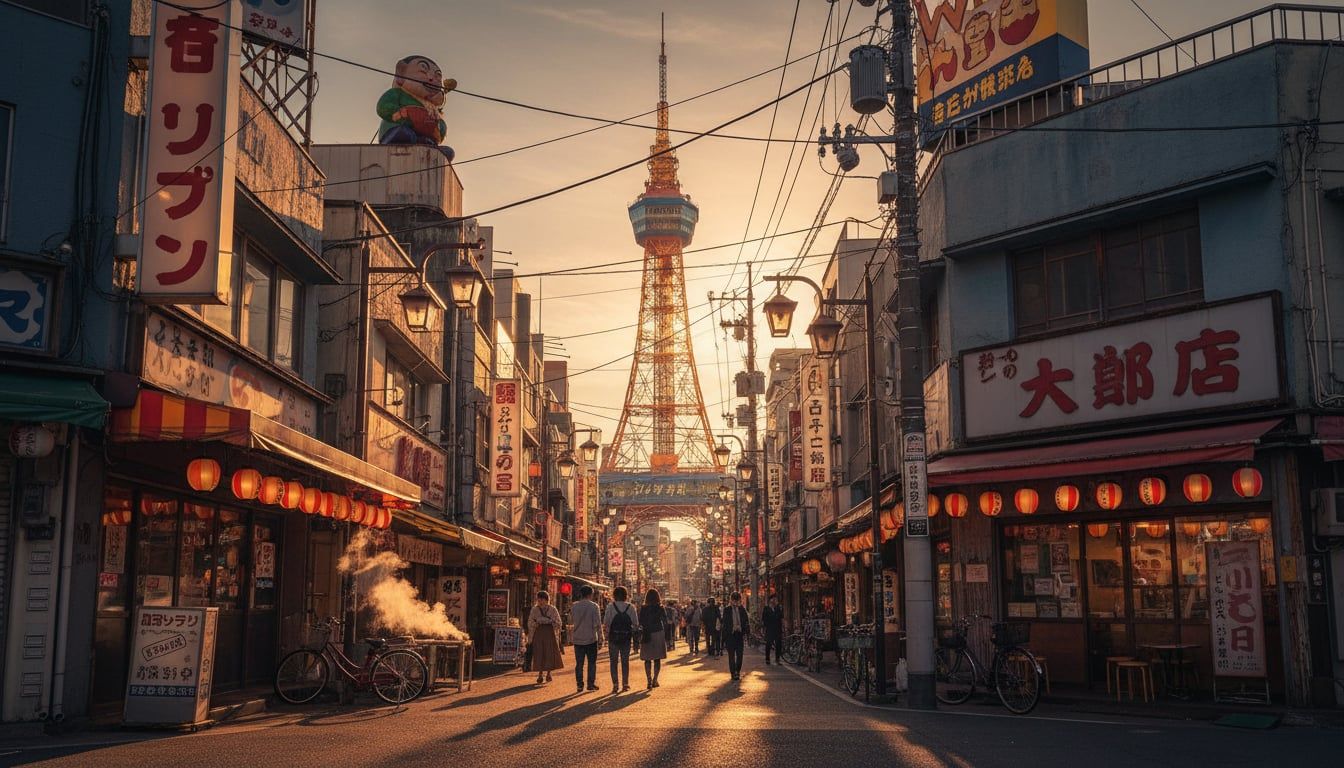
The tower is the neighborhood's symbol and its most recognizable landmark. At 108 meters, it is not tall by modern standards, but it dominates the Shinsekai skyline because nothing around it is particularly tall either. The observation deck offers views across the southern part of Osaka, including Tennoji Park and the Abeno Harukas skyscraper rising to the northeast.
Inside the tower you will find exhibits about Shinsekai's history and a shrine to Billiken, the peculiar grinning deity imported from American folk art in the early twentieth century and adopted as Tsutenkaku's resident luck god. The custom is to rub the soles of Billiken's feet to receive good fortune. The figure looks somewhere between impish and serene, which feels right for a neighborhood that has seen better days and worse days and come out the other side still standing.
Entrance to the observation deck costs 1,000 yen for adults. There is also a transparent floor section for those who want to look straight down at the street below.
Jan Jan Yokocho
Running south from the base of Tsutenkaku, this covered arcade is about 180 meters of dense, low-ceilinged commerce. The name comes from the sound of shamisen strings, which used to echo through here from the many entertainment venues. Today the arcade holds kushikatsu restaurants, pachinko parlors, game centers, mahjong clubs, and shops selling everything from plastic toys to tobacco pipes. It feels genuinely lived-in, because it is.
Walk slowly. The architecture rewards attention: hand-painted signs, layered decades of signage competing for wall space, the occasional cat sleeping in a doorway. This is not a preserved historic district. It is simply a place that has not been cleared out yet.
Spa World
At the southern end of Shinsekai sits Spa World, a large public bathhouse complex spanning multiple floors. The facility divides its bathing zones by world region, rotating access between men and women. Zones include Roman baths, Finnish saunas, and Japanese-style soaking pools. There is also a water park section and overnight accommodation.
Admission is around 1,200 yen for the basic bathing areas, with surcharges for the water park. It is a good option if you want to combine a long soak with the Shinsekai experience, particularly if you are visiting in the evening.
Retro Arcades and Street Life
Shinsekai has a density of old-school game arcades that have largely disappeared from other Japanese cities. The machines lean toward crane games, medal games, and classic titles rather than the rhythm games and VR installations you find in larger venues. Several arcades are open until late and attract a mix of elderly regulars and curious younger visitors.
The street life itself is part of the experience. Shinsekai is one of the few places in Osaka where you are likely to see locals playing shogi in the open air, older residents settled into folding chairs outside their shops, and the general unhurried pace of a neighborhood that has no interest in performing for an audience.
The Food: Kushikatsu Above All Else
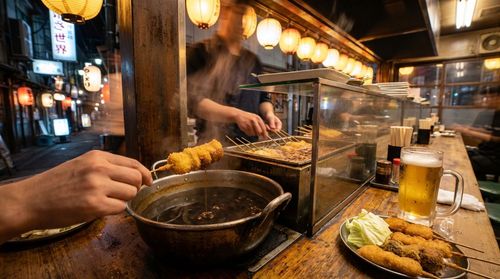
Kushikatsu is Shinsekai's signature dish, and the neighborhood's claim on it is strong enough that many Osaka residents treat the two as inseparable. The dish is simple: bite-sized ingredients skewered on bamboo sticks, battered in panko breadcrumbs, and deep-fried until golden. The ingredients range from pork and beef to onion, lotus root, cheese, shrimp, quail eggs, and seasonal vegetables.
The critical rule, posted prominently in every kushikatsu restaurant in Shinsekai, is that you do not double-dip into the shared sauce. Take a skewer, dip once, eat. If you want more sauce, use a piece of cabbage to scoop it. This is not a suggestion.
Daruma is the most famous kushikatsu restaurant in the district, with multiple locations around Tsutenkaku. The original branch is easy to spot by the large Daruma doll figure outside. Prices run around 100 to 200 yen per skewer, and a full meal of ten or twelve skewers with a beer is one of the most affordable satisfying meals you will find in any Japanese city. Expect a queue at peak times, though it moves quickly.
Beyond Daruma, nearly every restaurant along Jan Jan Yokocho and the surrounding streets serves some variation of kushikatsu. Quality is generally consistent. The differences are in atmosphere and specialties. Some places emphasize their sauce recipe. Others have longer menus that stretch into yakitori and offal dishes. If you see a set course advertised, it is usually good value.
Outside of kushikatsu, Shinsekai has takoyaki stalls, ramen shops of the old thick-broth Osaka style, and several bars that open in the afternoon and run until midnight. The food culture here is unpretentious in a way that feels almost confrontational after the carefully curated menus of Namba or the Umeda hotel district.
When to Visit
Evening is the right time for Shinsekai. The neon signs that plaster every surface become something genuinely spectacular after dark, a dense, overlapping grid of light advertising restaurants, pachinko halls, and businesses in kanji large enough to read from the far end of the street. The district feels alive at night in a way that daytime cannot fully replicate.
That said, daytime visits have their own character. The morning is quiet, the shopkeepers are setting up, and you can walk through Jan Jan Yokocho without the weekend crowds. If you are visiting on a weekday, late afternoon into evening gives you both the relaxed pace and the neon payoff.
Weekends bring more visitors than weekdays. The district handles the volume reasonably well because it is compact and the crowds tend to cluster around Tsutenkaku rather than spreading evenly. If crowds bother you, a Tuesday or Wednesday evening is ideal.
Getting There
Shinsekai sits about ten minutes on foot from Tennoji Station, which is served by the JR Loop Line, the Osaka Metro Midosuji Line, and the Tanimachi Line. From Tennoji, walk north through the shopping arcade alongside Tennoji Park and follow the signs toward Tsutenkaku.
The closer station is Dobutsuen-mae on the Midosuji and Sakaisuji Lines, which puts you at the edge of Shinsekai within two minutes of the exit. Take Exit 3 or 5 and you will emerge at the foot of Jan Jan Yokocho.
If you are staying in the Tennoji area, Shinsekai is genuinely within walking distance and easy to combine with an evening visit to Tennoji Park or the Abeno Harukas observation deck.
A Note on Atmosphere
Shinsekai has a reputation in some travel writing as rough or unsafe. This reputation is outdated. The area is perfectly safe to walk at any hour, including late at night. It is, however, different in character from the tourist-optimized zones of Namba and Dotonbori. The locals here are not primarily engaged in performing Osaka for outsiders. They live and work here, and the district's energy reflects that.
If you find the atmosphere confrontational or too far outside your comfort zone, that is a reasonable response. But the more likely experience is that the lack of tourist polish feels refreshing. Shinsekai asks nothing of you except that you show up, eat something fried on a stick, and look at the lights.
That is an easy request to fulfill.
Combining Shinsekai with Tennoji
Shinsekai and Tennoji are natural companions for a half-day or evening itinerary. Start at Tennoji Station, walk through Tennoji Park, visit Shitenno-ji Temple if the gates are still open, then continue north into Shinsekai for kushikatsu and the Tsutenkaku lights. The two neighborhoods together give you a fuller picture of this corner of Osaka than either delivers alone.
The Tennoji area has accommodation ranging from budget hostels to the high-rise hotels around the station. Staying here rather than in Namba puts you closer to both Shinsekai and Osaka's southern neighborhoods, which are among the most interesting and least crowded parts of the city.
Frequently Asked Questions
What is Shinsekai known for?
Shinsekai is an entertainment district in Osaka known for its retro atmosphere, vibrant neon signs, and unvarnished local energy. It offers a glimpse into Osaka's past with its unique blend of old-school charm and lively street life.
What is Tsutenkaku Tower?
Tsutenkaku Tower is Shinsekai's iconic 108-meter landmark, offering observation deck views across southern Osaka. Inside, visitors can find exhibits on the district's history and a shrine to Billiken, the neighborhood's resident luck god.
What food should I try in Shinsekai?
Shinsekai's signature dish is kushikatsu, which consists of bite-sized ingredients skewered, battered in panko breadcrumbs, and deep-fried. Remember the critical rule: do not double-dip into the shared sauce.
When is the best time to visit Shinsekai?
Evening is generally considered the best time to visit Shinsekai, as the dense, overlapping neon signs create a spectacular and lively atmosphere after dark. Weekday evenings offer a good balance of relaxed pace and vibrant street life.
What is Jan Jan Yokocho?
Jan Jan Yokocho is a covered arcade running south from Tsutenkaku, filled with kushikatsu restaurants, pachinko parlors, game centers, and shops. It offers a genuinely lived-in experience with its hand-painted signs and decades of layered signage.
Staying in Tennoji?
If you're planning to explore Tennoji, these neighborhood stays let you experience the area like a local.
Explore the Tennoji Area Guide
Discover more things to do, local food spots, and insider tips for Tennoji.