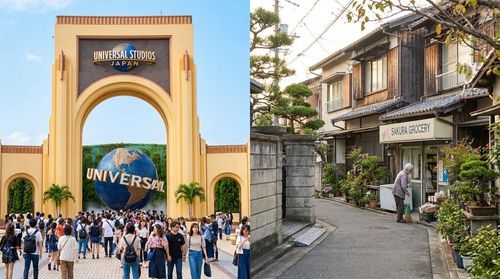
Everyone visits Konohana for Universal Studios. Almost nobody explores what's behind it — Hundertwasser architecture, waterfront sunsets, and shotengai that time forgot.
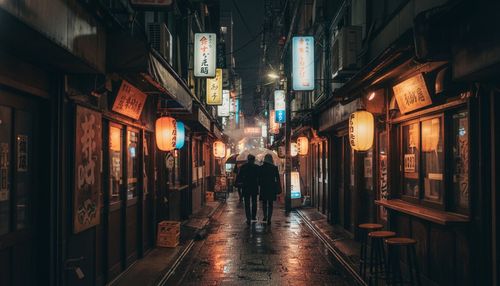
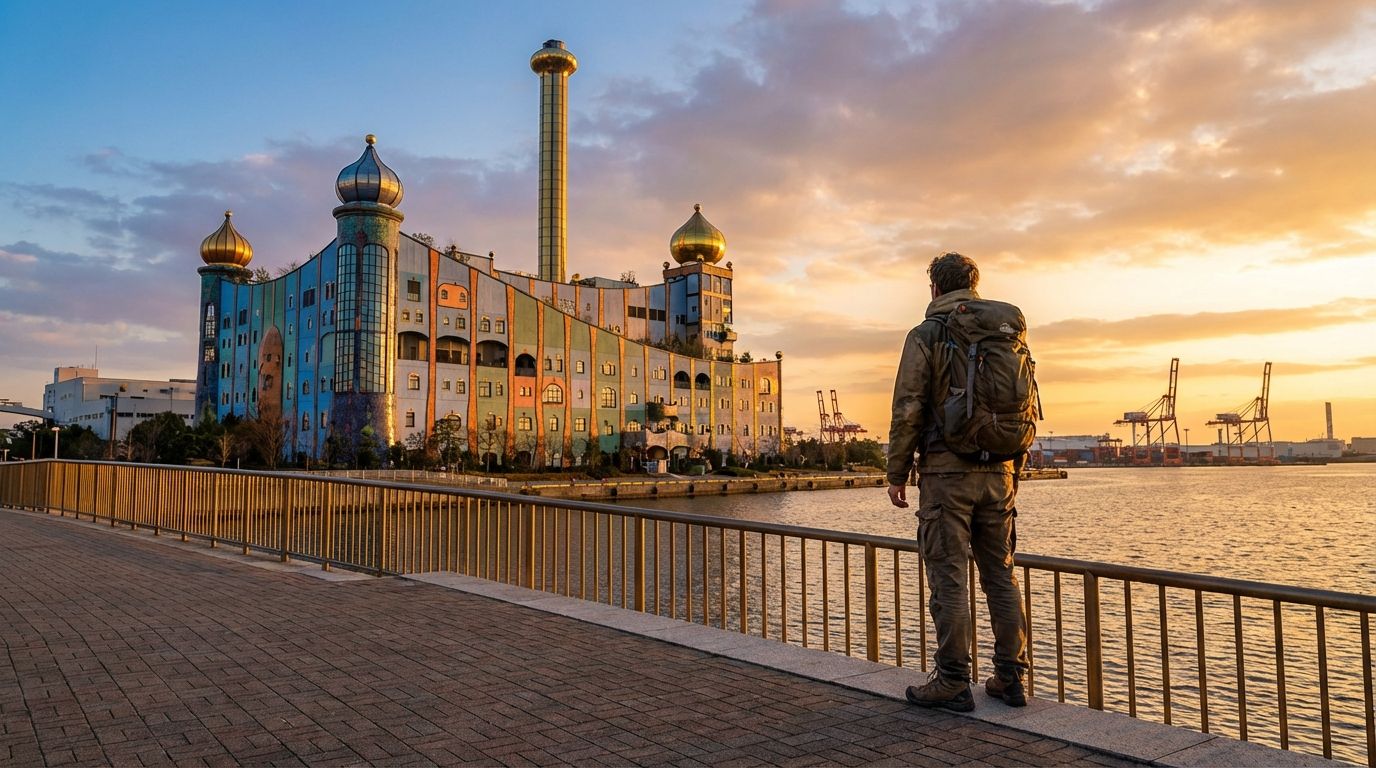 Image for illustrative purposes only.
Every year, millions of people pass through Konohana ward on their way to Universal Studios Japan. They ride the JR Yumesaki Line from Nishikujo, get off at Universal City Station, spend the day screaming on roller coasters, and ride back. They never see anything else.
That's a shame. Because behind the theme park gates, Konohana is hiding some of the strangest, most beautiful, and most genuinely local corners of Osaka — a Hundertwasser-designed garbage factory that looks like it belongs in a fairy tale, a waterfront where the sunsets rank among Japan's official best, and shotengai (covered shopping streets) where grandmothers have been buying tofu from the same shop for forty years.
This is the Konohana that nobody writes about. Let's fix that.
The World's Most Beautiful Garbage Factory
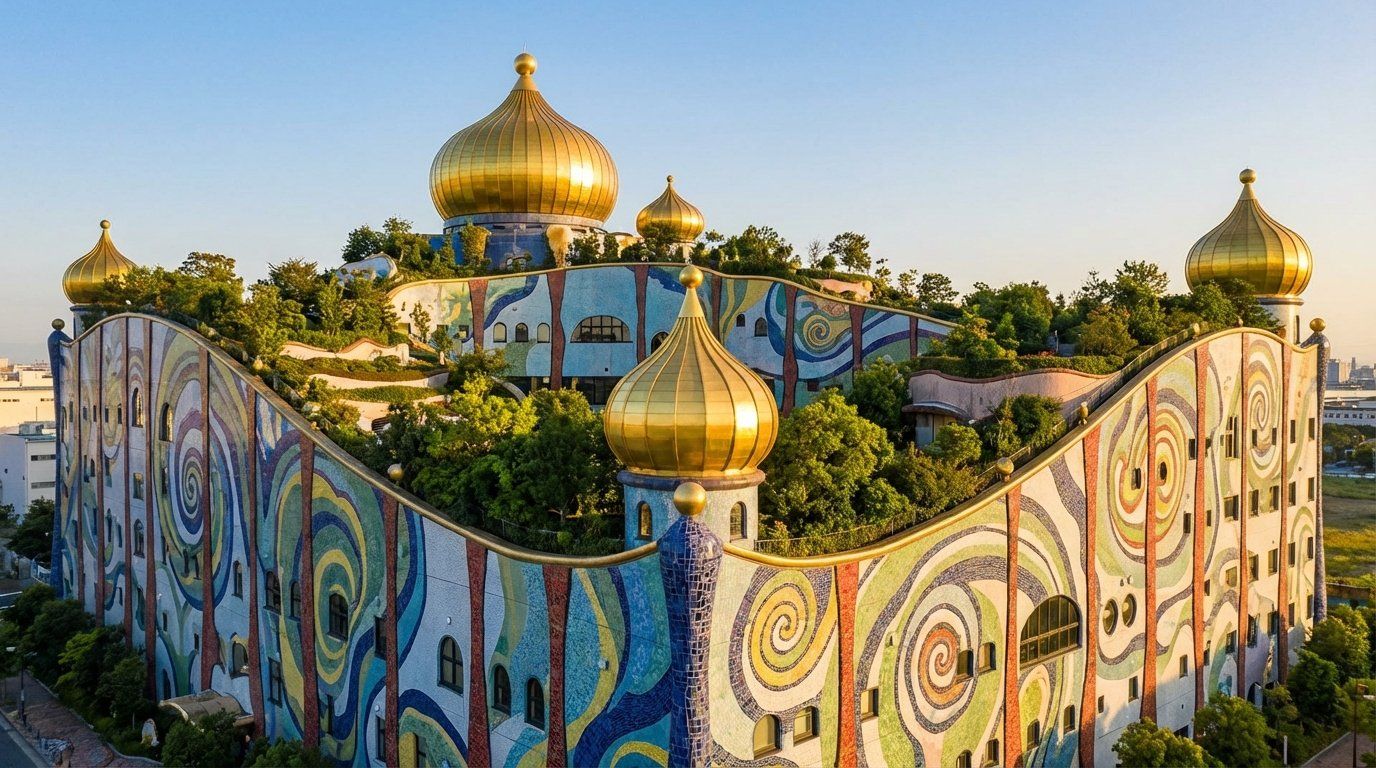 Image for illustrative purposes only.
Okay, we need to talk about the garbage factory.
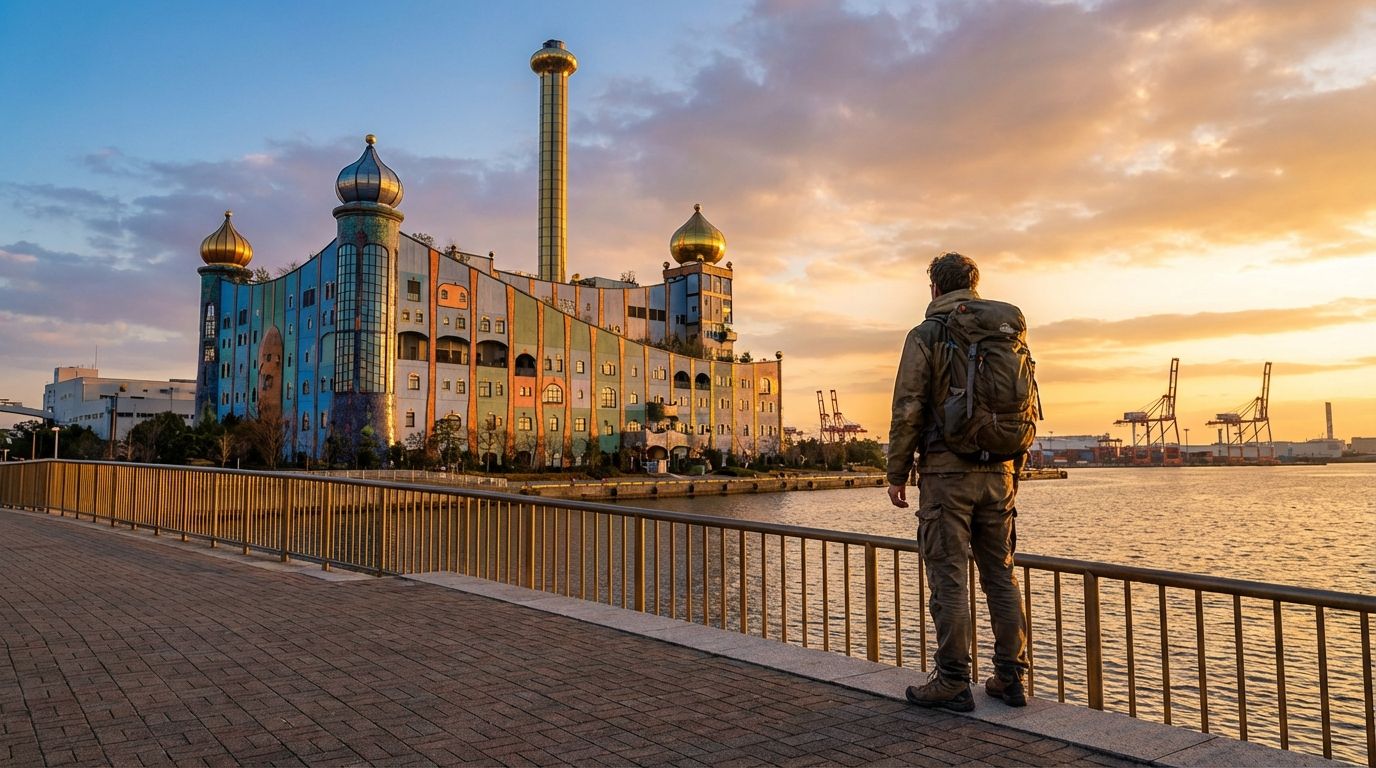
The Maishima Incineration Plant (舞洲工場) is a fully operational waste processing facility. It burns Osaka's garbage every day. And it is, without exaggeration, one of the most extraordinary buildings in Japan.
Designed by Austrian artist Friedensreich Hundertwasser — the same visionary behind Vienna's famous Hundertwasserhaus — the plant was completed in 2001. Hundertwasser believed that industrial buildings could coexist beautifully with nature, and the result is a structure covered in swirling colors, golden onion domes, and rooftop gardens. There is not a single straight line in the entire building. Step inside and you won't catch even a hint of what's being processed — the filtration systems are that good.
The interior is equally fascinating. Free guided tours (90 minutes, in Japanese) take you through the entire waste processing operation — from the massive crane that grabs tons of garbage at once to the control room monitoring emissions. It's educational, surreal, and strangely moving.
A few hundred meters away stands its sister building, the Maishima Sludge Center (舞洲スラッジセンター), also designed by Hundertwasser. Together, they form a pair of architectural wonders that most Osaka visitors never hear about.
Visiting details: Free tours available Monday-Saturday at 10:00, 13:00, and 15:00. Reservations required at least 10 days in advance via the facility's website. Tours are in Japanese — non-Japanese speakers will need to arrange an interpreter or go with a Japanese-speaking friend.
Maishima Waterfront: Osaka Bay Sunset Spot
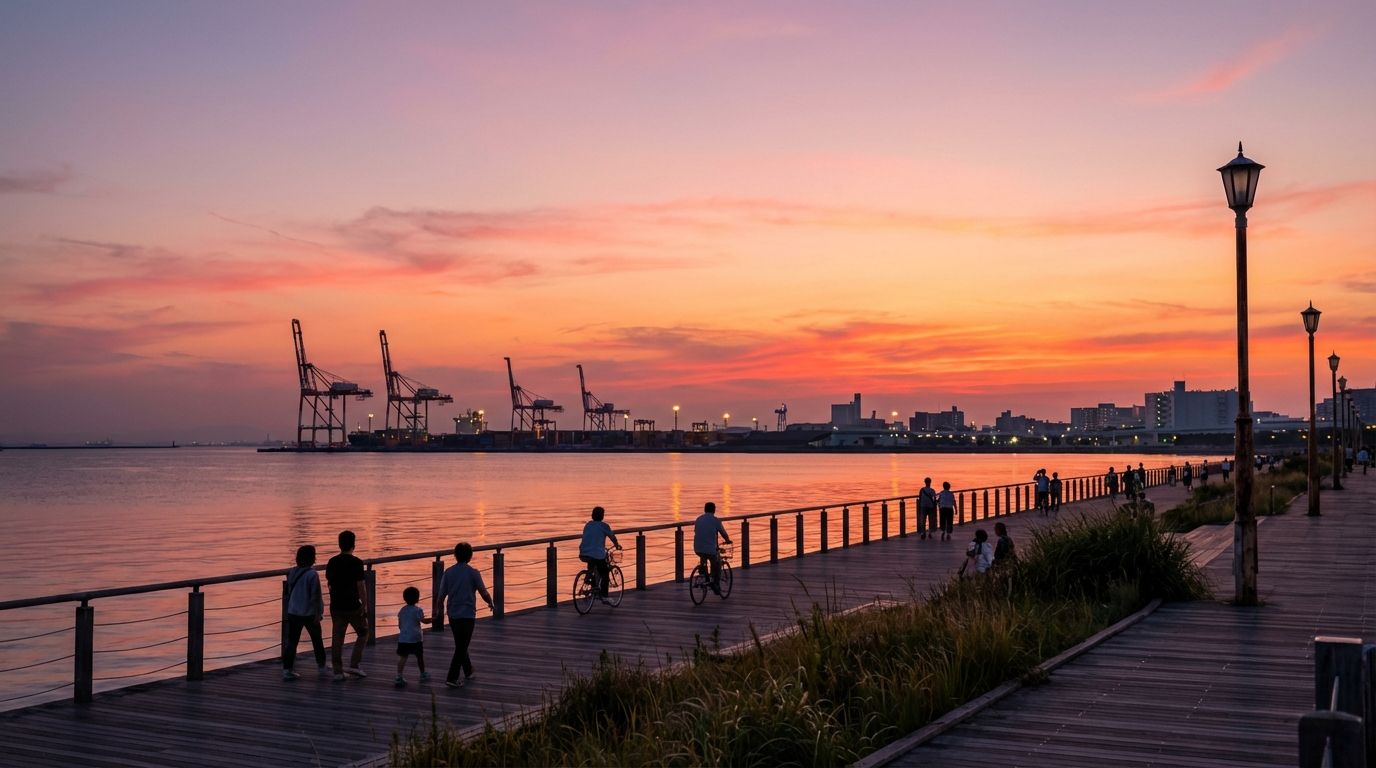 Image for illustrative purposes only.
The eastern shore of Maishima faces Osaka Bay, and the sunsets here are officially recognized as among Japan's 100 best (夕日100選). That's not marketing — it's a designation from the national 100 Best Sunsets list, and standing here as the sky turns amber over the water, you'll understand why.
The Maishima Greenway (舞洲緑地) runs about a kilometer along the waterfront. It's a simple walking and cycling path with artificial rock pools where you can spot small sea creatures at low tide. The wind carries the salt tang of the bay, and the only sounds are waves lapping against the rocks and the occasional cry of a seagull.
On weekends, you'll find local families fishing, couples walking dogs, and elderly men staring at the horizon with the quiet satisfaction of people who know they've found the right spot. It's the opposite of everything USJ represents — free, quiet, and unhurried.
How to get there: From JR Sakurajima Station, take the Maishima Active Bus to the Maishima area (about 10 minutes). Alternatively, it's a 30-40 minute walk from USJ through the Maishima Bridge — an interesting walk past port facilities, but only recommended during daylight.
Palm Garden Maishima: Urban Glamping on Osaka Bay
For those who want to extend their Maishima experience, Palm Garden Maishima (パームガーデン舞洲) offers glamping and BBQ facilities on the island. It's the only glamping site within Osaka city limits that allows pets — a rarity in Japan.
The facility provides "empty-handed BBQ" packages (手ぶらBBQ) where everything from equipment to ingredients is provided. Weekend visitors can use a free shuttle bus from the nearest train station.
It's not wilderness camping — this is a manicured, urban-resort-style experience. But sleeping on an island in Osaka Bay, waking up to waterfront views, and grilling breakfast while the morning mist clears over the water is a memory you won't find on any standard Osaka itinerary.
Konohana's Hidden Shotengai: Old Osaka at Its Best
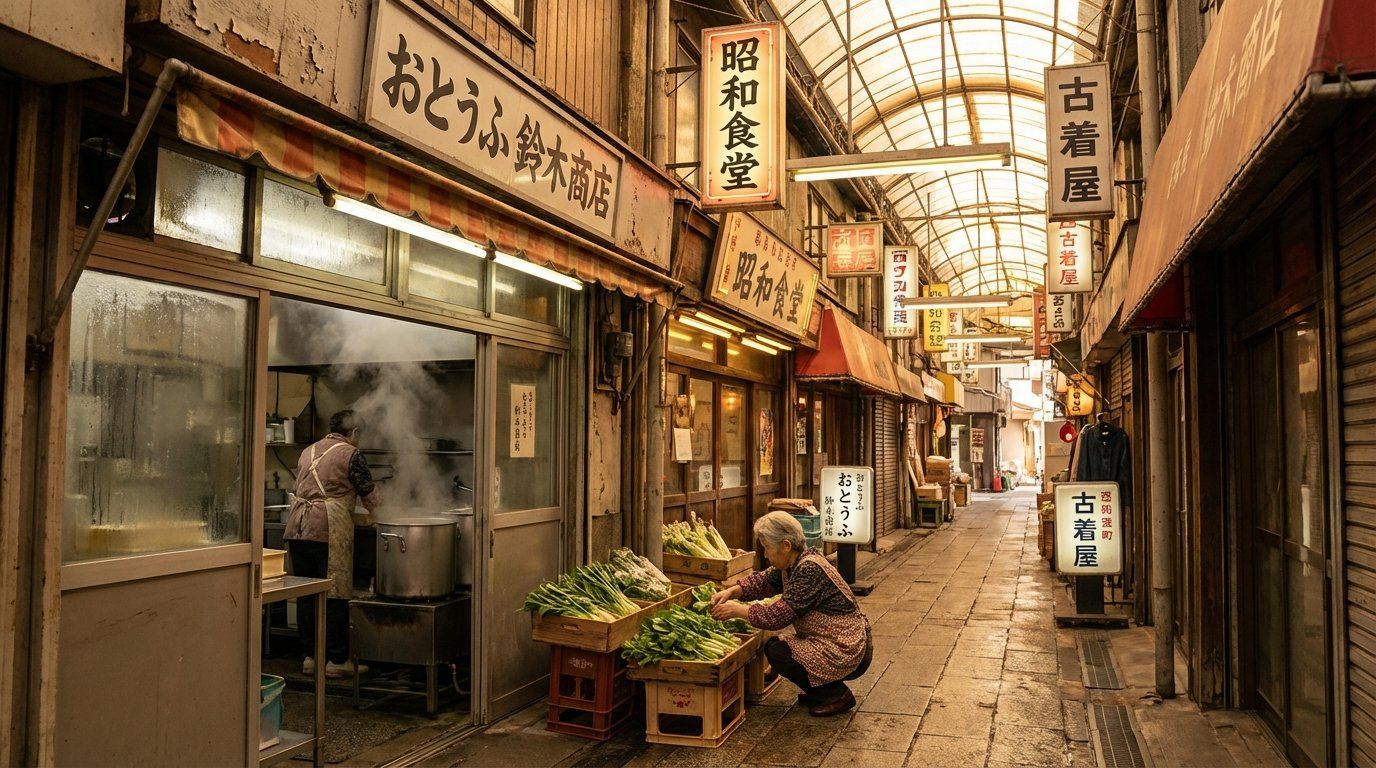 Image for illustrative purposes only.
Back on the mainland, Konohana has something that no amount of theme park engineering can replicate: real shotengai — covered shopping streets where daily life unfolds in slow motion.
The streets around Nishikujo Station — one stop before Universal City on the JR Yumesaki Line — are quintessential Osaka shitamachi (下町, old downtown). Small tofu shops with steam curling from behind the counter. Rice crackers wrapped in newspaper. Fish sellers shouting prices. A yakitori stand filling the air with the sweet-savory smoke of charcoal-grilled chicken, the sizzle audible from half a block away.
These shotengai aren't in any guidebook. They don't have Instagram accounts. They exist because the neighborhood needs them — and they've been here since long before anyone imagined building a theme park on the reclaimed land next door.
Walk slowly. Buy some croquettes (コロッケ, korokke) from the butcher shop — they'll be around ¥80-100 and better than anything you'll find in a tourist zone. Grab a can of coffee from the vending machine. Sit on the bench near the shrine. Let the neighborhood happen around you.
If you enjoy exploring Osaka's street food culture beyond the tourist hotspots, our guide to Osaka's best street food covers more of these hidden local favorites.
And if you want to go deeper into the local rhythm, look for one of Konohana's remaining sento (銭湯, public bathhouses). These Showa-era neighborhood baths are increasingly rare across Osaka, but a few still operate here — a hot soak after a day of walking costs just a few hundred yen and comes with a side of quiet community life.
What Most Tourists Don't Know
The two Hundertwasser buildings are separate facilities. The Incineration Plant and the Sludge Center are a few hundred meters apart. Most visitors only know about one. Visit both — the Sludge Center has an equally wild exterior and is visible from the road even without entering.
Nishikujo is the real hub. Forget Universal City Station — Nishikujo is where Konohana's actual life happens. It's the transfer point between JR and Hanshin railways, surrounded by local restaurants, izakayas, and kissaten (old-school Japanese coffee shops). Come here for dinner after your Maishima day trip.
Maishima is an artificial island. The entire island was created from reclaimed land in Osaka Bay. This context makes the Hundertwasser buildings even more interesting — they transformed what could have been a purely industrial landscape into something artistic.
The bus schedule is limited. Maishima Active Bus runs infrequently, especially on weekdays. Check the timetable before you go or you could end up stranded for an hour. Weekend shuttle buses from Palm Garden are more reliable but only serve specific routes.
Cycling is the best way to explore. If you can rent a bicycle (available from some hotels and hostels near Nishikujo), Maishima and the waterfront areas are perfectly flat and easy to cycle. The distances are too far for comfortable walking but perfect for a casual bike ride.
Frequently Asked Questions
What is there to do near USJ besides the theme park? Konohana ward, the neighborhood surrounding USJ, offers the Hundertwasser-designed Maishima Incineration Plant (free tours), waterfront sunset walks along Osaka Bay, glamping at Palm Garden Maishima, and authentic shotengai shopping streets around Nishikujo Station.
Can you visit the Maishima garbage factory? Yes. The Maishima Incineration Plant offers free 90-minute guided tours Monday through Saturday at 10:00, 13:00, and 15:00. You must reserve at least 10 days in advance through the facility's website. Tours are conducted in Japanese.
How do I get from USJ to Maishima? From JR Sakurajima Station (one stop past Universal City), take the Maishima Active Bus (about 10 minutes). You can also walk from USJ via the Maishima Bridge in 30-40 minutes — a scenic route best done during daylight hours.
Is Konohana worth visiting without going to USJ? Absolutely. A half-day exploring the Hundertwasser architecture, waterfront, and Nishikujo shotengai is a rewarding experience on its own — and a completely different side of Osaka that most visitors never discover.
Practical Information
Access to Konohana / Maishima
| Route | Details | Time | Cost |
|---|---|---|---|
| From Umeda/Osaka | JR Loop Line to Nishikujo, then JR Yumesaki Line | 15 min | ¥180 |
| From Namba | Hanshin Line to Nishikujo, then JR Yumesaki Line | 15 min | ¥250 |
| From Tennoji | JR Loop Line to Nishikujo | 25 min | ¥220 |
| USJ to Maishima | Walk via Maishima Bridge or bus from Sakurajima Stn | 10-40 min | Free-¥210 |
If you're coming from Tennoji or heading to Umeda afterward, Nishikujo is a convenient transfer hub on the JR Loop Line.
Key Spots
| Spot | Details | Cost | Notes |
|---|---|---|---|
| Maishima Incineration Plant | Mon-Sat, 10:00/13:00/15:00 | Free | Reserve 10 days ahead |
| Maishima Sludge Center | Exterior viewable anytime | Free | Interior tours limited |
| Maishima Greenway | Open 24 hours | Free | Best at sunset |
| Palm Garden Maishima | Check website for availability | ¥3,500~/person (BBQ) | Shuttle bus on weekends |
| Nishikujo shotengai | Daytime hours | Free to browse | Best lunch spot |
Wrapping Up
There's a version of Konohana that exists entirely in the shadow of Universal Studios Japan. And then there's the real Konohana — the one with Hundertwasser's impossible architecture, sunset views that made Japan's official top 100, and shotengai where the rhythm of daily Osaka life hasn't changed in decades.
Most visitors to Osaka pass through this neighborhood without ever knowing what they're missing. A half-day detour — or better yet, an overnight stay — reveals a side of the city that no theme park can replicate: the quiet beauty of a place that doesn't need to perform for tourists.
Konohana's unique blend of waterfront scenery, architectural wonder, and authentic local character makes it a compelling base for exploring this side of Osaka Bay — whether you're visiting USJ, discovering Maishima, or simply looking for a neighborhood that feels genuinely lived-in.
Pair this with our USJ Area Hidden Food Gems for the best local restaurants near Universal Studios, or plan a complete trip with the USJ + Local Experience 3-Day Plan.
Staying in Konohana?
If you're planning to explore Konohana, these neighborhood stays let you experience the area like a local.
Explore the Konohana Area Guide
Discover more things to do, local food spots, and insider tips for Konohana.
Spots in This Article
MAZE CAFE SHINSEKAI
5.0Maze Cafe Shinsekai stands out as a destination-worthy breakfast spot in Tennoji that consistently impresses with thoughtfully prepared coffee and elevated cafe cuisine—think perfectly executed avocado toast and latte art that photographs beautifully. The space cultivates a genuinely welcoming atmosphere with staff who are knowledgeable about their craft and attentive without being intrusive, making it equally appealing for solo travelers seeking a calm refuge or families wanting quality time. This is the rare cafe that justifies visiting multiple times during a Osaka trip rather than being a one-off stop.
ラーメン 醤すけ心斎橋店 Ramen SHOSUKE Shinsaibashi
5.0This Shinsaibashi ramen shop delivers authentic, handcrafted bowls that consistently exceed expectations—many visitors report it rivals or surpasses Osaka's more hyped establishments. The standout draw is the silky, meticulously prepared broth paired with fresh noodles, with both shoyu and shio variations earning praise. Staff hospitality is genuinely warm and accommodating to non-Japanese speakers, making it an accessible introduction to serious ramen culture for first-time visitors.
Bar Nocosarejima
4.9Bar Nocosarejima is a solo-run craft cocktail bar tucked near Tsutenkaku Tower where the owner personally curates both the drinks and atmosphere. This is the kind of place that elevates Osaka's nightlife scene—expect carefully crafted, innovative cocktails (including Japanese craft spirits and unexpected flavor combinations) in a intimate, dimly-lit setting filled with thoughtful art. The owner's exceptional English and genuine hospitality make it accessible and welcoming for foreign visitors, whether you're ending a night out or seeking a peaceful escape from the city's energy.
Osaka Halal Ramen Wagyutei
4.9This newly opened halal ramen specialist in Tennoji stands out as one of Osaka's rare dedicated halal ramen destinations, offering authentic broth-based ramen without compromise on quality. The owner and staff actively engage with international visitors and speak English, making it exceptionally accessible for foreign tourists unfamiliar with Japanese dining customs. Generous portions at reasonable prices, combined with an genuinely welcoming atmosphere where staff adapt the dining experience (like adjusting air conditioning), create an experience that feels personal rather than transactional.
ヤキソバベイベー/オコノミヤキベイベ/道頓堀本店 yakisoba baby okonomiyaki baby
4.9This is an energetic standing-room okonomiyaki bar where the chef's infectious personality is as much part of the experience as the crispy, well-executed food. The owner actively engages with guests—from tourists to families—creating an unexpectedly social atmosphere despite the no-seating format. It's the kind of authentic Osaka spot where you'll leave smelling like grill smoke but with genuine memories, especially if you catch the hip hop soundtrack and occasional live entertainment.
Universal Studios Japan
4.5USJ delivers world-class immersive theming that justifies the trip from central Osaka, with Super Nintendo World and the Wizarding World standing out as genuinely transportive experiences. The park excels at detail and creativity across all attractions, making it exceptional even compared to other Universal locations globally. Staff energy and park cleanliness significantly enhance the experience, though crowd management is the primary challenge visitors must navigate strategically.