Skip the obvious chain restaurants. This walking guide takes you through Ikebukuro's narrow back alleys to ramen shops, izakaya, and Chinese spots locals actually use.
 Image for illustrative purposes only.
Ikebukuro has a reputation problem.
Tokyo food pilgrims head to Shinjuku, Shibuya, or Shimokitazawa. Ramen obsessives put Ikebukuro on their lists only because Mutekiya is there — tick the box, move on. The mainstream story of Ikebukuro is Sunshine City, otaku shops, and an endless parade of chain restaurants ringing both exits.
That story is wrong. Or at least, it's incomplete.
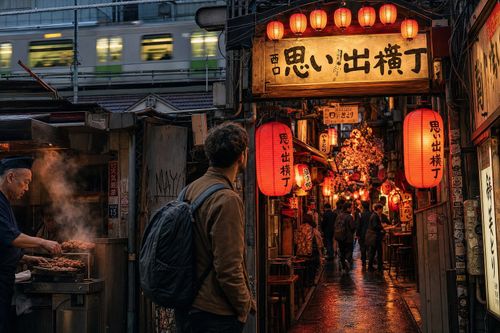
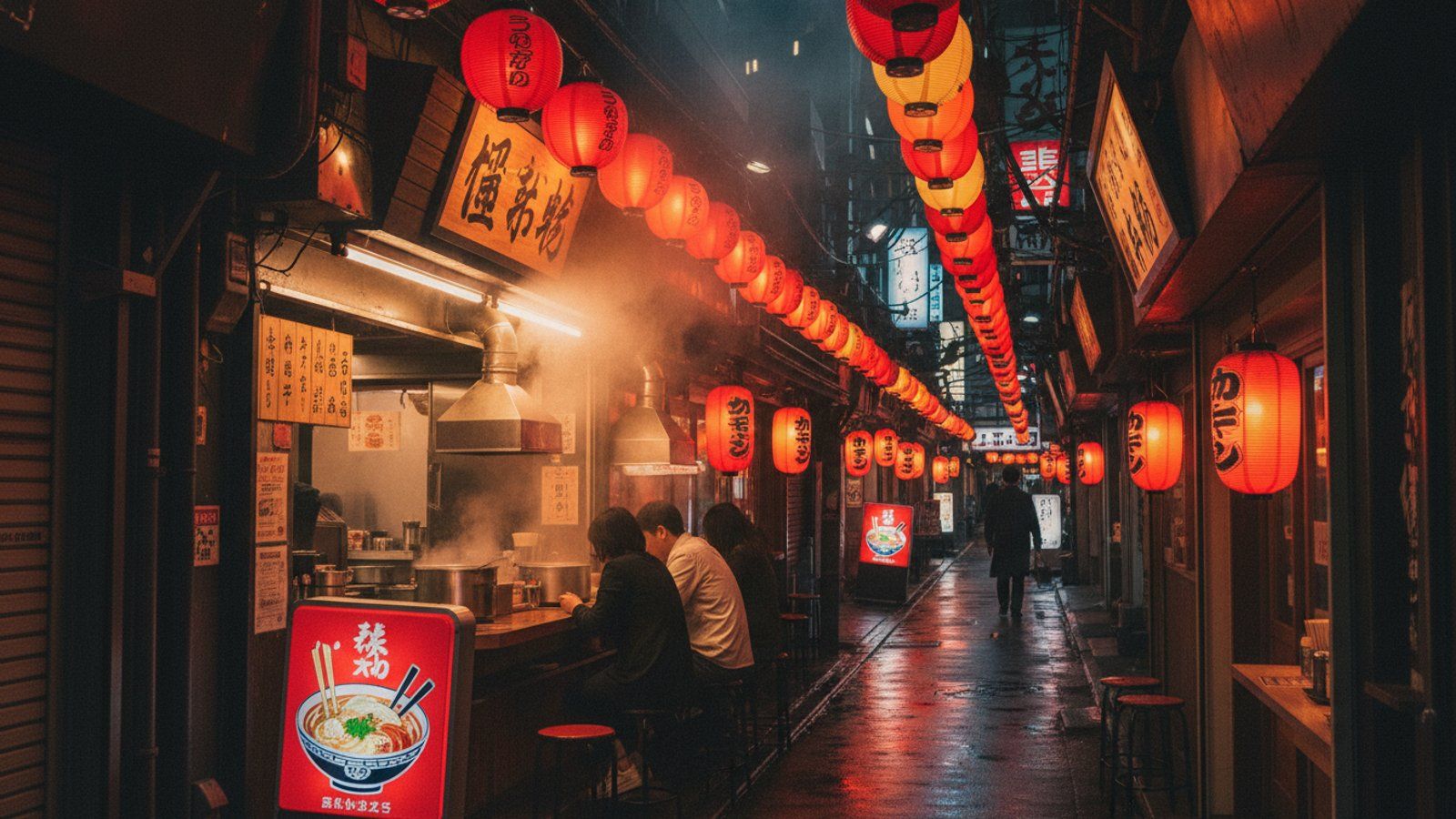
Walk thirty seconds off the main boulevard on the west side and the city changes gear. The signage drops to handwritten cardboard. The sidewalks narrow until two people can barely pass. The crowds thin to almost nothing, and the smell — that specific mix of pork-bone broth, charcoal smoke, and frying garlic that means serious eating is happening here — pulls you forward down alleys you'd normally walk straight past.
This is the Ikebukuro that locals use. This is the walk.
Why Does Ikebukuro Have a Hidden Food Scene?
Ikebukuro's west exit has historically attracted a different demographic than Tokyo's more polished districts. Cheaper rents, a large Chinese student and worker population, and proximity to Rikkyo and Mejiro universities created conditions for genuine, no-frills eating. When a neighborhood has residents who actually need to feed themselves affordably every day — not just tourists who want an experience — you get real food infrastructure.
The result is an area where a life-changing bowl of ramen sits sixty seconds from a family-run Chinese restaurant that makes hand-pulled noodles the way someone's grandmother taught, twenty meters from a standing izakaya where the yakitori smoke coats your jacket by the time you get your first beer.
It requires patience to find. That's the point.
Stop 1: The Alley Behind Marui — Where the Walk Begins
Exit Ikebukuro Station from the West Exit. Don't turn toward the big department stores. Turn right, then immediately right again, into the narrow corridor that runs parallel to the elevated rail tracks. Locals call this stretch nishi-guchi uramichi — "west exit back road" — but it has no official name, which is part of the charm.
The first thing you notice is the smell. At around 17:30, the char-grilled yakitori smoke kicks up from a cluster of open-front shops halfway down this corridor. The charcoal smell is complex and slightly sweet — chicken thigh fat dripping onto hot coals produces a caramel-smoke note you can pick out from twenty meters. Walk toward it.
You'll pass a tiny tonkatsu counter (six seats, no English menu, reliably excellent ¥900 set lunches that run until 19:00), a sake shop with refrigerated cases of craft nihonshu from all over Japan, and two competing yakitori spots. Resist the yakitori — that's for the back half of the evening. Keep walking.
The alley forks. Take the left fork. This deposits you onto a slightly wider lane that runs north-south, and this is where the real evening begins.
Stop 2: Tonchin — Tonkotsu-Shoyu That Earns the Queue
Tonchin (東京豚骨拉麺 ぶた神 池袋本店) has a queue. Accept it.
The queue, on most evenings, is six to fifteen people long and moves faster than you'd think — turnover at ramen counters is brisk because nobody lingers, and Tonchin seats fill and empty in continuous rotation. The wait is rarely more than twenty minutes and often under ten.
Stand in line and watch what happens inside through the window. The kitchen is open and the bowl assembly is theatrical: a ladle-full of clear pork-shoyu tare goes down first, then the broth hits — paler than you'd expect from "tonkotsu," because Tonchin runs a tonkotsu-shoyu hybrid where the shoyu pulls the fat clean and lets the body of the broth come through without the murky opacity of Fukuoka-style. The aroma that hits you through the glass — ginger, pork sweetness, a sharp edge of soy — is different from any ramen you've smelled in the south.
When your bowl arrives, the surface is sheeted with a thin film of pork oil that traps the heat. The noodles are medium-thin, slightly wavy, and slightly spring to the bite. The chashu is two large, torched-edge slices that release fat into the broth on contact. The menma (bamboo shoots) are soft and marinated deep.
The question you'll ask yourself halfway through: why isn't this place more famous? The answer is that Ikebukuro absorbs good things quietly.
Budget: ¥900-1,200 for a bowl, ¥200 extra for a soft-boiled egg (worth it).
Stop 3: The Mutekiya Strategy (and When to Skip It)
Mutekiya (無敵家) is the reason most ramen tourists come to Ikebukuro at all, and the reason some leave disappointed.
The restaurant occupies a corner position near the west exit and runs a cream-colored tonkotsu that has earned serious, sustained national attention since the 1990s. The broth is built over many hours and has a viscosity and depth that most ramen shops can't replicate. The noodles are house-made. This is genuinely great ramen.
The problem is the queue, which on weekends can run forty-five to seventy-five minutes and attracts a significant tourist component that lengthens wait times without adding to the atmosphere inside.
Strategy if you want Mutekiya: Go on a Tuesday or Wednesday, arrive by 11:30 for lunch service or precisely at 17:00 for dinner opening. The wait drops from punishing to manageable.
Strategy if the queue is long: Walk past it. Tonchin (above) and Mokoshi (below) are serious alternatives, and you won't spend forty minutes on a pavement.
A note on the broth itself: Mutekiya's tonkotsu is richer and cloudier than Tonchin's hybrid style — more Hakata-adjacent. If you want that intense pork-bone opacity and the slightly funky, almost funky-sweet back note that characterizes real tonkotsu, Mutekiya earns its reputation. If you want clarity and soy balance, Tonchin is your bowl.
Stop 4: Ikebukuro Chinatown — The Neighborhood That Isn't Named
Tokyo has Yokohama Chinatown, famous and tourist-oriented. What it also has, and doesn't name, is Ikebukuro's Chinese quarter — a dense cluster of Chinese restaurants, hot pot specialists, and bubble tea shops spread across the streets northeast of the west exit.
The distinction from Yokohama is significant: Ikebukuro's Chinese food scene serves a resident Chinese population, not tourists. The menus run to regional Chinese cuisines that rarely appear in more visible Tokyo neighborhoods — Sichuan, Dongbei (northeastern Chinese), and Shanghainese — and the cooking is adjusted for Chinese palates, not approximated for Japanese-export versions of Chinese food.
Turn into the block just north of Marui Department Store and walk east. The signs shift to Mandarin. The window displays show photographs of dishes you'd see in Chengdu: scarlet-oiled mala hot pot, hand-torn cabbage in vinegar, crispy pork belly in chili sauce. The proprietors are frequently talking to each other in Mandarin rather than Japanese.
For Japanese-Chinese fusion, the chuka (中華) stands in this zone are exceptional: gyoza skins that have the chew of hand-made dough rather than factory sheets, mapo tofu that uses actual Sichuan peppercorn and has the lip-numbing quality the original demands, cold noodles with sesame paste in summer that arrive in a lake of ice chips.
If you want the full Sichuan experience without the flight, budget ¥1,500-2,500 for a shared table here and try the dan dan noodles alongside whatever the weekly special is on the handwritten board above the counter.
Stop 5: Mokoshi — Shio Ramen in a Tiny Counter
If tonkotsu is the heavy, Mokoshi is the counterpoint.
Mokoshi (もこし) operates from a counter that seats perhaps eight people, tucked into a side street two blocks from the main restaurant cluster. The shop is easy to miss: the sign is small, the facade is plain, and there's no queue because Mokoshi doesn't have the name recognition of Tonchin or Mutekiya.
What it has is a shio (salt) ramen that belongs in a different conversation from most Tokyo shio. The broth is built from dashi — real kombu-and-seafood dashi, not a powder approximation — finished with a white shio tare that doesn't hide behind soy or miso. The result is a bowl that's entirely transparent, golden, and tastes profoundly of the sea. The chicken chashu on top is poached rather than braised, sliced thin, and draped carefully over thin straight noodles.
The first spoonful hits the palate with a clean savory note and then opens into layers — a slight sweetness from the kombu, a faint brine, a finish that's umami without the bluntness of soy. People who claim not to like ramen often like this bowl, because it operates in a register closer to French consommé than to the pork-forward styles that dominate.
Come here before the evening crowds if possible. The counter fills by 19:30 on weekdays and stays full.
Budget: ¥850-1,050.
Stop 6: The Back-Alley Izakaya Belt Behind Sunshine City
The last section of this walk moves east.
From Mokoshi, cut through the block toward Sunshine City — the enormous shopping complex that anchors Ikebukuro's east side — but don't go inside. Walk around its southern edge and then dive into the network of alleys that run behind the complex toward the Higashi-Ikebukuro area.
This zone doesn't have a name. It should.
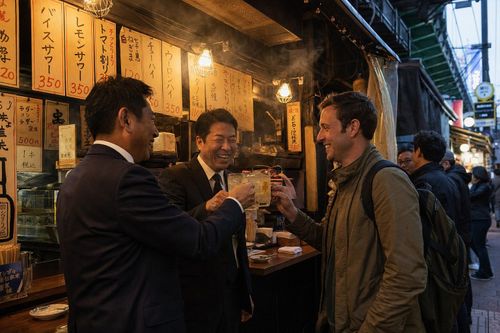
Thirty to forty small izakaya operate here in a density that rivals Shinjuku's most crowded drinking streets. The difference is that these aren't preserved or celebrated — they're just the places where people who live and work nearby actually drink. The clientele on a weekday evening runs to salary workers, university students, and the occasional couple who got slightly lost on the way to something else and then decided to stay.
The izakaya here operate on the casual-counter model: you sit at the bar, you order what the chef is doing tonight, and you drink. The menus are handwritten, frequently seasonal, and usually run to yakitori alongside whatever the chef wants to cook — house-made tofu, sashimi if someone got good fish that day, small plates of pickled vegetables that arrive with the first drink.
Specifically: look for the izakaya with the rough-cut wood counter and the hand-drawn lantern sign on the left side of the main alley. They don't advertise and the name has been sun-faded off the sign, but the yakitori here is done over binchotan (white charcoal), which produces a heat distribution that chars the surface without drying the interior. The momo (thigh) skewer is the standard; the heart skewer, if they're doing it, is the reason to return.
This is the stop to end the evening. Order a cold Sapporo draft, one or two skewers, and whatever small plate the person next to you seems to be enjoying.
Budget: ¥600-1,200 per person for drinks and a skewer or two.
What Most Tourists Don't Know About Ikebukuro Food
The west exit is the eating side. Almost every guidebook photo of Ikebukuro shows the east exit — Sunshine City, the neon boulevard, the anime shops. The food culture is concentrated on the west side, specifically in the twenty-square-block area between the station and Mejiro-dori. If you're only navigating from the east exit, you're missing the whole scene.
Dinner starts earlier here than in central Tokyo. The Ikebukuro west exit crowd includes a large segment of workers who start early and leave by 21:00. The prime standing-bar window is 17:30-20:00, not the 20:00-late schedule you'd see in Roppongi or Ginza. Arrive at 18:00 and you'll hit everything at peak energy.
The Chinese restaurants don't cater to Japanese tastes. This sounds obvious but has practical implications: the spice levels at the Sichuan spots are genuine, not tourist-adjusted. If you ask for kara-sa hikae-me (less spicy), they'll dial it back. If you don't specify, you'll get the original.
Cash is strongly preferred. Not universal — some of the ramen shops now take IC cards or QR payment — but the standing izakaya and many of the Chinese restaurants run cash-only. Bring ¥5,000-8,000.
Practical Information
Getting There
| From | Route | Time |
|---|---|---|
| Shinjuku | JR Yamanote Line to Ikebukuro | 8 min |
| Shibuya | JR Yamanote Line to Ikebukuro | 20 min |
| Ueno | JR Yamanote Line to Ikebukuro | 16 min |
| Tokyo Station | Marunouchi Line to Ikebukuro | 20 min |
Exit: West Exit (西口) for the food walk.
Walk Route Summary
| Stop | What | Budget |
|---|---|---|
| 1. Nishi-guchi alley | Walk-through, smell the yakitori | Free |
| 2. Tonchin | Tonkotsu-shoyu ramen | ¥900-1,200 |
| 3. Mutekiya (optional) | Tonkotsu ramen | ¥950-1,300 |
| 4. Ikebukuro Chinatown | Sichuan or Chinese-Japanese fusion | ¥1,500-2,500 |
| 5. Mokoshi | Shio ramen | ¥850-1,050 |
| 6. Back-alley izakaya belt | Yakitori + drinks | ¥600-1,200 |
Total evening budget: ¥4,000-6,000 per person if you eat at two stops and drink at one.
Tips
| Tip | Detail |
|---|---|
| Best day | Tuesday-Thursday; weekends bring longer queues |
| Best time | 17:30-20:00 for peak standing-bar atmosphere |
| Language | Point at menu items; osusume means "what do you recommend?" |
| Payment | Cash strongly preferred; bring ¥5,000-8,000 |
| Solo travel | Counter seating makes this excellent for solo diners |
Wrapping Up
The best meals in Tokyo aren't always announced. They're tucked behind the department store, down the alley that has no name on any map, in a counter where the person next to you is a regular and nobody is performing for an audience.
Ikebukuro's west-side alley network is that kind of place. It exists because people needed it to exist — not because a developer decided to create a food destination. The ramen is extraordinary, the Chinese cooking is genuine, and the izakaya behind Sunshine City will make you question why you spent your first two nights in Tokyo eating somewhere with an English menu.
The walk takes two to three hours at a slow pace. Budget ¥5,000. Go on a weeknight. Get slightly lost.
For more on Tokyo's ramen culture, see our best ramen shops in Tokyo guide. For a different kind of eating walk through central Tokyo, our essential Japanese phrases guide will help you order confidently at the counter-only spots on this route.
Explore more Tokyo eating: Shinjuku guide | Akihabara otaku guide | Japan izakaya guide
Frequently Asked Questions
Where exactly is Ikebukuro's hidden food alley district?
The main food alley network is on the west side of Ikebukuro Station — exit the West Exit (西口) and turn right, then immediately right again to find the narrow corridor running parallel to the train tracks. The Chinese restaurant cluster is north of Marui Department Store, and the back-alley izakaya belt runs behind Sunshine City on the east side.
Is Mutekiya worth the queue in Ikebukuro?
Mutekiya is genuinely excellent — its tonkotsu broth has real depth and decades of reputation behind it. The wait is worth it if you go on a weekday (Tuesday-Thursday) and arrive at opening time (17:00 for dinner). On Saturday or Sunday evenings the wait can reach 60-75 minutes, at which point Tonchin or Mokoshi are comparable quality with no line.
What is the difference between Tonchin and Mutekiya ramen?
Tonchin runs a tonkotsu-shoyu hybrid — cleaner, clearer broth with a soy backbone that balances the pork fat. Mutekiya is closer to pure Hakata-style tonkotsu: rich, cloudy, intense. If you want bolder and heavier, Mutekiya. If you want complexity and clarity, Tonchin.
What kind of Chinese food is in Ikebukuro?
Ikebukuro's Chinese quarter serves regional Chinese cuisines including Sichuan (known for mala spice and numbness), Dongbei (northeastern Chinese, heavier dishes), and Shanghainese. Unlike tourist-oriented Chinatowns, these restaurants serve a resident Chinese population and maintain genuine regional flavors, including real Sichuan peppercorn in dishes that call for it.
How much cash should I bring for the Ikebukuro food walk?
Bring ¥5,000-8,000 in cash. Most ramen counters take card or IC payment, but standing izakaya and many Chinese restaurants are cash only. There are 7-Eleven and Family Mart ATMs near the station that accept international cards.
What time is best to do this food walk?
Start at 17:30-18:00 on a weekday. The standing bars hit peak atmosphere when the after-work crowd arrives between 18:00 and 20:00. Most small izakaya close by 22:00-23:00, so arriving late means fewer options and less energy in the alleys.