Kobe Chinatown (Nankinmachi): Street Food, Red Lanterns, and 150 Years of History
May 4, 2026
Explore Nankinmachi, one of Japan's three great Chinatowns, where steaming pork buns, ornate gates, and a resilient community welcome you to Kobe.
Image for illustrative purposes only.
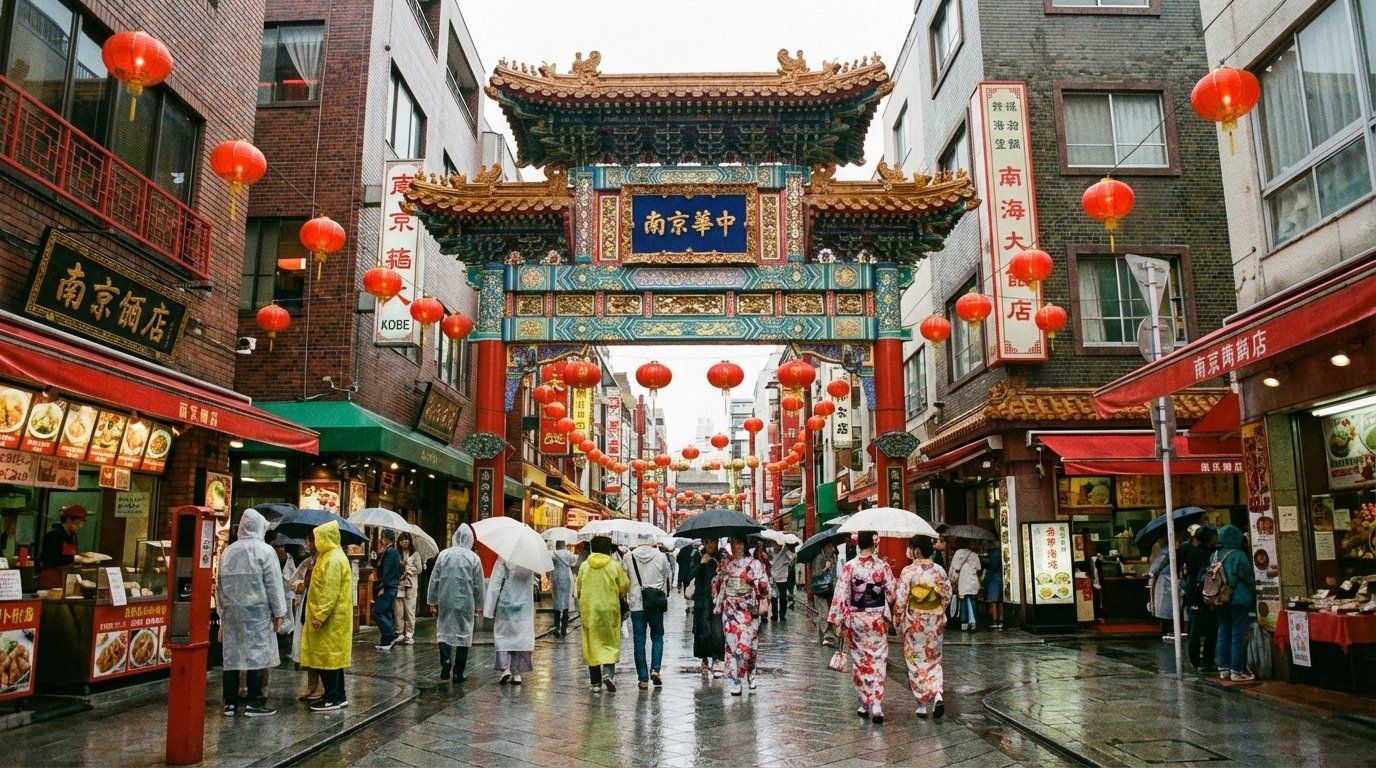
Picture this: you step off the train at Motomachi Station, walk a few minutes south, and suddenly the modern Kobe cityscape gives way to ornate red gates, swinging silk lanterns, and the unmistakable scent of freshly steamed pork buns drifting through the air. Welcome to Nankinmachi -- one of Japan's three great Chinatowns, alongside Yokohama and Nagasaki, and arguably the most walkable and welcoming of them all.
Whether you're here for the food (and let's be real, you probably are), the history, or just the vibrant atmosphere, this compact neighborhood packs an incredible amount of flavor into a few city blocks.
From Port Town to Pork Buns: Nankinmachi's Story
Nankinmachi's roots go back to 1868, when Kobe Port opened to international trade. Chinese merchants -- primarily from Guangdong and Fujian provinces -- were among the first to settle near the port, establishing shops and restaurants in the area west of the official foreign settlement. The name "Nankinmachi" (南京町) means "Nanjing Town," a nod to the Chinese heritage that has shaped this neighborhood for more than 150 years.
But Nankinmachi's history hasn't been easy. The area suffered severe damage during World War II and went through a difficult postwar period. Then, in 1995, the Great Hanshin Earthquake devastated Kobe, and Nankinmachi was hit hard. Each time, though, the community came back -- rebuilding through remarkable cooperation between residents, business owners, and local government. That resilience is part of what makes walking these streets feel so meaningful.
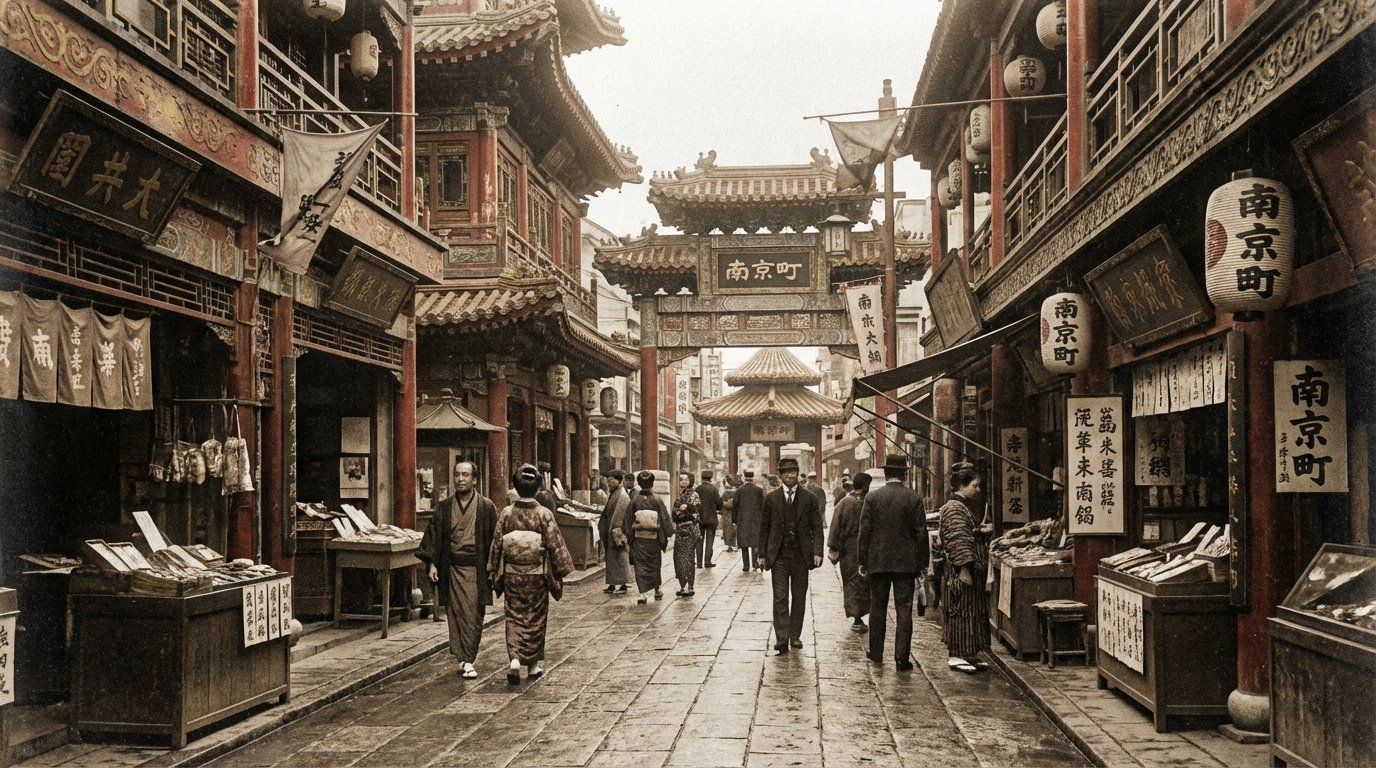 Image for illustrative purposes only.
The Gates and the Heart of the Neighborhood
Three ornate gates called paifang mark the main entrances to Nankinmachi, while a pair of stone guardian lions watches over the north entrance.
Changan Gate (長安門, East) -- The most elaborate of the three gates, this striking white marble archway stands 9.8 meters tall and was built in 1985. It's a convenient entry point if you're coming from the Daimaru department store or Sannomiya area.
Seian Gate (西安門, West) -- Standing 9.7 meters high, this gate was erected in 2005 as a symbol of Nankinmachi's recovery after the Great Hanshin Earthquake. Its name means "Western Peace Gate."
Kaieimon Gate (海栄門, South) -- A smaller gate at the south entrance, completing the traditional Chinese architectural framing of the neighborhood.
North Entrance -- Instead of a gate, a pair of stone guardian lions flanks the northern entrance, which connects directly to Motomachi Shopping Street.
Right at the center of everything is Nankinmachi Square, home to the Azumaya -- a traditional Chinese pavilion that has been the neighborhood's beloved landmark for over 40 years, since its construction in 1983. In recent years, community-led efforts have focused on maintaining and restoring this hexagonal treasure, a testament to how much it means to locals and visitors alike.
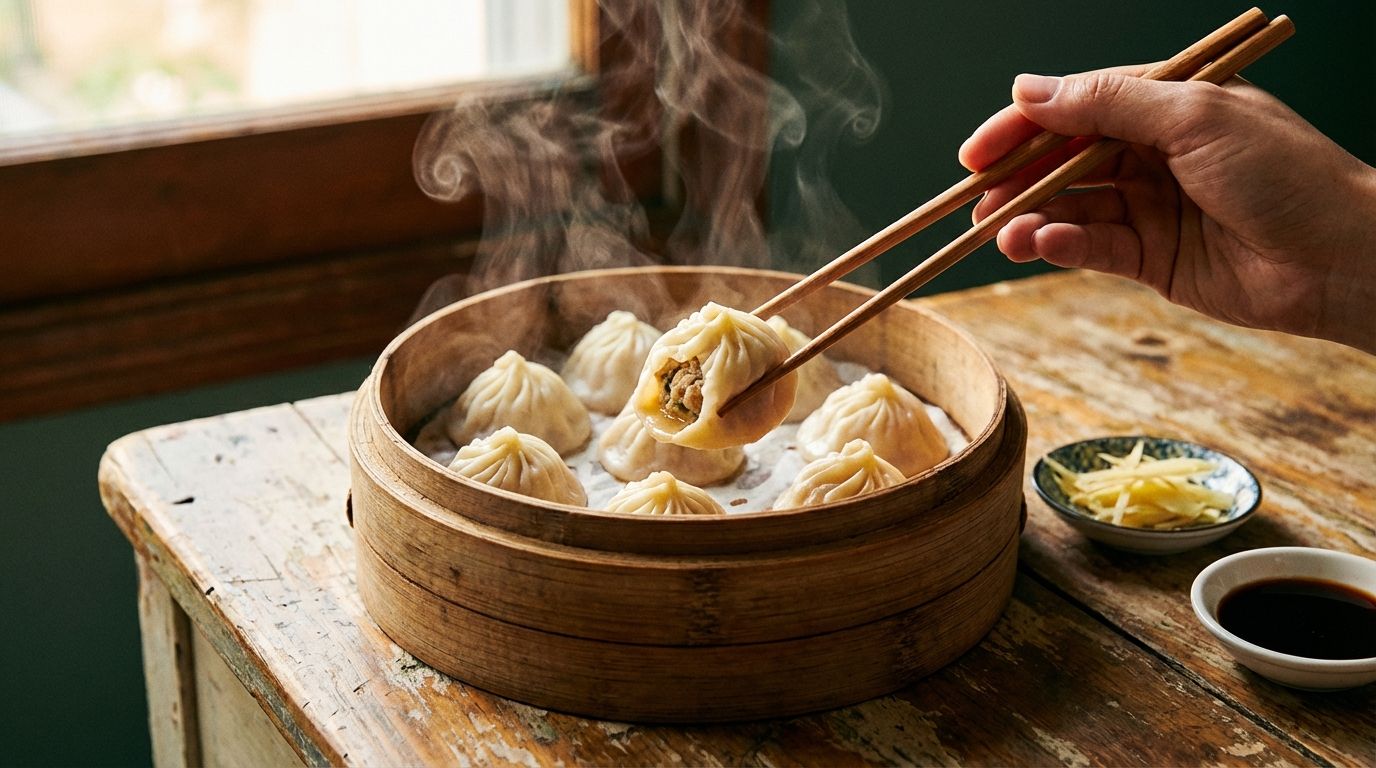 Image for illustrative purposes only.
Street Food Heaven: What to Eat
With around 100 shops crammed into this compact area, Nankinmachi is essentially an open-air food court -- and one of the best ones you'll find anywhere in Japan. Most vendors sell grab-and-go items, so the whole experience is wonderfully casual.
The Essentials
Butaman (豚まん) -- Pork Buns The undisputed star. Fluffy steamed buns filled with seasoned pork are available at nearly every stall, but the legendary Roshoki (老祥記) -- founded in 1915 and credited as the birthplace of pork buns in Japan -- often draws lines down the street. These are bigger, juicier, and far more satisfying than anything you'll find at a convenience store. Budget around 100-200 yen per bun.
Xiaolongbao (小籠包) -- Soup Dumplings A word of caution: these delicate beauties are filled with scalding hot soup. Bite a tiny hole first, let it cool, then enjoy. Several shops serve them straight from bamboo steamers, and the experience of eating them in the open air is hard to beat.
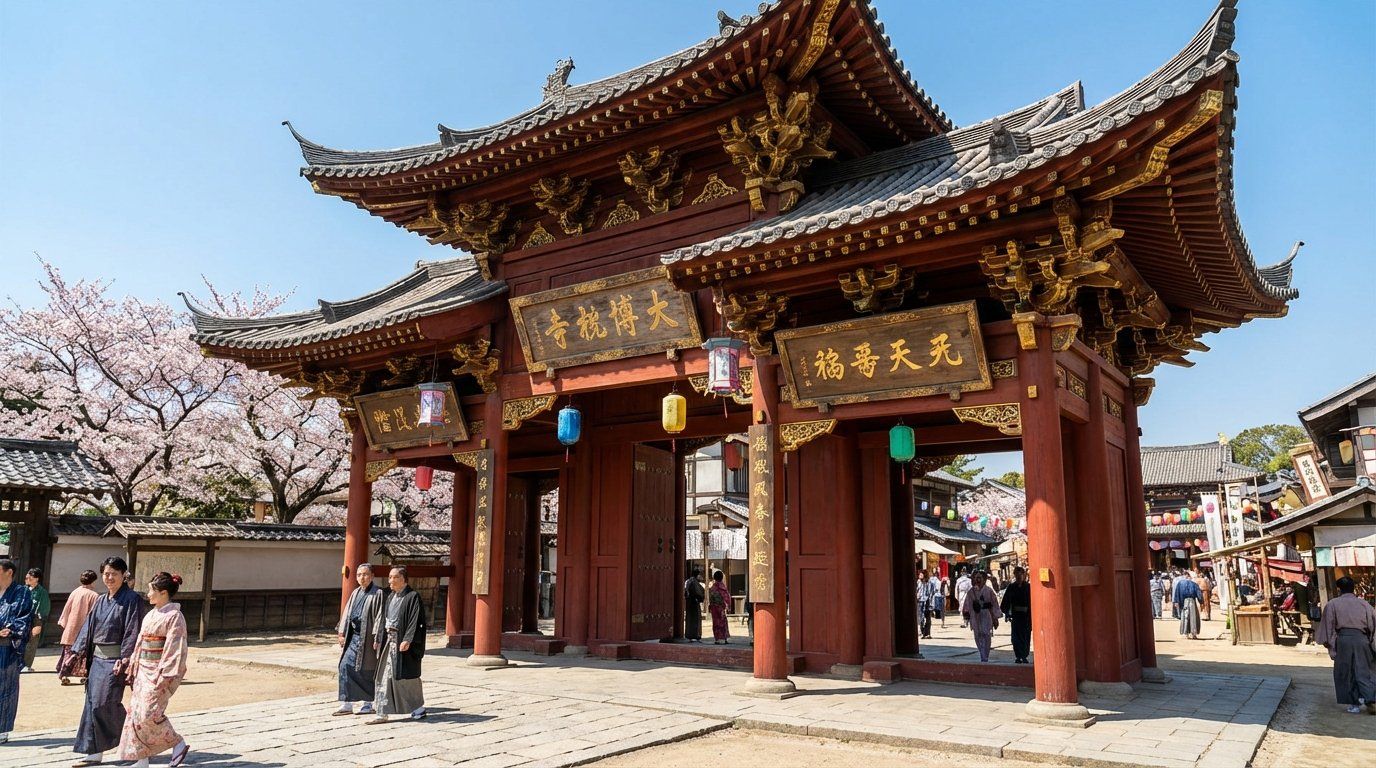 Image for illustrative purposes only.
Kobe Beef Gyoza Here's something you won't find in other Chinatowns -- gyoza made with Kobe's world-famous beef. They're a fusion of Chinese technique and local Kobe pride, and they're absolutely worth seeking out.
Peking Duck Wraps Crispy duck skin, scallions, cucumber, and sweet bean sauce in a thin pancake. Available at various stalls for around 500-800 yen.
Sweet Surprises
Panda Cream Puffs These adorable panda-shaped pastries are almost too cute to eat. Almost. They're filled with custard cream and make for excellent photos before you devour them.
Egg Tarts and Almond Cookies Portuguese-style egg tarts (reflecting Macanese culinary influence) and crumbly almond cookies are perfect for satisfying a sweet tooth between savory bites.
Pro tip: Walk the entire length of Nankinmachi before committing to any one stall. Prices and portions vary, and you'll want to pace yourself so you can try a bit of everything.
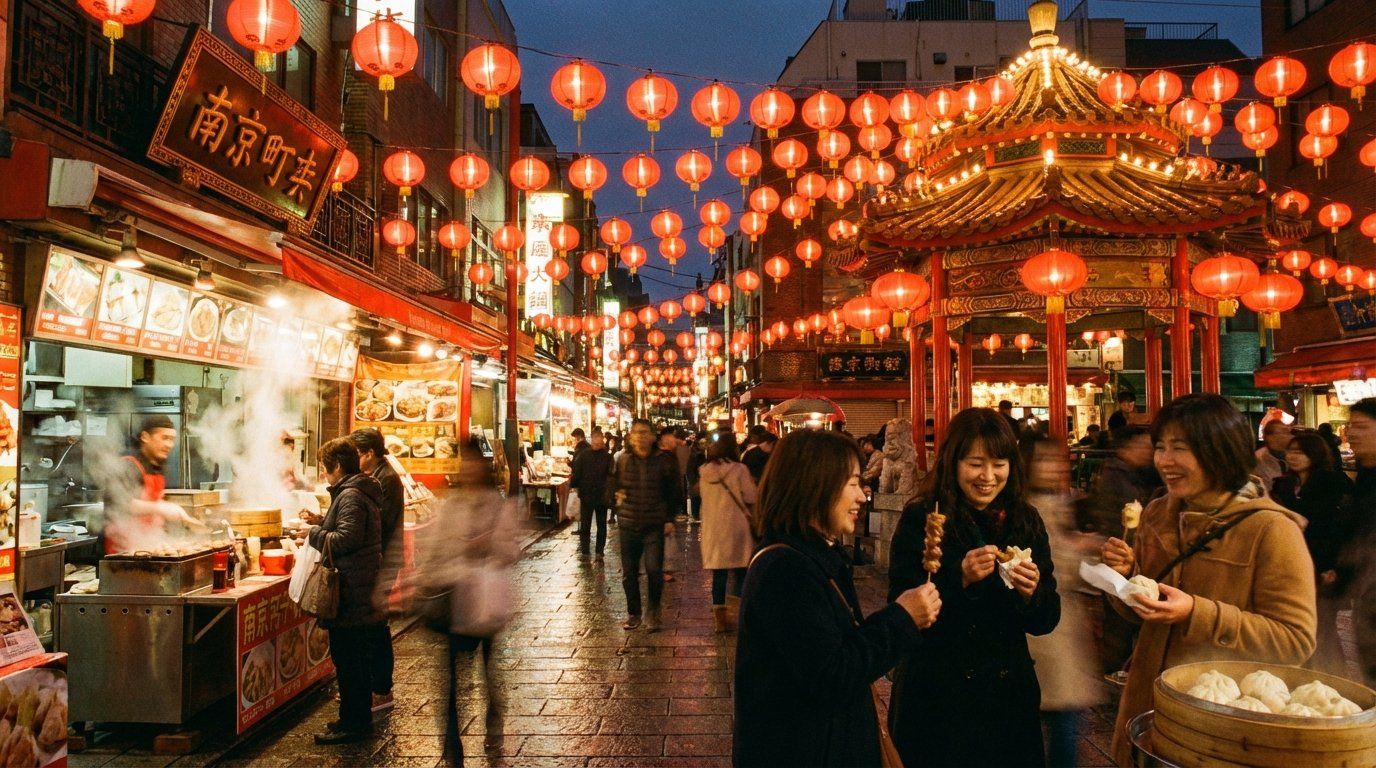 Image for illustrative purposes only.
When to Visit: Festivals and Timing
Chinese New Year (Spring Festival / 春節祭)
This is Nankinmachi at its most spectacular. In 2026, celebrations take place on February 17 and February 21-23. Expect lion dances weaving through the crowds, traditional bian lian (変臉) performances -- where masked performers change faces in the blink of an eye -- tai chi demonstrations, and firecrackers echoing between buildings. It's crowded, loud, colorful, and absolutely unforgettable.
Mid-Autumn Festival
Held in September or October, this celebration brings mooncakes to shop windows and warm lantern light to evening strolls. It's a calmer alternative to the Chinese New Year festivities.
Everyday Visits
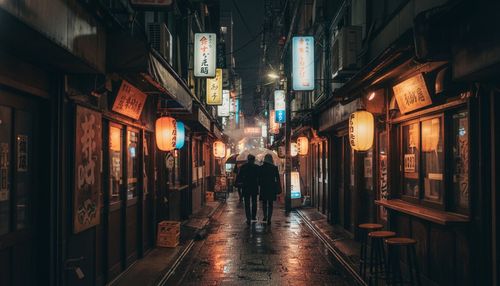
For a more relaxed experience, weekday afternoons are your best bet. Evening visits (most shops stay open until around 9 PM) reward you with the gorgeous sight of lanterns and gates glowing against the night sky -- a completely different atmosphere from the daytime bustle.
Combine It: Nearby Kobe Attractions
Nankinmachi is centrally located, making it easy to pair with other Kobe highlights in a single day.
Motomachi Shopping Street -- Bordering Nankinmachi to the north, this nearly 2-kilometer covered arcade is packed with shops, cafes, and boutiques. You can step between the two areas effortlessly through the lion-guarded north entrance.
Meriken Park & Kobe Port Tower -- A 15-minute walk south takes you to the waterfront, the iconic Port Tower (reopened in April 2024 after renovation), and the BE KOBE monument. The nearby Earthquake Memorial Park offers a moving look at the 1995 disaster.
Kobe Harborland -- Shopping, dining, and beautiful harbor views. The nighttime illuminations here pair perfectly with an evening Nankinmachi visit.
Ikuta Shrine -- One of Japan's oldest shrines, just north of Nankinmachi. A peaceful contrast after the bustling Chinatown streets.
Practical Information
| Detail | Info |
|---|---|
| Location | Nankinmachi, Chuo-ku, Kobe |
| Nearest Station | JR/Hanshin Motomachi Station (3-5 min walk), JR Sannomiya Station (10 min walk) |
| Shop Hours | Generally 11:00 AM - 9:00 PM (varies by shop) |
| Admission | Free (open pedestrian area) |
| Time Needed | 1-2 hours for a relaxed visit |
| Budget | Street food: 300-800 yen per item; full lunch sampling: 1,500-2,500 yen |
Tips
- Bring cash -- Many smaller stalls don't accept cards or digital payments
- Weekdays are calmer -- Weekend and holiday crowds can make the narrow streets quite packed
- Look up -- Second-floor restaurants often have full menus with sit-down dining if you want a proper meal
- Grab extra napkins -- Street food gets messy; most vendors provide them, but a few extras in your pocket help
- Try the same dish at different stalls -- Even pork buns taste noticeably different from shop to shop
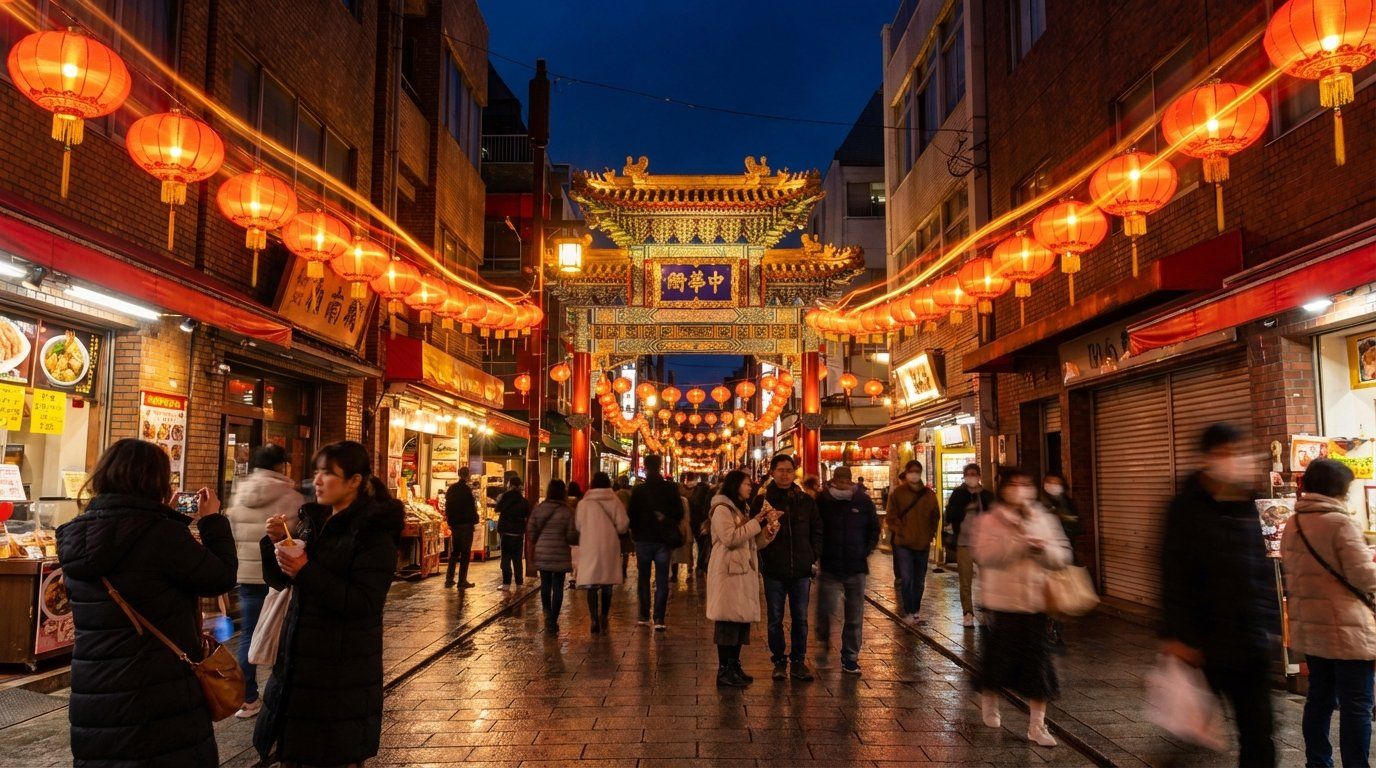 Image for illustrative purposes only.
A Chinatown That Feels Like Home
There are bigger Chinatowns in Japan, and flashier ones too. But Nankinmachi has something that's harder to find -- a genuine sense of community. This is a neighborhood that has been knocked down and rebuilt, not once but multiple times, by people who refused to let its spirit disappear.
You can feel that warmth in the shop owners who chat with regulars, in the community efforts to preserve landmarks like the Azumaya pavilion, and in the way the whole neighborhood comes alive during Chinese New Year. It's not just a tourist attraction. It's a living, breathing piece of Kobe's identity.
So take the train to Motomachi, walk through those red gates, and let Nankinmachi welcome you. Come hungry, stay curious, and don't forget to grab one last pork bun for the road.
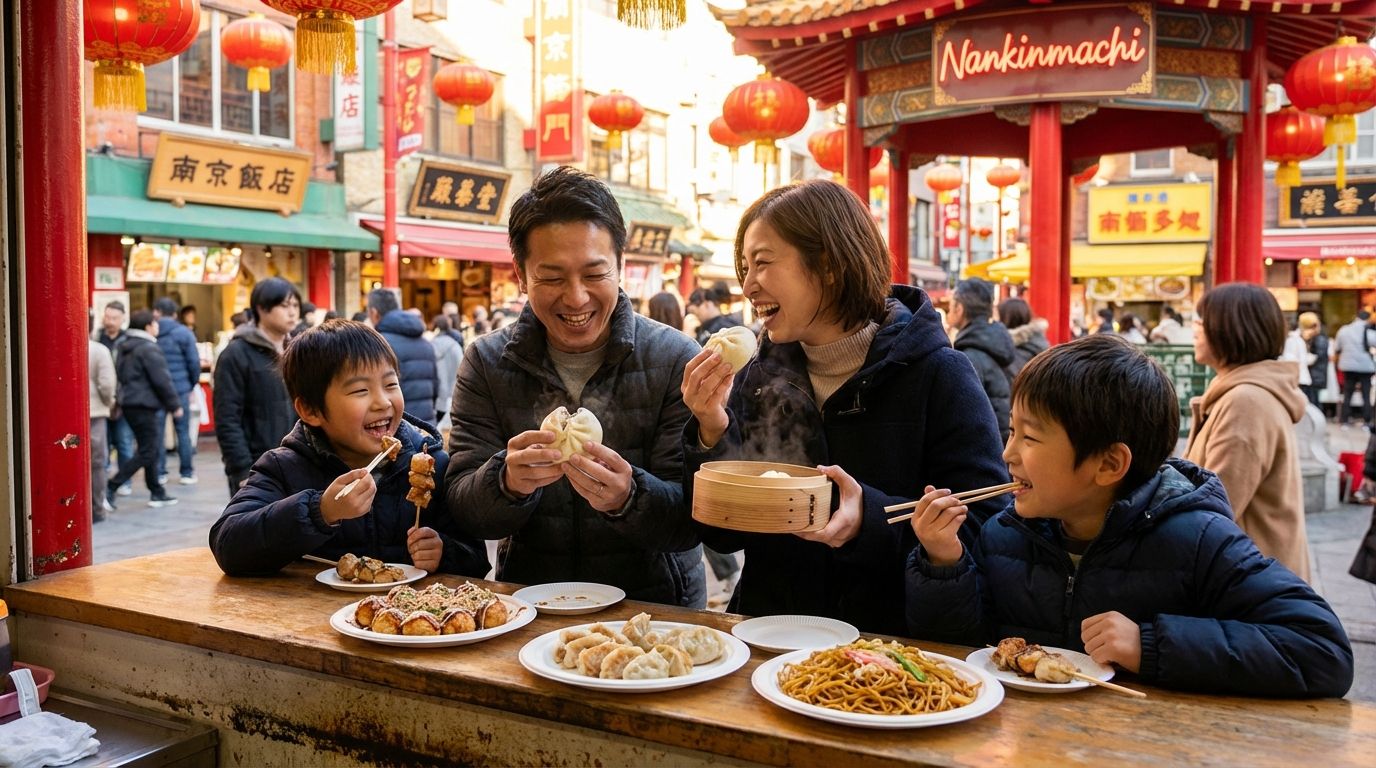 Image for illustrative purposes only.
Frequently Asked Questions
What is Nankinmachi and where is it located?
Nankinmachi is one of Japan's three great Chinatowns, located in Kobe, a short walk south from Motomachi Station. It's known for its vibrant atmosphere, street food, and over 150 years of history.
What street food should I try in Kobe's Nankinmachi?
Essential street foods include butaman (pork buns) from places like Roshoki, scalding hot xiaolongbao (soup dumplings), and unique Kobe Beef Gyoza. Don't forget sweet treats like panda cream puffs or egg tarts.
When is the best time to visit Nankinmachi?
For a spectacular experience, visit during Chinese New Year (Spring Festival / 春節祭) for lion dances and performances. Weekday afternoons offer a more relaxed visit, while evenings provide a beautiful view of glowing lanterns and gates.
What are the main gates and landmarks in Nankinmachi?
Nankinmachi is marked by three ornate gates: Changan Gate (East), Seian Gate (West), and Kaieimon Gate (South). At its center is Nankinmachi Square, home to the traditional Chinese Azumaya pavilion.
What attractions are near Nankinmachi in Kobe?
Nankinmachi is centrally located, making it easy to visit Motomachi Shopping Street, Meriken Park and Kobe Port Tower, Kobe Harborland, or Ikuta Shrine. These nearby spots offer a range of shopping, dining, and cultural experiences.