From Yamazaki to Nikka, discover the world of Japanese whisky — its history, top distilleries, highball culture, and the best bars to try it.
Walk into a whisky bar in Tokyo or Osaka, and you will quickly notice that the bottles lining the shelves are not just from Scotland or Kentucky. Japanese whisky has earned its place among the finest spirits in the world, winning international competitions and attracting collectors who pay serious money for rare bottles. But you do not need to be a collector to enjoy it. A cold highball at an izakaya on a warm evening is just as much a part of the culture as a single malt poured slowly in a quiet bar.
This guide covers the full picture: where Japanese whisky came from, which distilleries to know, how to drink it, where to find the best bars, and what to buy when you leave.
How It All Started: The Fathers of Japanese Whisky
Japanese whisky owes its existence largely to one man: Masataka Taketsuru. Born in 1894, Taketsuru traveled to Scotland in 1918 to study at the University of Glasgow and apprentice at Scottish distilleries. He immersed himself in every step of the whisky-making process — malting, distilling, maturing — and returned to Japan with detailed notes and a Scottish wife, Rita Cowan, who supported him throughout his career.
Back in Japan, Taketsuru partnered with businessman Shinjiro Torii, who had already built a successful wine and spirits business. Together they established Japan's first whisky distillery in Yamazaki, a village south of Kyoto, in 1923. The location was chosen deliberately: the valley sits at the confluence of three rivers, producing cool, misty air that is ideal for aging spirits.
The partnership did not last forever. Torii wanted a lighter, more approachable whisky suited to Japanese palates. Taketsuru believed in the full Scottish style, bold and peaty. They parted ways in 1934, and Taketsuru founded his own company, Nikka, building the Yoichi distillery in Hokkaido — a coastal, cold region that reminded him of Scotland.
These two men, and the philosophies they represented, shaped everything that followed. Torii's company became Suntory. Taketsuru's became Nikka. Their friendly rivalry drove both to produce whiskies of remarkable quality.
Why Japanese Whisky Is World-Class
Japanese distillers took the Scottish tradition seriously and then refined it with the precision and attention to detail that characterizes Japanese craft culture. A few things set Japanese whisky apart.
Blending philosophy. Most major Japanese producers control multiple distilleries with different stills, water sources, and fermentation methods. This lets master blenders create complex layered whiskies without buying stock from outside producers, which is common practice in Scotland.
Water quality. Japan's mountain spring water is exceptionally soft and pure. The water at Yamazaki, Hakushu, and Yoichi is a direct contributor to the flavor of the whisky made there.
Meticulous aging. Japanese producers use a variety of cask types, including Mizunara oak — a native Japanese wood that imparts distinctive notes of sandalwood, incense, and coconut. Mizunara is rare and expensive, but it produces flavors found nowhere else in the whisky world.
Consistency. Japanese quality control is relentless. A bottle of Hibiki Harmony or Yamazaki 12 Year will taste the same whether you buy it in Osaka or London.
That combination of rigor and creativity caught the world's attention. In 2001, Nikka's Yoichi Single Malt was named the world's best single malt by Whisky Magazine, blindsiding an industry that had dismissed Japanese whisky as a novelty. The accolades kept coming, and global demand eventually outpaced supply — a problem the industry is still working through.
The Major Distilleries
Yamazaki (Suntory)
Located about 25 minutes by train from Osaka and 15 minutes from Kyoto, Yamazaki is both Japan's oldest and most accessible distillery. The visitor center is excellent, with self-guided tours, tasting rooms, and a whisky library where you can sample rare expressions by the pour.
The Yamazaki 12 Year is the entry point: fruity, refined, and approachable. The 18 Year is exceptional, with layers of dried fruit, spice, and oak. Limited releases like the Yamazaki 25 Year or Mizunara Special Reserve command extraordinary prices but represent the pinnacle of the distillery's craft.
As a day trip from Osaka, Yamazaki is hard to beat. The distillery is free to enter, and you pay only for what you taste or purchase.
Hakushu (Suntory)
Sitting deep in the Southern Alps of Yamanashi Prefecture, Hakushu is the opposite of Yamazaki. Where Yamazaki is warm and fruity, Hakushu is fresh and green — often described as "forest whisky." The distillery sits at 700 meters elevation inside a bird sanctuary, and the air itself feels clean.
The Hakushu 12 Year has a characteristic herbal, slightly smoky quality. The 18 Year deepens into mint, citrus, and gentle peat. Getting there requires more effort than Yamazaki, but the setting is spectacular.
Nikka Yoichi
On the northern island of Hokkaido, the Yoichi distillery sits near the Sea of Japan, where cold ocean air and heavy winters create conditions close to the Scottish Highlands. Taketsuru designed it that way intentionally.
Yoichi whiskies are typically richer and more robust than their Suntory counterparts — more peat, more weight, more resemblance to Scotch. The single malt expressions are highly regarded, and the distillery itself is a heritage site, with brick buildings dating to Taketsuru's era still in use.
Nikka Miyagikyo
Also run by Nikka, the Miyagikyo distillery sits in a mountain valley in Miyagi Prefecture, not far from Sendai. Where Yoichi is bold, Miyagikyo is elegant — lighter, fruity, and more aromatic. The contrast between the two Nikka distilleries lets the company produce a wide range of blends, including the excellent Nikka From the Barrel, one of the best value bottles in Japanese whisky.
Highball Culture: Whisky the Japanese Way
Before you chase single malts, understand that most Japanese people drink their whisky as a highball (whisky soda). The ratio is typically one part whisky to three or four parts chilled soda water, served over a large clear ice cube or crushed ice in a tall glass. It sounds simple because it is, but the execution matters enormously.
The Suntory Kakubin — a square-shouldered bottle of blended whisky — became the cultural symbol of the highball in Japan. From the 1950s onward, Suntory marketed the Kaku Highball aggressively, and it became as natural a part of an izakaya meal as edamame or cold tofu. Today you will find Kaku Highball on tap at many izakayas, poured with bartender precision: chilled glass, ice stirred to lower the temperature without diluting, whisky measured, soda water poured down the side of the glass to preserve carbonation, and one slow stir.
The highball works brilliantly with food because it is light, carbonated, and refreshing. It cuts through fatty dishes, cleanses the palate between bites, and never overwhelms what you are eating. At a yakitori restaurant, a cold highball alongside skewers of chicken thigh or liver is one of the great simple pleasures of eating in Japan.
Where to Drink Whisky in Osaka
Namba and Shinsaibashi
The bar scene around Namba has a few standouts for whisky. Look for small, quiet bars on the upper floors of narrow buildings — often marked by a handwritten sign and a short menu. These are the places where a bartender has spent years building a collection and knows every bottle behind the counter. Bar Nayuta in the Shinsaibashi area is worth seeking out. Ask what the bartender recommends rather than ordering blind; you will often discover something unexpected.
Kitashinchi
Osaka's premium bar district is Kitashinchi, north of Umeda. This is where you go for serious whisky. The bars here tend to be small — six to ten seats — with extensive Japanese and Scotch collections. Prices are higher than Namba, but you are paying for expertise and rare bottles. Bar K6 is one of the most respected whisky bars in the city. The atmosphere is calm, the service is attentive, and the whisky list includes bottles you will not find anywhere else.
Tokyo Whisky Bars
Tokyo has one of the highest concentrations of exceptional whisky bars in the world. The neighborhood of Ginza has multiple basement bars with collections numbering in the hundreds. Bar High Five in Ginza is internationally famous, with bartender Hidetsugu Ueno considered one of the best in the world. The atmosphere is relaxed, the cocktails are precise, and the whisky selection is serious.
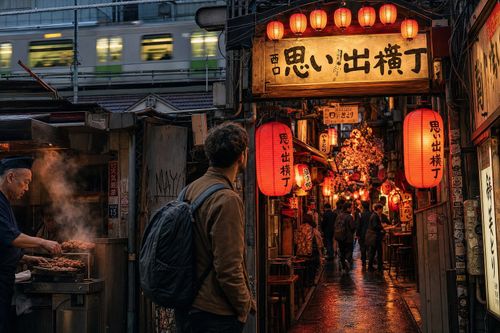
Shinjuku's Golden Gai district offers a completely different experience: tiny bars with five or six seats, where the owner often doubles as bartender and conversation is half the point. Some of these bars specialize in whisky, and the prices are surprisingly reasonable. Wandering the alleyways, finding a bar that feels right, and settling in for the evening is one of the best things you can do in Tokyo.
Distillery Tours: Yamazaki as a Day Trip from Osaka
The Yamazaki distillery is the easiest distillery visit in Japan. From Osaka, take the JR Kyoto Line to Yamazaki Station — the journey takes about 23 minutes from Osaka Station and costs around 200 yen. The distillery is a five-minute walk from the station.
Entry to the distillery grounds is free. You can take a self-guided tour through the production areas and aging warehouses. The paid tasting experiences range from a basic whisky tasting (around 1,000 yen) to the premium Whisky Library experience, where you sample rare and aged expressions that are not available for purchase. Booking ahead is strongly recommended, especially on weekends and during holiday periods. The distillery shop sells bottles that are difficult or impossible to find elsewhere.
Plan for two to three hours at the distillery, then consider continuing to Kyoto for the afternoon.
Buying Japanese Whisky: What to Know
The global boom in Japanese whisky created a supply shortage that has not fully resolved. Many desirable expressions — Yamazaki 12, Hakushu 12, Hibiki 17 — are difficult to find at retail and command significant premiums on the secondary market.
At the distillery. Distillery shops sometimes sell exclusive or limited expressions not available elsewhere. If you are visiting Yamazaki, check what they have in stock; it changes regularly.
Airport duty-free. Japanese airport duty-free shops, particularly at Narita, Haneda, and Kansai International, are often the best place to buy Japanese whisky at something close to retail price. The selection is good, and you avoid paying local consumption tax. Buy here if you are looking for Yamazaki, Hakushu, or Hibiki expressions.
Department stores and specialty shops. Isetan Shinjuku and Takashimaya Osaka have well-stocked spirits departments. Specialty whisky retailers in Tokyo (Bic Camera Yurakucho, for example) sometimes have surprising stock.
What to look for. For value, Nikka From the Barrel is exceptional — bold, complex, and reasonably priced around 3,000 to 4,000 yen. Suntory Toki is light and ideal for highballs. Among aged expressions, the Yamazaki 12 (around 6,000 to 8,000 yen when found at retail) and Hakushu 12 are the benchmark bottles. Hibiki Japanese Harmony is the go-to blended whisky at around 5,000 to 6,000 yen.
Limited editions and collectibles. Suntory and Nikka both release limited annual expressions — single cask bottlings, special Mizunara finishes, distillery exclusives — that become collector's items. If you see something unfamiliar with a distinctive label, ask about it. These bottles appreciate in value quickly and are worth buying if your budget allows.
Whisky and Food Pairing at an Izakaya
Japanese whisky's natural home is the izakaya. A good highball pairs with almost everything on the menu, but some combinations are especially good.
Yakitori (grilled chicken skewers) and a Kaku Highball is the classic pairing. The light carbonation cuts through the char and fat of the chicken. Tsukune (chicken meatball skewers) with tare sauce work particularly well.
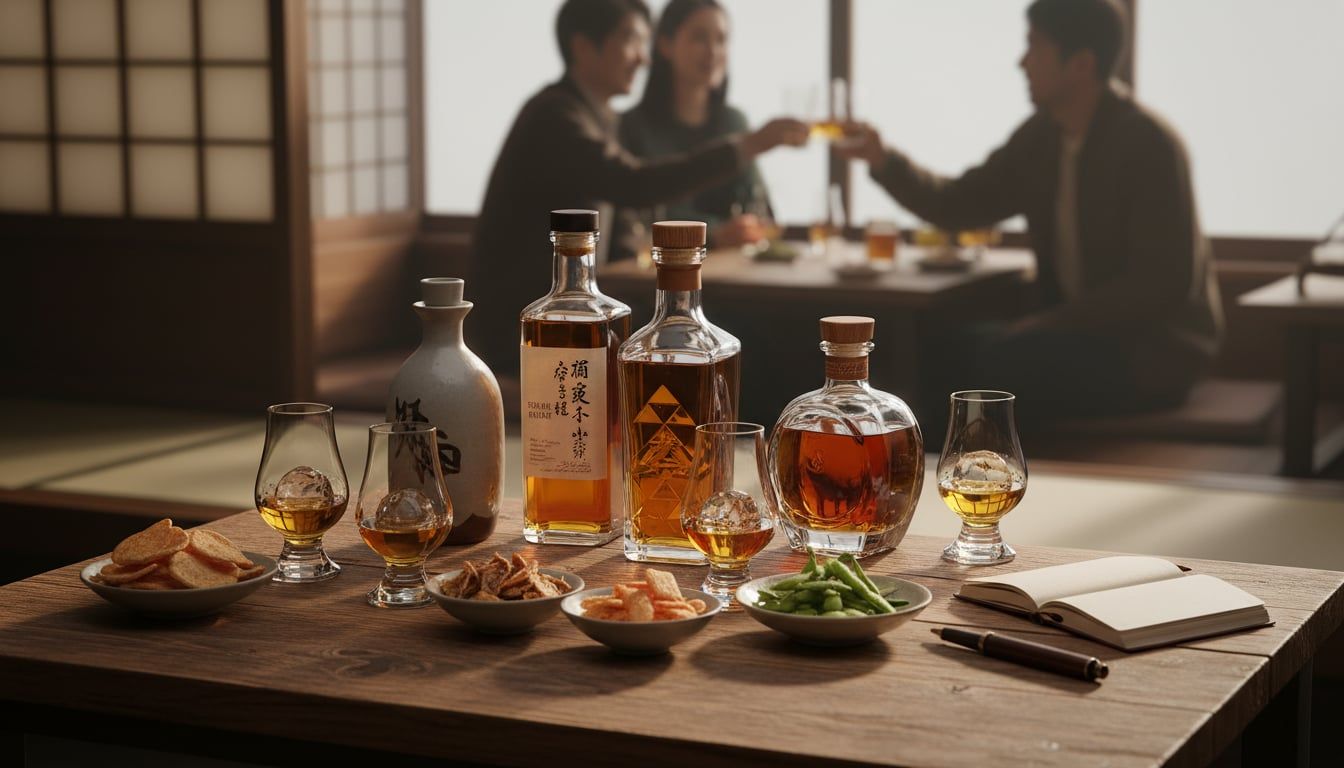
Richer whiskies — a Yoichi or a Yamazaki 18 — pair well with aged cheeses, smoked fish, and dark chocolate. At an izakaya, try them alongside sashimi of more robust fish like salmon or mackerel, or with grilled ginkgo nuts and mushroom dishes.
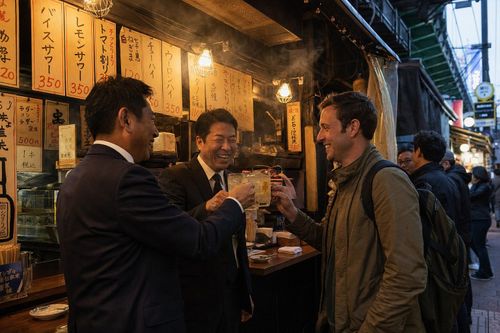
The izakaya culture of slow eating, multiple small dishes, and long conversation is exactly the right context for Japanese whisky. Order a bottle of Kaku Highball to share with the table, take your time, and let the evening unfold.
Getting the Most Out of Japanese Whisky
You do not need to be a whisky expert to enjoy what Japan produces. Start with a highball at an izakaya and notice how well it fits the food and the atmosphere. If you want to go deeper, visit Yamazaki on a day trip from Osaka and taste your way through the distillery's range. Find a small whisky bar in Namba or Kitashinchi and ask the bartender to guide you.
Japanese whisky rewards curiosity. The more you explore, the more you will find — a different distillery character, a new cask type, a limited edition you were not expecting. That sense of discovery, unhurried and grounded in quality, is entirely in keeping with the spirit of traveling in Japan.
Practical Information
Yamazaki Distillery
- Access: JR Yamazaki Station, 5-minute walk
- Hours: 10:00-16:30 (last entry 16:00), closed Tuesdays
- Entry: Free; tastings and tours require advance reservation
- Website: suntory.com/factory/yamazaki
Price ranges (approximate retail)
- Suntory Toki: 2,500-3,000 yen
- Nikka From the Barrel: 3,000-4,000 yen
- Suntory Kakubin: 2,000-2,500 yen
- Hibiki Japanese Harmony: 5,000-6,000 yen
- Yamazaki 12 Year: 6,000-9,000 yen (when available)
- Hakushu 12 Year: 6,000-9,000 yen (when available)
Bar etiquette
- Small Japanese whisky bars are quiet places. Keep your voice low.
- Tipping is not expected or practiced in Japan.
- A cover charge (300-1,000 yen) is common in Ginza and Kitashinchi bars.
- Ask the bartender for a recommendation — they will not steer you wrong.
Frequently Asked Questions
Who are the founders of Japanese whisky?
Masataka Taketsuru and Shinjiro Torii are largely credited as the fathers of Japanese whisky. Taketsuru studied whisky-making in Scotland, and together they established Japan's first distillery at Yamazaki in 1923, before later founding their own rival companies, Nikka and Suntory.
What makes Japanese whisky unique?
Japanese whisky stands out due to its meticulous blending philosophy, use of exceptionally soft and pure mountain spring water, and careful aging in various cask types, including rare Mizunara oak. This dedication to precision and consistency has earned it global recognition.
Which major Japanese whisky distilleries can I visit?
You can visit Yamazaki, Japan's oldest and most accessible distillery, located near Osaka and Kyoto. Other major distilleries include Hakushu in Yamanashi Prefecture and Nikka Yoichi in Hokkaido, both offering distinct visitor experiences.
How do Japanese people typically drink whisky?
Most Japanese people drink their whisky as a highball, which is one part whisky to three or four parts chilled soda water, served over ice. This refreshing drink, often made with Suntory Kakubin, is a common accompaniment to meals at izakayas.
What are the flavor profiles of Yamazaki and Hakushu whiskies?
Yamazaki whiskies are typically fruity, refined, and approachable, with the 12 Year being a popular entry point. Hakushu whiskies, in contrast, are often described as "forest whisky," characterized by fresh, green, and sometimes slightly smoky qualities.
Where can I find good whisky bars in Osaka?
In Osaka, you can find excellent whisky bars in the Namba and Shinsaibashi areas, often small, quiet establishments. For a more premium experience with extensive collections, the Kitashinchi district north of Umeda is highly recommended.