Comiket, Comitia & Doujinshi Events Japan 2026: Foreign Fan's Survival Guide
May 5, 2026
Complete guide to Japan's biggest doujinshi events — Comiket (C108, C109), Comitia, and other indie comic markets for foreign visitors.
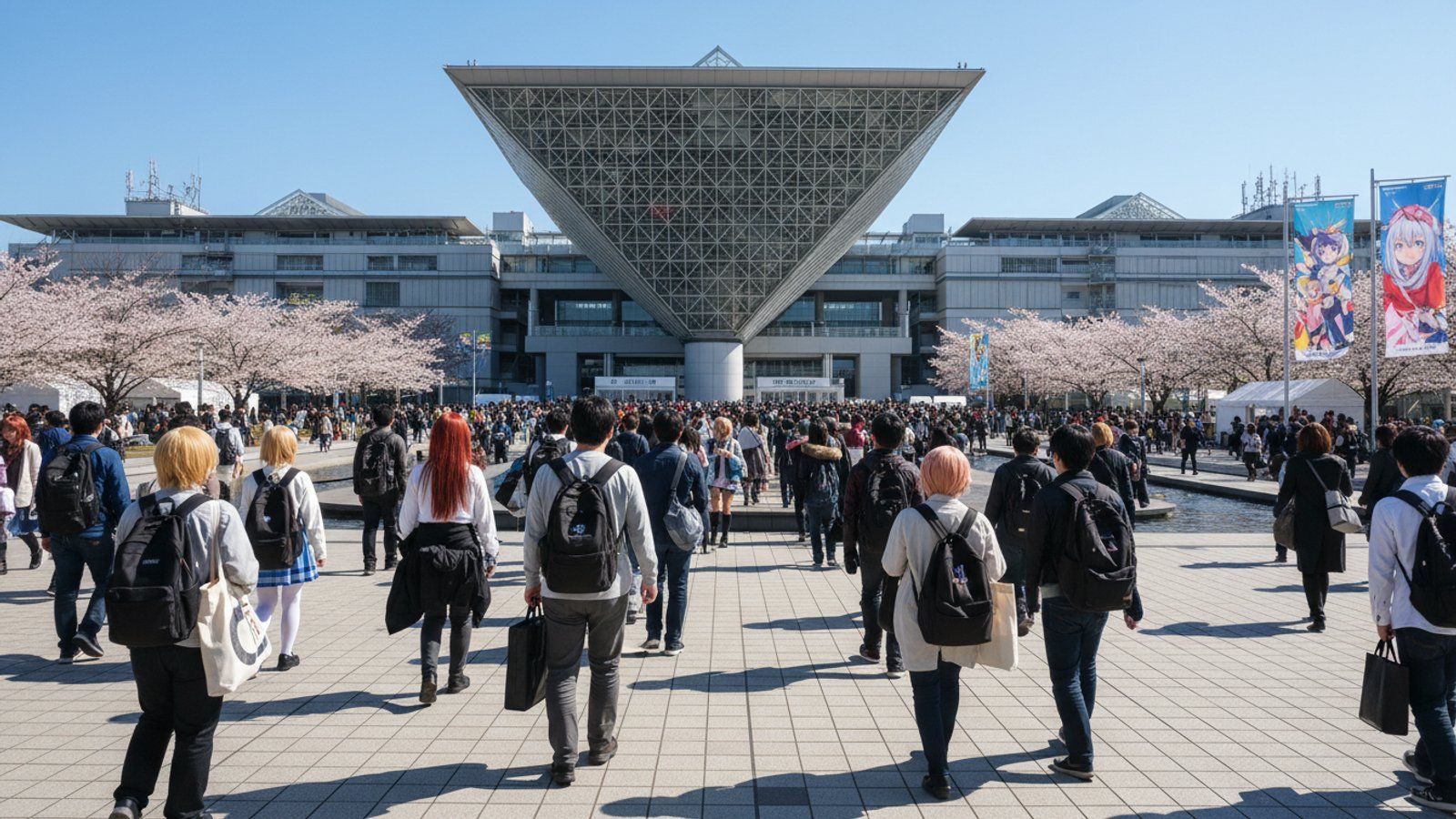
Nothing in the anime and manga world quite prepares you for the scale of Comiket. You can read the statistics — over 700,000 attendees across three days, some 35,000 participating circles (doujin creators), four massive exhibition halls filled shoulder-to-shoulder with self-published comics, games, music CDs, and fan goods — and still feel genuinely unprepared when you step off the Rinkai Line at Tokyo Big Sight for the first time.
Comiket (コミックマーケット, abbreviated C or CM) is not just Japan's largest doujinshi fair. It is one of the most significant gatherings of participatory creative culture anywhere in the world. It is simultaneously a publishing event, a merchandise market, a cosplay gathering, and a social ritual that many Japanese fans have attended every summer and winter for decades. For the overseas fan, it is also an experience that rewards preparation — because the difference between an organized, thrilling day and an exhausting, disorienting one comes almost entirely down to what you know before you arrive.
This guide covers Comiket (C108 in August 2026, C109 in December 2026), Comitia, Sunshine Creation, COMIC1, and regional events — plus everything you need to handle the crowd, the heat, the queue, and the cultural etiquette as a foreign visitor.
What You'll Find in This Guide
- What is Comiket — and how it actually works
- C108 (Summer 2026) and C109 (Winter 2026) — dates, access, and logistics
- What to bring — the essential packing list
- Buying tactics — how to prioritize, navigate halls, and not miss what you came for
- Photography rules — the non-negotiable etiquette
- Comitia and other events — how they compare to Comiket
- Etiquette guide for foreign visitors — the unwritten rules that matter
- What Most Tourists Don't Know — mistakes that ruin the day
What Is Comiket — And What Is a Doujinshi?
A doujinshi (同人誌) is a self-published work — typically a comic, novel, or art book — produced by independent creators and sold directly to the public. Doujinshi can be original works, but a large portion are fan-made derivative works based on existing franchises: manga, anime, games, and increasingly VTubers.
Japan's legal and cultural framework has long tolerated fan-made derivative works sold non-commercially, provided they remain at a certain scale. Doujinshi events occupy a grey zone that major IP holders generally do not challenge, partly because the culture has been foundational to developing Japanese creative talent for fifty years.
Comiket (Comic Market) began in 1975 with 32 participating circles and 600 attendees. Today it is held twice yearly at Tokyo Big Sight — in summer (August) and winter (December) — and is the largest event of its kind in the world. Participation is by lottery application; circles register and are assigned table spaces to sell their work. Attending as a buyer (a "general participant") requires no registration — you show up, pay the entrance fee, and shop.
Beyond doujinshi, Comiket has expanded to include corporate booths (major publishers and game companies sell event-exclusive merchandise in the corporate hall), cosplay areas (some of the most elaborate cosplay in Japan happens in and around Tokyo Big Sight during Comiket), and an enormous secondary market of circle-made goods that are not strictly comics — games, music albums, fan-made figures, and prints.
Comiket 2026 Dates and Venue
C108 — Summer Comiket 2026
- Dates: Mid-to-late August 2026 (exact dates to be announced on the official Comiket website: comiket.co.jp)
- Venue: Tokyo Big Sight (東京ビッグサイト), Ariake, Koto, Tokyo
- Duration: 3 days
- Attendance per day: Approximately 200,000–250,000
C109 — Winter Comiket 2026
- Dates: Late December 2026, typically December 29–31
- Venue: Tokyo Big Sight
- Duration: 3 days
Note: Official dates are confirmed approximately 3–4 months in advance on comiket.co.jp. Always verify before planning your travel around Comiket.
Getting to Tokyo Big Sight
Tokyo Big Sight is located in the Ariake area of Odaiba, on the artificial island in Tokyo Bay.
Most efficient route: Take the Rinkai Line from Osaki Station (accessible from Shinjuku via Shonan-Shinjuku Line) to Kokusai-Tenjijo Station (国際展示場駅). Walk time to Big Sight: approximately 7 minutes. On Comiket days, this route handles crowds better than the Yurikamome monorail.
Yurikamome option: Board at Shimbashi or Toyosu and ride to Kokusai-Tenjijo-Seimon (国際展示場正門駅). Slightly closer to the West Halls entrance. However, the Yurikamome has limited capacity and on major Comiket days, queues at departure stations can be very long.
Wangan bus: Express buses run from Shimbashi during Comiket days — faster than the train for some routes, but crowded. Check the official Comiket website for current bus services closer to the event.
Entry fee: Comiket charges a day-entry fee (typically ¥1,000–¥1,500 per day in recent years) paid at the gate. Exact pricing announced with each event.
What to Bring: The Essential Comiket Packing List
Getting this right separates a good Comiket day from a miserable one.
Cash (essential) Almost every circle at Comiket sells for cash only. There are no card terminals, no IC card readers, no QR payment options at individual tables. Bring at least ¥20,000–¥30,000 per day if you plan to buy seriously, in a mix of ¥1,000 and ¥500 coin — exact change is appreciated and expected.
Large, rigid shopping bag or tote You will accumulate books, prints, and merchandise over the course of a day. A bag that holds its shape is far more practical than a soft tote that collapses on itself. Many experienced attendees bring foldable lightweight luggage carts for heavy days of buying.
Small plastic bags (ziplock-style) For organizing purchases — keeping small items separate, protecting glossy art books from sweat and humidity in summer, and making it easy to find things in a large bag.
Water (at least 1.5L in summer) The summer Comiket is held in Tokyo in August. This means temperatures between 33–38°C outside and significant heat inside the halls from body density. Dehydration is a real risk. There are vending machines and convenience stores near the venue, but lines are long. Bring your own water and drink before you feel thirsty.
Fan, cooling towel, cooling spray (summer only) Heat management is serious. Small battery-powered fans are widely used. A cooling towel around your neck makes the outdoor queue tolerable. Many Japanese attendees also bring portable ice packs.
Snacks The food options at Tokyo Big Sight during Comiket are overloaded. Long queues at every restaurant and convenience store are standard. A packed lunch or snack bars in your bag save significant time.
Printed catalog page or Comiket Web Catalog on your phone Comiket publishes an official physical catalog (sold at Big Sight and in advance at convenience stores) and a digital version (ComicMarket Web Catalog app). Your circle of interest is identified by Hall + Row + Table number. Navigating without knowing your targets in advance costs enormous time — the halls are genuinely enormous.
Comfortable shoes You will walk several kilometers across the day, often on hard concrete. This is not the day for new shoes.
Buying Tactics: How to Navigate Comiket Without Missing What You Want
Do your research before you arrive. The Comiket Web Catalog (comiket.co.jp) goes live several weeks before the event. Browse by genre, series, or character to identify circles you want to visit. Mark them in the app — it shows their table locations on a hall map. Build a priority list (top 5–10 circles) and a secondary list.
Understand the hall layout. Tokyo Big Sight has East Halls 1–8 and West Halls 1–4. Different content clusters in different areas. Doujinshi by genre tends to be organized in blocks — anime/manga fan works fill the East Halls, original works and more niche content may be in West or South Halls. Corporate booths (event-exclusive merchandise from official companies) are typically in a separate dedicated hall.
Prioritize, then shop in order. Go to your top-priority circles first, ideally within the first 2 hours. Popular circles sell out within the first 30–60 minutes. Circles from well-known creators selling Hololive, One Piece, or Jujutsu Kaisen derivative works will have queues — sometimes very long ones — and sell-outs happen early.
Queueing for popular circles. Some highly anticipated circles operate individual queue systems — you take a number and return at a designated time. Others are first-come, first-serve with a standing line. Check the circle's social media before the event: popular creators often announce their queue system in the days before Comiket.
The corporate hall is separate. Major game companies, anime studios, and publishers set up corporate booths selling event-exclusive merchandise. This area has its own queue structure and is often as popular as the circle tables. If there are specific corporate exclusives you want (limited-edition goods from Bandai, Square Enix, etc.), plan your day to hit these booths early.
Photography Rules at Comiket
This is non-negotiable etiquette, and getting it wrong can create a real problem.
Inside the halls: no photography of circles or their merchandise without explicit permission. The tables and the works sold there are the creator's intellectual property. Photographing a circle's display — even just for reference — requires asking first. Most creators will agree if you ask politely; many will not if you just raise your camera. When in doubt, ask.
Cosplay photography is consensual only. Comiket has a designated outdoor cosplay area. Even within this area, photographing a cosplayer requires asking permission directly. The standard phrase is: "Shashin wo totte mo ii desu ka?" (写真を撮ってもいいですか?) — "May I take a photo?" Many cosplayers will agree warmly and even pose. Do not photograph without asking, and accept a refusal without argument.
No photography in queues. Some queues pass through sensitive areas or include cosplayers who have not yet reached the designated photo area. As a rule of thumb, do not photograph other attendees in queue without asking.
No video streaming from inside the halls. Live streaming or recording video inside the exhibition halls is prohibited.
Comitia: Comiket's Original-Works Counterpart
Comitia (コミティア) is held quarterly at Tokyo Big Sight — typically in February, May, August, and November — and is dedicated exclusively to original works. No derivative fan works, no franchise-based doujinshi. Only creators producing their own original stories, characters, and worlds.
This distinction makes Comitia a fundamentally different experience from Comiket. The atmosphere is quieter and more focused — Comitia attracts working professionals, aspiring manga artists, and fans specifically seeking new original voices rather than more content of existing franchises. The scale is smaller (approximately 10,000–15,000 attendees per event), meaning less crowds and more space to talk directly with creators.
For visitors with serious interest in Japanese indie comics as an art form rather than franchise merchandise, Comitia is arguably the more rewarding experience.
Comitia 2026 approximate dates: February, May, August, November (exact dates at comitia.co.jp).
Access: Same venue as Comiket — Tokyo Big Sight. Take the Rinkai Line to Kokusai-Tenjijo.
Admission: Typically ¥1,000 at the gate; advance catalog purchase available.
Other Major Doujin Events in Japan
Sunshine Creation (サンクリ)
Held at Sunshine City Convention Center in Ikebukuro, Sunshine Creation is a mid-size doujin event running roughly quarterly. Smaller than Comiket but covering the same broad mix of fan-work categories. Its Ikebukuro location makes it extremely convenient for visitors staying in central Tokyo.
COMIC1
A semi-annual event (★ series and ♦ series) held at Tokyo Big Sight, focused on similar content to Comiket but organized by a different team. Typically smaller and less overwhelming, making it a better first doujin event for newcomers. Check comic1.jp for upcoming dates.
M3 (Sound Only)
A specialized event for independent music, drama CDs, and sound works — not visual doujinshi. Held at Tokyo Ryutsu Center in spring and autumn. The VTuber original song and fan arrange community has significant presence here.
Regional Events
Major regional cities host their own doujin events throughout the year:
- Osaka: Comic City Osaka (held at Intex Osaka, one of Japan's largest regional doujin events)
- Nagoya: Comic Live Nagoya
- Fukuoka: Comic City Fukuoka
These regional events are smaller, less overwhelming, and often friendlier for first-time attendees who want to experience doujin culture without the full Comiket intensity.
What Most Tourists Don't Know
The summer Comiket is genuinely dangerous if you are not prepared for heat. Multiple attendees receive medical treatment for heat-related illness at every summer Comiket. The outdoor queue can last 2–3 hours in direct Tokyo August sun. The organizers take this seriously and provide rest areas — but preventing the problem through hydration, shade, and knowing your limits is entirely on you. If you feel dizzy or nauseous, leave the queue immediately and find shade.
Day 3 of each Comiket event is typically the busiest. The final day of Comiket draws the largest crowds — many circles save their most desirable items for this day, and corporate booths often receive the most remaining inventory. But it is also the most exhausting day to attend. Days 1 and 2 are generally more navigable for a first-time visitor.
Many popular circles do not take walk-in purchases at all. Some highly anticipated creators now sell exclusively through advance online pre-orders, with Comiket serving only as the pickup location. Check the circle's social media before assuming you can buy on the day.
The cloakroom fills up fast. Tokyo Big Sight has coat check / baggage facilities. On Day 1 these can fill by mid-morning. If you are bringing large bags, arrive early or use a nearby coin locker (Kokusai-Tenjijo Station has lockers, though they also fill quickly).
Cosplay changing rooms are inside the venue, not in public areas. Cosplayers are required to change into costume inside the venue's dedicated dressing areas — not in hotel lobbies, train stations, or outside. This is strictly enforced.
For more on finding doujinshi and fan merchandise outside of events, the Akihabara Otaku Guide covers Toranoana, Mandarake, and Melon Books — which stock current doujinshi between events.
Wrapping Up
Comiket and Japan's broader doujin event scene are experiences unlike anything else in global pop culture — a bottom-up creative industry where professional artists, hobbyist illustrators, and fans who love a character enough to spend weeks making a book about them stand behind adjacent tables with equal dignity. Approaching it with preparation and genuine respect for the culture makes the difference between a chaotic, overwhelming day and one of the most memorable experiences of any Japan trip.
Frequently Asked Questions
When is Comiket 2026?
Comiket C108 (Summer) is scheduled for mid-to-late August 2026, and C109 (Winter) for late December 2026, typically December 29–31. Exact dates are announced on the official website at comiket.co.jp approximately 3–4 months in advance.
How much cash should I bring to Comiket?
Bring at least ¥20,000–¥30,000 per day if you plan to buy across multiple circles. Almost all circle sales are cash-only. Individual doujinshi typically cost ¥500–¥1,500, with art books and boxed sets running higher.
Do I need a ticket to attend Comiket?
There is no advance ticket for general attendees. You pay an entry fee (approximately ¥1,000–¥1,500) at the gate on the day. Bring exact change if possible as the gate queues move faster when cash is ready.
What is the difference between Comiket and Comitia?
Comiket accepts all doujinshi including fan-made derivative works based on existing franchises. Comitia is restricted to original works only — no fan fiction of existing anime, manga, or games. Comitia is smaller and quieter, with a different creative atmosphere.
Can I take photos of cosplayers at Comiket?
Yes, but only with explicit permission. Always ask directly — "Shashin wo totte mo ii desu ka?" — before raising your camera. Cosplay photography is concentrated in the designated outdoor cosplay area. Never photograph without asking, and accept a refusal gracefully.
What should I wear to summer Comiket?
Light, breathable clothing suitable for 35°C+ weather. Closed-toe shoes for safety on crowded floors. Bring a hat or cap for outdoor queue time, a small fan, a cooling towel, and 1.5L+ of water. Avoid heavy bags — you will be carrying purchases by the end of the day.
Explore More
- Akihabara Otaku Guide — Where to find doujinshi, VTuber goods, and anime merchandise between events.
- VTuber Pilgrimage Japan Guide — VTuber-themed doujin is one of Comiket's fastest-growing categories; this guide covers the broader VTuber fan destination scene.
- Gundam Spots Japan Guide — Gundam fan works are perennially among Comiket's busiest circles; visit these official destinations alongside the event.
- Japan Figure Collector Guide — Fan-made resin garage kits are sold at Comiket alongside doujinshi; this guide covers the broader collectibles market.