From takoyaki to ikayaki, Osaka earns its 'Kitchen of Japan' title one bite at a time. Our ranked guide to the 15 best street foods.
There is a saying in Osaka: "kuidaore" -- eat until you drop. This is not a warning. It is a lifestyle. While Tokyo refines and Kyoto preserves, Osaka devours. The city wears its "Kitchen of Japan" nickname with greasy, delicious pride, and nowhere is that more obvious than on its streets.
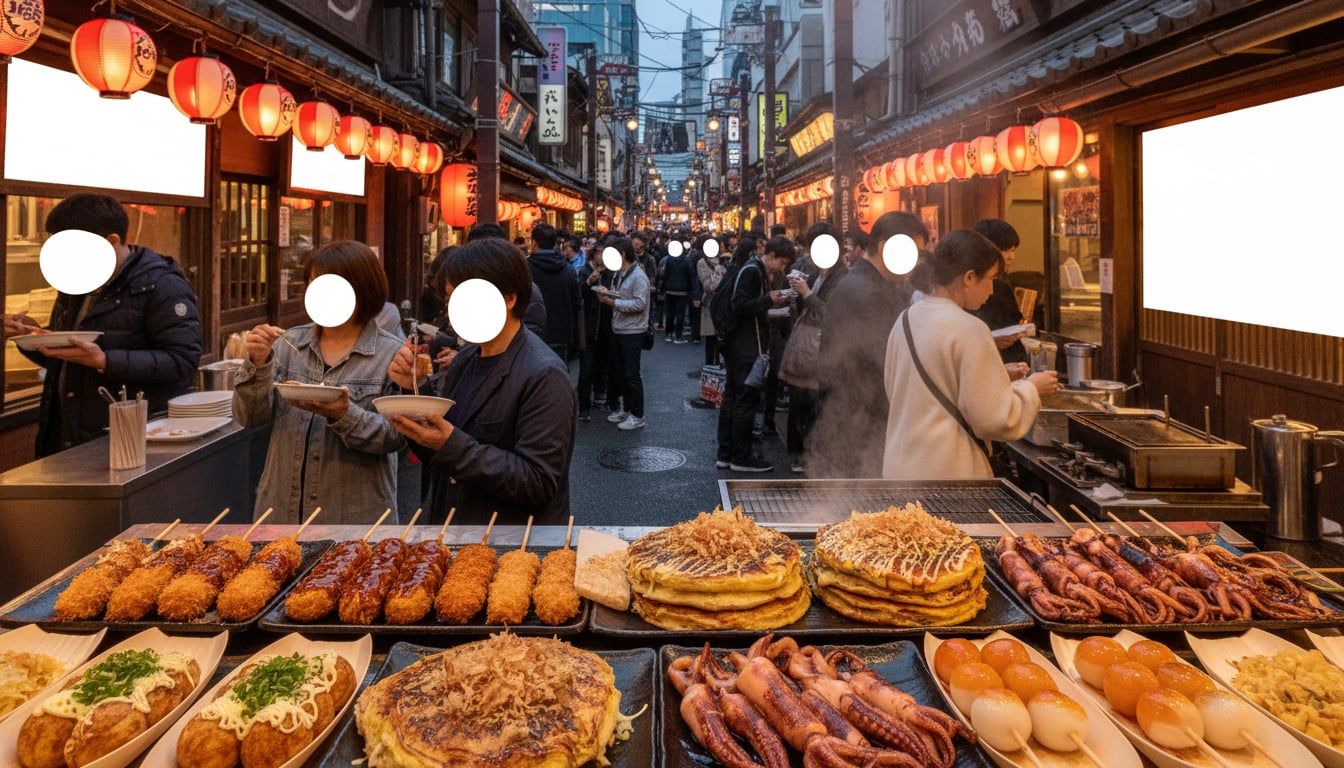
From sizzling griddles in Dotonbori to the covered stalls of Kuromon Market, Osaka's street food scene is loud, affordable, and unapologetically over the top. We ranked the 15 best bites so you know exactly where to spend your yen.
Where to Eat: Osaka's Best Street Food Areas
Before we dive into the rankings, here are the neighborhoods where the magic happens:
- Dotonbori -- The neon-lit main stage. Iconic shops line the canal, and the energy is unmatched at night.
- Shinsekai -- Old-school Osaka atmosphere with kushikatsu towers and retro charm around Tsutenkaku Tower.
- Kuromon Market -- Known as "Osaka's Kitchen," this covered market has been feeding locals since 1902. Best visited in the morning.
- Tennoji -- A locals' favorite with less tourist traffic and plenty of authentic stalls near Abeno and Shitennoji Temple.
The Rankings
1. Takoyaki (Octopus Balls) -- 400-700 yen
The undisputed king. Crispy shell, molten center, a chunk of tender octopus hiding inside. Osaka invented takoyaki, and the city takes it personally if you leave without trying some. Head to Wanaka in Dotonbori or Aizuya in Tamade (where it was born in 1933) for the real deal. Get them with sauce, mayo, bonito flakes, and green onion. Burn your mouth on the first one -- everyone does.
2. Okonomiyaki (Savory Pancake) -- 800-1,500 yen
Osaka-style okonomiyaki mixes all the ingredients together into the batter before grilling -- cabbage, pork, shrimp, tempura bits, egg -- creating a thick, satisfying disc of flavor. Watch it sizzle on the teppan griddle, then smother it in sweet brown sauce and mayo. Mizuno in Dotonbori has had lines since 1945 for good reason.
3. Kushikatsu (Deep-Fried Skewers) -- 100-200 yen per stick
Shinsekai is kushikatsu territory. Meat, vegetables, cheese, even whole garlic cloves get battered, skewered, and deep-fried to golden perfection. Dip each stick into the communal sauce trough -- but only once. The "no double-dipping" rule is sacred here. Daruma is the most famous chain, but the smaller shops along Janjan Yokocho alley are just as good and half the wait.
4. Ikayaki (Pressed Squid) -- 200-400 yen
Not the whole-grilled-squid-on-a-stick you see at festivals elsewhere. Osaka's ikayaki is something different: squid pressed flat into a thin egg batter and cooked between iron plates, then brushed with sweet soy sauce. It is cheap, fast, and intensely savory. The stall inside Hanshin Department Store's basement floor near Umeda Station is legendary -- office workers line up daily for this 200-yen snack.
5. Butaman (Pork Buns, 551 Horai) -- 200 yen each
In Osaka, "551" is practically a household name. 551 Horai's butaman are juicy, peppery pork buns with a thick, fluffy wrapper that you can smell from a block away. The main shop is in Namba, but kiosks are scattered across every major station. Buy a box to take on the train -- just know that the entire car will smell like pork and everyone around you will start craving one.
6. Gyoza (Pan-Fried Dumplings) -- 300-500 yen
Thin-skinned, crispy-bottomed, served in sets of six or eight with a vinegar-soy-chili dip. Osaka's gyoza tend to be smaller and crunchier than the Tokyo style. Chao Chao Gyoza near Dotonbori serves creative fillings, but for classic pork gyoza, the no-name shops in Tsuruhashi's Korean Town are hard to beat.
7. Karaage (Fried Chicken) -- 400-600 yen
Marinated in ginger, garlic, and soy, coated in potato starch, and fried until shatteringly crispy. Karaage is sold in paper cups from stalls and carts across Dotonbori and Amerikamura. Squeeze lemon on top and eat them while they are still scalding hot. Some stalls offer spicy or garlic-butter variants for an extra kick.
8. Taiyaki (Fish-Shaped Pastry) -- 200-300 yen
These golden, fish-shaped cakes are filled with sweet red bean paste (anko) or custard cream. The best ones have a thin, crispy shell and generous filling that oozes out with every bite. Naruto Taiyaki near Shinsaibashi makes theirs to order, so you always get them fresh off the iron mold.
9. Yakitori (Grilled Chicken Skewers) -- 100-200 yen per stick
Charcoal-grilled chicken skewers seasoned with salt or tare (sweet soy glaze). Thigh meat, skin, cartilage, heart -- Osaka's yakitori stalls grill every part of the bird. The smoky alleys near Tennoji Station and under the tracks at Shinsekai are prime yakitori hunting grounds. Order five or six sticks and a cold beer for the complete experience.
10. Kitsune Udon (Sweet Fried Tofu Udon) -- 500-800 yen
Osaka is the birthplace of kitsune udon. The broth is lighter and sweeter than its Tokyo counterpart, made with kombu and light soy. A large piece of sweet, juicy abura-age (fried tofu) sits on top of thick, slippery noodles. Usami Tei Matsubaya, operating since 1893, claims to have invented it. Sit at the counter, slurp loudly, and soak in over a century of tradition.
11. Negiyaki (Green Onion Pancake) -- 800-1,200 yen
Think of it as okonomiyaki's lighter, more refined cousin. Instead of cabbage, negiyaki is packed with chopped green onions and cooked thinner and crispier. It is finished with soy sauce rather than the usual heavy brown sauce. Negiyaki Yamamoto in Juso has been the gold standard since 1965.
12. Tecchiri / Fugu (Blowfish Hot Pot) -- Splurge Option
This is Osaka's luxury street food adventure. Fugu (blowfish) is served as sashimi, fried, or in a warming hot pot called tecchiri. Zuboraya in Shinsekai -- with its giant blowfish lantern -- was the most iconic spot for decades. The area around Shinsekai and Tennoji still has several licensed fugu restaurants where a full course starts around 4,000-5,000 yen. Worth the splurge at least once.
13. Dorayaki (Red Bean Pancakes) -- 200-300 yen
Two fluffy, honey-scented pancakes sandwiching sweet red bean paste. Yes, this is what Doraemon eats. Pick one up at any depachika (department store basement) or traditional wagashi shop. They are the perfect walking snack -- neat, portable, and just sweet enough.
14. Wataame (Cotton Candy) -- 500-1,000 yen
The trendy shops in Amerikamura have turned simple cotton candy into towering, colorful works of art. Some are bigger than your head, swirled into flower shapes, and flavored with matcha, strawberry, or grape. Is it street food? Technically yes. Is it mostly for photos? Also yes. But it is fun, and the Amemura vibe makes it worth the stop.
15. Kakigori (Shaved Ice) -- 500-1,000 yen
A summer essential. Fluffy, snow-like shaved ice drenched in syrup -- matcha, condensed milk, mango, or Osaka's own mix of flavors. The best kakigori spots use natural ice blocks that produce an impossibly fine, melt-on-your-tongue texture. Visit between June and September for peak season; look for long lines near Nakazakicho or Shinsaibashi.
Street Food Tips for Osaka
- Eat-walking is generally fine in market areas like Kuromon and Dotonbori's side streets. Just avoid eating on trains or buses -- it is considered rude.
- Cash is still king at many street stalls. Bring coins and small bills.
- Go hungry. Portions are small by design so you can sample many things in one session. Five to seven items makes a full meal.
- Lunch beats dinner for crowds. Hit the popular spots between 11:00 and 14:00 to avoid the longest waits.
- Ask for "atsui" (hot) items fresh off the grill rather than pre-made ones sitting in the display. The difference is enormous.
Osaka does not just feed you -- it challenges you to keep eating. From a 200-yen squid snack at a basement stall to a golden takoyaki ball burning your fingers in Dotonbori, every bite here tells you exactly why this city earned its title as Japan's Kitchen. Come hungry, leave happy, and maybe loosen your belt a notch before you start.
Frequently Asked Questions
What is Osaka's food culture known for?
Osaka's food culture is famously encapsulated by the saying "kuidaore," meaning "eat until you drop," which is considered a lifestyle rather than a warning. The city proudly holds the nickname "Kitchen of Japan" due to its vibrant and delicious street food scene.
Where are the best places to find street food in Osaka?
Top street food areas in Osaka include the neon-lit Dotonbori, old-school Shinsekai around Tsutenkaku Tower, the historic Kuromon Market, and the locals' favorite Tennoji. Each neighborhood offers a unique atmosphere and selection of bites.
What are the must-try street foods in Osaka?
The undisputed king of Osaka street food is Takoyaki (octopus balls), followed closely by Okonomiyaki (savory pancake) and Kushikatsu (deep-fried skewers). Other essential bites include Ikayaki (pressed squid), Butaman (pork buns), and Gyoza (pan-fried dumplings).
Are there any specific etiquette tips for eating street food in Osaka?
While eat-walking is generally acceptable in market areas like Kuromon and Dotonbori's side streets, it's considered rude to eat on trains or buses. A crucial rule for Kushikatsu is "no double-dipping" in the communal sauce trough.
Do I need cash for Osaka street food stalls?
Yes, cash is still king at many street stalls in Osaka, so it's advisable to bring coins and small bills. Portions are typically small by design, allowing you to sample many items in one session.