Osaka-style vs Hiroshima-style, DIY griddle tables, and the best shops — your complete guide to Japan's ultimate comfort food.
The name says it all. "Okonomi" means "as you like it," and "yaki" means "grilled." Put them together and you get Japan's most democratic dish — a savory pancake where you choose the fillings, cook it yourself on a sizzling iron griddle, and drown it in sauce without a shred of guilt.
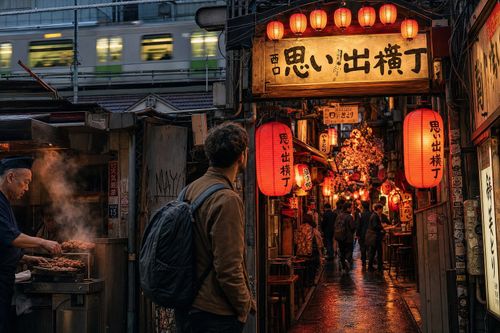
Osaka claims okonomiyaki as its soul food. Walk through Dotonbori or the backstreets of Namba on any evening and the smell hits you before the neon does: sizzling batter, caramelizing sauce, and bonito flakes dancing in the rising heat. This is comfort food at its finest, and Osaka does it better than anywhere else in Japan.
Osaka-Style vs Hiroshima-Style: The Great Debate
Before you order, you should know there are two major schools of okonomiyaki, and fans of each will argue passionately about which is superior.
Osaka-style (Kansai-style) mixes everything together. Shredded cabbage, batter, egg, tenkasu (crispy tempura bits), and your choice of protein all go into a bowl, get stirred up, and are poured onto the griddle as one thick, satisfying disc. The result is fluffy on the inside, crispy on the edges, and loaded with flavor throughout.
Hiroshima-style takes a layered approach. A thin crepe of batter goes down first, then a mountain of cabbage, followed by pork, a fried egg, and a generous bed of yakisoba noodles. The layers stay distinct, creating a towering stack that gets pressed together on the griddle. It is a different experience entirely — more structured, more textural contrast.
Both are outstanding. But since you are in Osaka, start with the hometown version. You will have plenty of chances to compare.
What Goes Into an Okonomiyaki
The base is simple: a light wheat flour batter, shredded cabbage (and lots of it), eggs, and tenkasu for extra crunch. Most shops add grated nagaimo yam to the batter, which gives it that signature fluffy, almost custardy interior.
From there, you pick your main ingredient. Buta-tama (pork belly and egg) is the classic — thin slices of fatty pork that crisp up beautifully on the griddle. Seafood lovers go for ebi (shrimp), ika (squid), or a mixed seafood version. Some shops offer cheese, mochi, or kimchi as add-ons. Remember the name: as you like it.
The Toppings That Make It
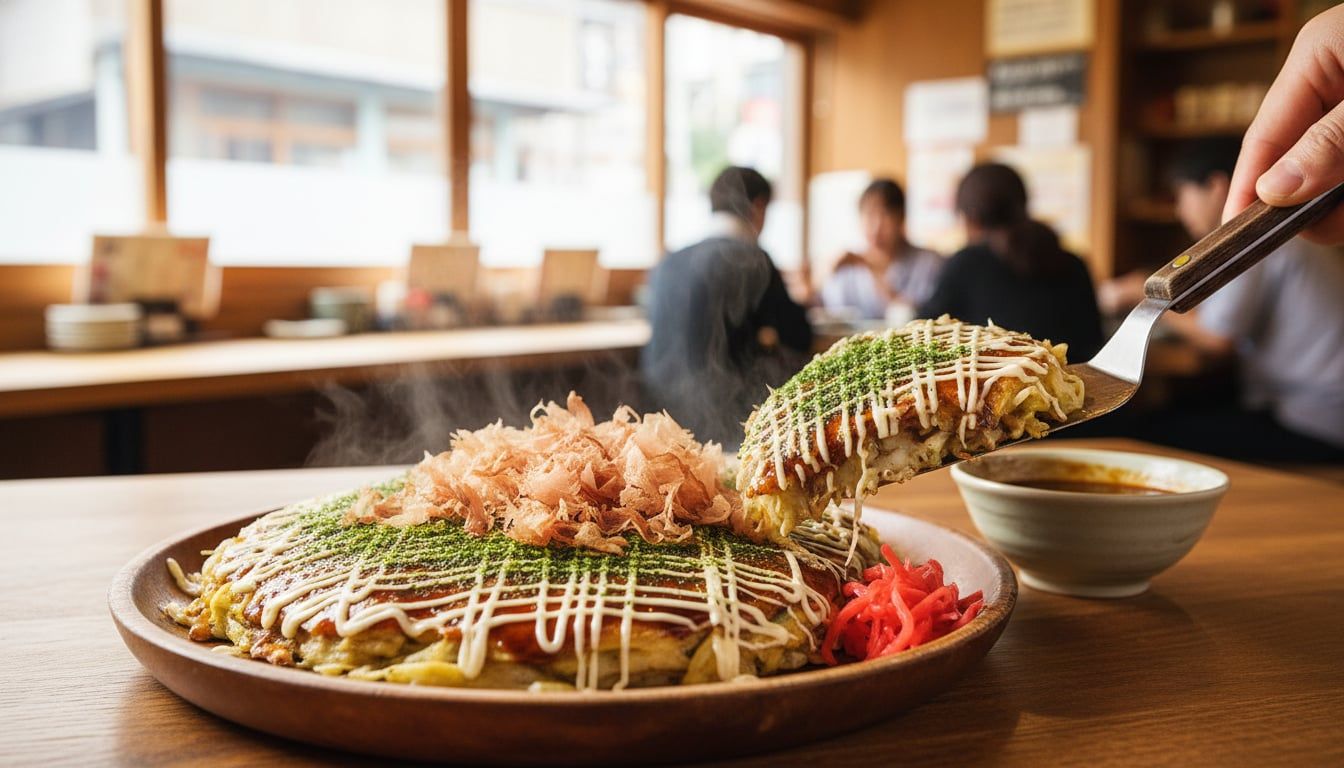
An okonomiyaki without its toppings is like a canvas without paint. Once your pancake is golden and cooked through, the finishing ritual begins:
- Otafuku sauce — a thick, sweet-savory brown sauce that is practically synonymous with okonomiyaki. It tastes like a fruitier, less tangy version of Worcestershire sauce.
- Japanese mayonnaise — squeezed in zigzag lines across the top. Kewpie brand is the gold standard.
- Katsuobushi (bonito flakes) — paper-thin shavings of dried fish that wave and curl from the heat, making your okonomiyaki look alive.
- Aonori (green seaweed flakes) — scattered on top for color and a subtle ocean flavor.
The combination of sweet sauce, rich mayo, umami-packed bonito, and fragrant seaweed is what elevates okonomiyaki from a simple pancake into something genuinely addictive.
The DIY Griddle Experience
Here is where Osaka okonomiyaki gets really fun. Many shops seat you at a table with a built-in teppan (iron griddle) and hand you a bowl of raw batter and ingredients. You mix it yourself, pour it onto the hot surface, and cook your own meal.
Do not panic. The staff will show you the basics: mix gently (overstirring makes it tough), form a rough circle, resist the urge to press it flat, and flip it once after about four minutes. You will get a metal spatula called a "kote" to handle the flipping. Your first attempt might not be Instagram-perfect, but it will taste fantastic.
Cooking your own okonomiyaki is one of those travel experiences that sticks with you. There is something deeply satisfying about sitting around a hot griddle with friends, debating flip timing, and eating directly off the iron surface. It is interactive, social, and delicious.
Some higher-end shops cook it for you at a counter, which lets you watch a master at work. Both experiences are worth trying.
Where to Eat: Osaka's Best Okonomiyaki Shops
Mizuno (美津の) — Namba
The most famous okonomiyaki shop in Osaka, and for good reason. Mizuno holds a Michelin Bib Gourmand and has been serving since 1945. Their signature "Yama-imo yaki" uses generous amounts of mountain yam for an incredibly light, airy texture. Expect a line, especially on weekends — but it moves steadily.
- Address: 1-4-15 Dotonbori, Chuo-ku
- Station: 3 min walk from Namba Station
- Price: 1,000-1,500 yen
- Tip: The counter seats facing the griddle are the best spots in the house.
Fukutaro (福太郎) — Namba
A local favorite that flies under the tourist radar. Fukutaro keeps things simple and executes perfectly. Their pork and squid mix is outstanding, and the slightly charred edges they achieve are chef-level. The shop is small and atmospheric, tucked into a Namba side street.
- Address: 2-3-17 Sennichimae, Chuo-ku
- Station: 5 min walk from Namba Station
- Price: 800-1,200 yen
- Tip: Try their negiyaki (green onion version) as a side.
Kiji (きじ) — Umeda Sky Building
Hidden in the retro restaurant alley beneath the Umeda Sky Building, Kiji is a pilgrimage spot for okonomiyaki devotees. The master cooks everything himself on a long counter griddle, and his "modanyaki" — okonomiyaki with yakisoba noodles folded inside — is legendary. The noodles add chew and substance that takes the dish to another level.
- Address: B1F Takimi-koji, Umeda Sky Building, Kita-ku
- Station: 9 min walk from Umeda Station
- Price: 900-1,400 yen
- Tip: Arrive before 11:30 or after 14:00 to avoid the longest waits.
Ajinoya (味乃家) — Namba
Operating since 1965, Ajinoya is another Namba institution. They cook your okonomiyaki on the griddle in front of you, and their batter recipe — passed down for decades — produces a texture that is crispy outside and almost creamy inside. The mixed seafood version here is exceptional.
- Address: 1-7-16 Namba, Chuo-ku
- Station: 3 min walk from Namba Station
- Price: 900-1,300 yen
- Tip: Pair it with their yakisoba for the full experience.
Variations Worth Trying
Modanyaki adds a layer of yakisoba or udon noodles to the standard okonomiyaki, creating a carb-on-carb masterpiece that is pure Osaka indulgence. The name likely comes from "modern," and it is the go-to order for anyone who wants maximum satisfaction.
Negiyaki swaps most of the cabbage for finely sliced green onions, producing a thinner, more delicate pancake with a sharper flavor. It is lighter and pairs well as a complement to a regular okonomiyaki.
Beyond Namba: Tennoji and Shinsekai
If you are staying in the Tennoji area, you are in luck. The streets around Shinsekai — Osaka's wonderfully retro entertainment district near Tsutenkaku Tower — are packed with affordable okonomiyaki joints alongside the famous kushikatsu shops. The vibe here is grittier and more old-school Osaka than the polished Namba scene, and prices tend to be a touch lower. Wander Jan Jan Yokocho arcade and follow your nose.
Every Family Has a Recipe
Ask any Osakan about okonomiyaki and they will inevitably tell you that their mother's version is the best. This is not just restaurant food — it is deeply woven into home cooking culture. Every family has their own ratio of batter to cabbage, their own secret ingredient (dashi stock, grated lotus root, a splash of beer in the batter), and their own strong opinions about sauce application.
That home-cooking tradition is exactly what gives okonomiyaki its character. It is unpretentious, endlessly customizable, and meant to be shared. Whether you are standing at a Shinsekai counter or sitting at a Dotonbori griddle table with sauce on your fingers, you are eating the dish that Osaka loves most.
Budget around 800 to 1,500 yen per okonomiyaki, add a cold beer, and you have one of the best meals in Japan for under 2,000 yen. As you like it, indeed.
Frequently Asked Questions
What is the difference between Osaka-style and Hiroshima-style okonomiyaki?
Osaka-style okonomiyaki mixes all ingredients like cabbage, batter, and protein together into one thick disc before grilling. In contrast, Hiroshima-style takes a layered approach, starting with a thin crepe, then adding cabbage, pork, egg, and yakisoba noodles, keeping the layers distinct.
What are the main ingredients and toppings for Osaka-style okonomiyaki?
The base includes a light wheat flour batter, shredded cabbage, eggs, and tenkasu, often with grated nagaimo yam for fluffiness. Essential toppings are Otafuku sauce, Japanese mayonnaise (Kewpie brand), katsuobushi (bonito flakes), and aonori (green seaweed flakes).
Do you cook your own okonomiyaki at restaurants in Osaka?
Yes, many Osaka okonomiyaki shops offer a DIY experience where you mix the ingredients and cook your own pancake on a built-in iron griddle (teppan). Staff are usually on hand to show you the basics, but some higher-end shops will cook it for you.
Can you recommend some popular okonomiyaki restaurants in Osaka?
Popular and highly-regarded okonomiyaki shops in Osaka include Mizuno (Namba), known for its Yama-imo yaki; Fukutaro (Namba), a local favorite; Kiji (Umeda Sky Building), famous for its modanyaki; and Ajinoya (Namba), an institution since 1965.
What are Modanyaki and Negiyaki?
Modanyaki is a variation of okonomiyaki that includes yakisoba or udon noodles folded inside, creating a satisfying carb-on-carb dish. Negiyaki is a lighter version where most of the cabbage is replaced with finely sliced green onions, producing a thinner pancake with a sharper flavor.