Deep-fried perfection on a stick — and one golden rule: never double-dip. Your guide to Osaka's beloved kushikatsu, from Shinsekai to hidden gems.
There is a dish in Osaka that captures everything the city stands for — bold flavors, zero pretension, and an absolute refusal to overcomplicate a good thing. That dish is kushikatsu: skewered ingredients coated in batter, deep-fried to a shattering golden crunch, and dunked in a tangy Worcestershire-style sauce. It is fast, affordable, wildly addictive, and surrounded by one of the most famous food rules in all of Japan.
What Exactly Is Kushikatsu?
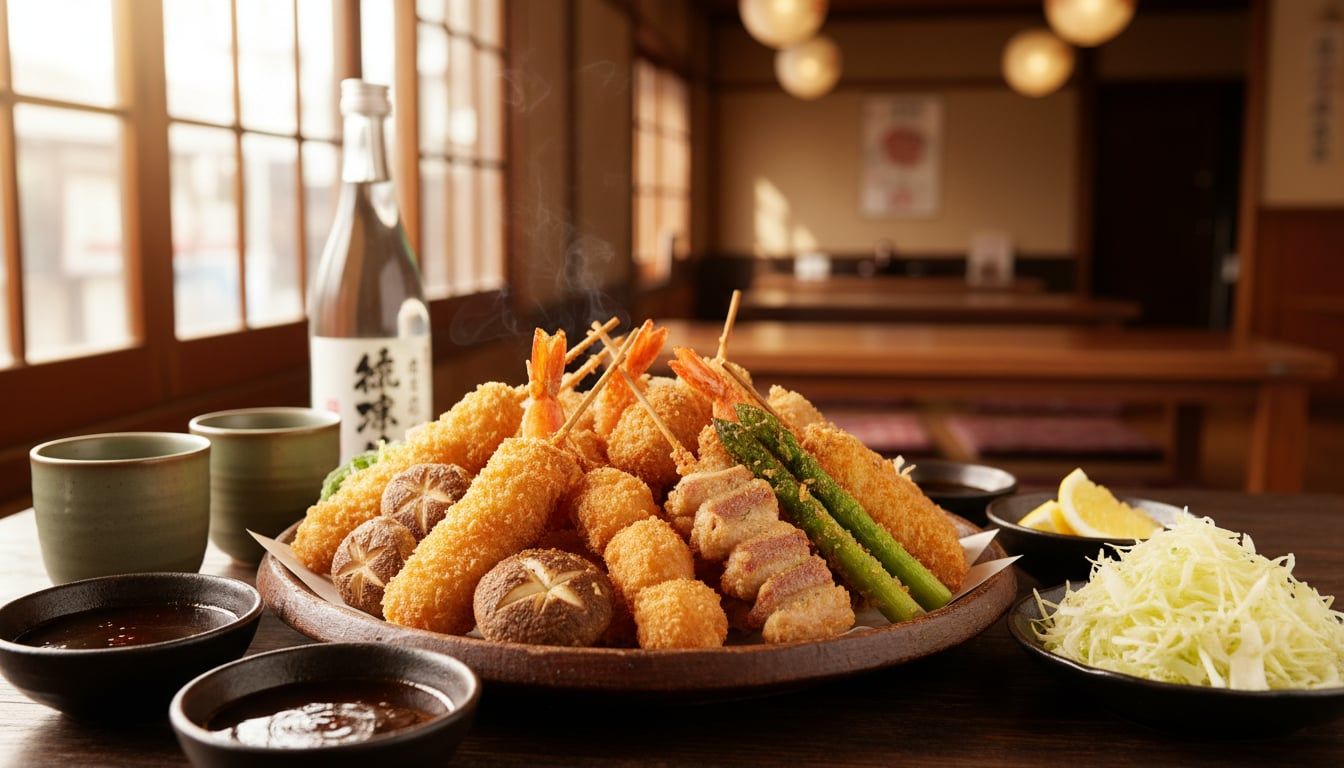
Kushikatsu (also called kushiage) is the art of deep-frying skewered bites of meat, seafood, and vegetables. "Kushi" means skewer, and "katsu" refers to the crispy cutlet-style frying technique. Each piece is threaded onto a bamboo stick, dipped in a light egg-and-flour batter, rolled in fine panko breadcrumbs, and plunged into hot oil for just long enough to turn perfectly golden.
The dish traces its roots back to 1929 in Shinsekai, Osaka's retro entertainment district. A shop called Daruma is widely credited as the birthplace, originally serving deep-fried skewered beef as cheap, hearty fuel for the neighborhood's working-class residents. Nearly a century later, kushikatsu remains one of the most beloved street foods in the city — and Shinsekai is still the undisputed capital.
The One Rule You Must Never Break
Before you pick up a single skewer, there is one rule every kushikatsu restaurant will make absolutely clear: no double dipping. The sauce at your table sits in a shared communal trough, and you get exactly one dip per skewer. If you want more sauce, use the provided cabbage leaves as a spoon to scoop extra onto your plate.
This is not a casual suggestion. Signs in multiple languages plaster the walls of every kushikatsu shop, often accompanied by stern cartoon mascots. The rule exists for hygiene — once you have bitten into a skewer, putting it back into the shared sauce is simply not acceptable. Respect it, and you will earn quiet nods of approval from the regulars around you.
What to Order
The beauty of kushikatsu is the sheer variety. A typical shop offers dozens of options, and part of the fun is working your way through the menu a few sticks at a time. Here are the classics to start with:
- Beef (gyu) — The original and still the king. Rich, juicy, and perfectly complemented by the tangy sauce.
- Pork (buta) — Tender belly or loin cuts that melt inside the crispy shell.
- Shrimp (ebi) — Plump, sweet, and always a crowd-pleaser.
- Lotus root (renkon) — A satisfying crunch-on-crunch experience with a mild, starchy flavor.
- Onion (tamanegi) — Caramelized and sweet after frying, deceptively delicious.
- Quail egg (uzura) — A creamy, bite-sized surprise hidden inside the golden coating.
- Asparagus — Fresh and green, a welcome contrast to the richer options.
- Cheese — Gooey, melty, and dangerously easy to keep ordering.
- Mochi — Sticky rice cake that becomes wonderfully chewy when fried. A must-try.
Do not overthink it. Order four or five sticks to start, eat them while they are hot, then order more. That is the kushikatsu way.
How the Meal Works
Kushikatsu dining follows a simple rhythm. You sit at the counter (most shops are counter-style), order a few skewers at a time, and eat them as they arrive fresh from the fryer. There is no need to plan your entire meal upfront — just keep ordering until you are satisfied.
When you are finished, the staff counts your empty skewer sticks to tally the bill. Some shops also use a color-coded plate system. Either way, the process is refreshingly straightforward. A pile of shredded cabbage usually comes free with your seat, serving double duty as a palate cleanser and your personal sauce scoop.
Where to Eat: The Best Kushikatsu Shops
Daruma (Shinsekai) — The Original
No kushikatsu guide is complete without Daruma. Founded in 1929, this is where it all began. The main branch sits right in the heart of Shinsekai, marked by the iconic angry chef statue out front. Expect a queue during peak hours, but the line moves fast. The batter here is light and the sauce has that perfect sweet-savory balance that has kept people coming back for nearly a hundred years. Multiple branches exist in the neighborhood if the main shop is packed.
Yaekatsu (Shinsekai) — The Local Favorite
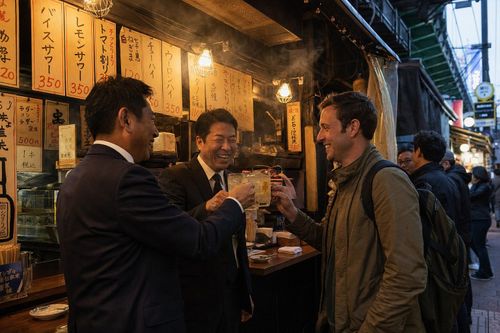
While tourists flock to Daruma, many Osaka locals swear by Yaekatsu instead. This no-frills counter shop serves impeccably fried skewers with a slightly thicker, crunchier coating. The atmosphere is pure old-school Osaka — friendly staff, regulars nursing beers at the counter, and zero tourist polish. If you want the authentic neighborhood experience, this is your spot.
Kushikatsu Tanaka — Reliable and Everywhere
Yes, it is a chain. But Kushikatsu Tanaka does an excellent job of maintaining quality while making the kushikatsu experience accessible to newcomers. English menus, a wide selection, and a relaxed atmosphere make it a solid choice if the Shinsekai crowds feel overwhelming. Branches are scattered across Osaka, including convenient locations near Tennoji Station.
Spots Near Tennoji
The area around Tennoji and Abeno is packed with smaller kushikatsu joints that rarely appear in guidebooks. Wander the streets south of JR Tennoji Station or explore the covered shopping arcades, and you will find counter shops where five or six stools face a single fryer. These places offer some of the best value in the city, with sticks starting as low as 100 yen each.
What It Costs
Kushikatsu is one of the best food deals in Osaka. Individual skewers typically run between 100 and 200 yen each, with premium items like shrimp or wagyu beef occasionally reaching 300 yen. A satisfying meal of 10 to 15 sticks plus a drink will set you back roughly 1,500 to 3,000 yen per person. That is a full, memorable dinner for the price of a convenience store bento in Tokyo.
What to Drink
Kushikatsu and beer are an inseparable pair. Order a "nama biiru" (draft beer) and you have the quintessential Osaka meal. Highballs — whisky and soda — are equally popular and cut through the richness of the fried food beautifully. Most shops also serve chu-hai (shochu-based cocktails) and sake if you want to branch out.
The Shinsekai Experience
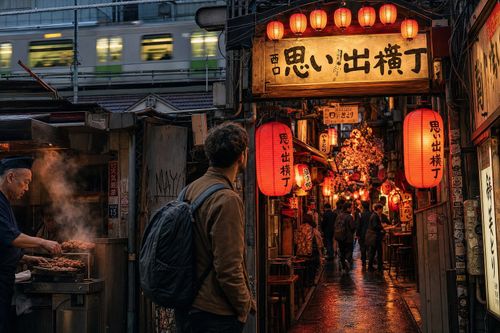
Eating kushikatsu in Shinsekai is about more than just the food. The neighborhood itself is a time capsule of mid-century Osaka, draped in retro neon signs and watched over by the Tsutenkaku Tower — a steel landmark that has defined the skyline since 1956. The streets buzz with a lively, unpretentious energy that feels completely different from the polished shopping districts of Umeda or Shinsaibashi.
Shinsekai was built as a "new world" entertainment district in 1912, modeled partly after New York and Paris. Over the decades it evolved into a working-class neighborhood with a rough-around-the-edges charm that Osaka residents hold dear. Today it is one of the most photogenic and atmospheric places to eat in the entire city — especially after dark, when the neon kicks into full gear.
Getting There
Shinsekai is a short walk from both Tennoji Station (JR, Midosuji Line) and Dobutsuen-mae Station (Midosuji and Sakaisuji Lines). From Tennoji, head north through the Abeno area and you will hit the southern edge of Shinsekai in about five minutes. The whole district is compact and walkable.
Stay in the Heart of It
Tennoji and Shinsekai sit right next to each other, making this area an ideal base for exploring southern Osaka. Staying nearby means late-night kushikatsu runs are always on the table, and you are just minutes from Tsutenkaku, Shitennoji Temple, and the Abeno Harukas observation deck. Check out our Tennoji area stays for a local, comfortable home base in one of Osaka's most exciting neighborhoods.
Frequently Asked Questions
What exactly is kushikatsu?
Kushikatsu, also known as kushiage, consists of skewered ingredients like meat, seafood, and vegetables that are coated in batter and panko breadcrumbs, then deep-fried until golden. It's