From tea ceremonies to matcha soft serve, discover Japan's deep matcha culture — where to drink it, buy it, and experience it firsthand.
Matcha is everywhere in Japan. You will find it in ancient tea rooms in Kyoto, in trendy cafes in Osaka, on the shelves of every convenience store, and in Kit Kat wrappers at airport gift shops. But matcha in Japan is far more than a flavor trend. It is a centuries-old tradition rooted in Zen Buddhism, craftsmanship, and a philosophy of finding beauty in simplicity. This guide will help you understand what matcha really is, how to experience it properly, and where to find the best cups and sweets the country has to offer.
What Is Matcha, Exactly?
Matcha is finely stone-ground green tea powder made from a specific type of shade-grown tea leaf called tencha. Unlike regular green tea, where you steep the leaves and discard them, matcha is whisked directly into hot water, meaning you consume the entire leaf. This is part of why matcha has such an intense flavor and a vibrant green color.
The heartland of Japanese matcha production is Uji, a small city just south of Kyoto that has been growing tea since the 12th century. Uji's climate — mild temperatures, misty river air, and fertile soil — creates ideal conditions for producing sweet, low-bitterness tea leaves. The region's name has become synonymous with quality, and you will see "Uji Matcha" on packaging throughout Japan as a mark of prestige.
How Matcha Is Grown
The process that makes matcha so distinctive begins about three to four weeks before the harvest. Farmers cover the tea plants with shade cloth or bamboo screens, blocking out roughly 90 percent of sunlight. This slows photosynthesis and forces the leaves to produce more chlorophyll and amino acids — particularly L-theanine, which gives matcha its characteristic umami sweetness and calming quality.
After harvest, the leaves are steamed to halt oxidation, dried, and stripped of their stems and veins. The resulting material is called tencha. It is then stone-ground at an extremely slow pace — a traditional stone mill produces only around 40 grams of matcha powder per hour — to preserve the flavor compounds that would be destroyed by the heat of faster mechanical grinding.
Ceremonial Grade vs. Culinary Grade
Not all matcha is created equal, and you will hear these two terms often.
Ceremonial grade matcha is made from the youngest, most tender leaves picked in the first flush of spring. The color is vivid emerald green, the flavor is smooth and slightly sweet, and the bitterness is subtle. It is meant to be prepared simply — just matcha and hot water — so that nothing masks the quality of the leaf.
Culinary grade matcha is made from leaves harvested later in the season, often with slightly more bitterness and a less vibrant color. It is perfectly suited for cooking, baking, and blending into lattes or smoothies, where it is combined with other ingredients. It is also far more affordable, which is why it dominates the matcha sweets market.
When buying matcha to drink on its own, reach for ceremonial grade. When baking matcha cookies at home, culinary grade works beautifully.
The Tea Ceremony: Chado and the Art of Presence
The Japanese tea ceremony, known as chado or sado (the way of tea), is a ritualized practice of preparing and drinking matcha that developed under the influence of Zen Buddhism in the 15th and 16th centuries. The tea master Sen no Rikyu is considered its most important historical figure, codifying the principles of wabi-cha — a style emphasizing rustic simplicity, humility, and mindfulness.
A formal tea ceremony is not simply about drinking tea. It is a choreographed practice where every movement, every object, and even the arrangement of the room carries meaning. The host may spend years mastering the proper way to fold a cloth, ladle water, or rotate a bowl.
What to Expect in a Tea Ceremony
Most visitors experience an abbreviated, guest-friendly version of the ceremony rather than the full formal version, which can last several hours. The typical experience goes like this:
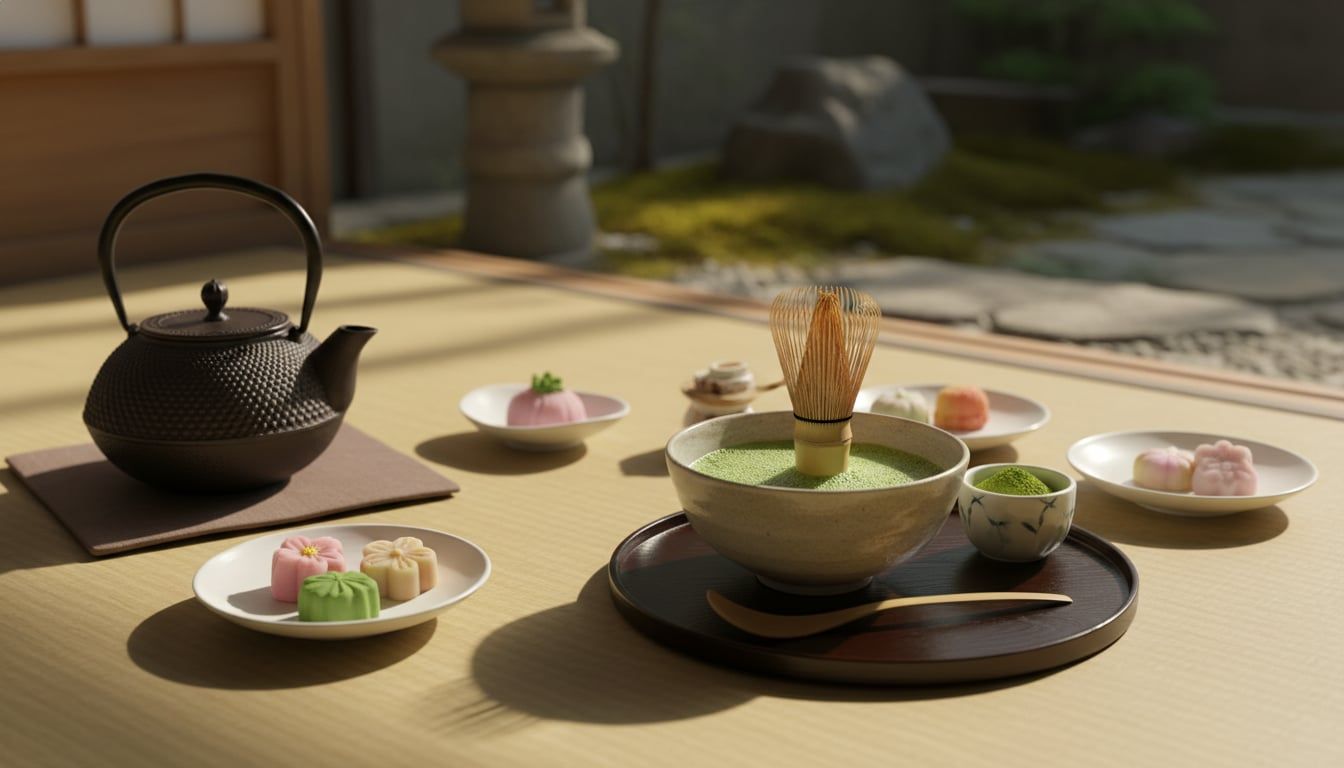
You enter a serene tatami room and take a seat on the floor or on a low cushion. Before the tea arrives, you are served a small wagashi — a traditional Japanese sweet made from bean paste, rice flour, or sweet potato. The sweetness of the wagashi is deliberate: it prepares your palate for the slight bitterness of the matcha that follows.
The host prepares the matcha in front of you using a bamboo whisk called a chasen, a small scoop called a chashaku, and a ceramic bowl called a chawan. A small amount of matcha powder is sifted into the bowl, hot water is added, and the whisk is moved in a brisk "M" or "W" motion until the tea is frothy and uniform. You receive the bowl with both hands, rotate it clockwise a couple of times before drinking (this is to avoid drinking from the "front" of the bowl, which is considered the most beautiful side), and drink in a few sips.
Where to Experience a Tea Ceremony
Kyoto is the undisputed capital of the tea ceremony experience. Some reliable options:
- Urasenke and Omotesenke are two of the major schools of tea, both headquartered in Kyoto, and each offers practice sessions and cultural programs.
- En (near Kinkakuji) and Camellia Tea Experience (Higashiyama) offer English-friendly sessions with no booking complexity.
- Many temples — including Kodaiji and Daitokuji — offer tea ceremony experiences in their gardens or machiya teahouses.
In Osaka, options are more limited but growing. Some hotels and cultural centers in the Tennoji and Shinsaibashi areas offer shorter introductory sessions aimed at tourists.
Matcha in Daily Japanese Life
While the tea ceremony represents the formal, contemplative side of matcha, everyday Japan has fully embraced it in more casual and often delightfully excessive ways.
Walk into any convenience store and you will find matcha-flavored everything: matcha milk, matcha ice cream bars, matcha mochi, matcha chocolate. Cafes list matcha lattes alongside espresso drinks. Bakeries sell matcha croissants. Ramen shops occasionally venture into matcha-flavored noodles. The Japanese appetite for matcha as a flavor is seemingly boundless.
A matcha latte — matcha whisked with a small amount of hot water and then combined with steamed or cold milk — has become a daily ritual for many people, much like a cappuccino in Italy. You can order these at most cafe chains including Starbucks Japan (which offers seasonal matcha drinks unavailable elsewhere), Doutor, and countless independent cafes.
Best Matcha Cafes and Shops in Kyoto and Osaka
Kyoto
Tsujiri is one of the oldest and most respected matcha specialty brands in Japan, founded in Uji in 1860. Their Kyoto cafe locations — particularly the one near Gion — serve beautifully layered matcha parfaits, matcha soft serve, and hot ceremonial matcha. The parfaits combine matcha ice cream, matcha jelly, red bean paste, and mochi in a single glass and are justifiably iconic.
Nakamura Tokichi is another Uji-born institution, founded in 1854, with a gorgeous flagship cafe in Uji and branches throughout Kyoto. Their matcha tiramisu is one of the most talked-about matcha desserts in the country — a faithful Italian format transformed by the deep, slightly bitter flavor of high-quality Uji matcha. Queues form early, especially on weekends.
Gion Tsujiri (the Gion branch specifically) tends to draw long lines, but arriving when it opens or visiting on a weekday afternoon typically means a shorter wait.
Itohkyuemon in Uji is beloved for its matcha soft serve, which is rolled in matcha powder for an extra-intense finish.
Osaka
Tsujiri has multiple locations in Osaka as well, with branches in Namba and Shinsaibashi that are easy to access during a standard sightseeing day. The menu mirrors Kyoto locations closely.
Maccha House (also spelled Matcha House) is a popular Osaka-born chain with a flagship in Shinsaibashi. They are known for their matcha tiramisu — a dessert that has become something of a signature dish for Osaka matcha culture — and their takeaway matcha drinks.
For standalone high-quality matcha powder and tea goods, Ippodo Tea has a Kyoto main store (near Kyoto Imperial Palace) and a presence in Osaka that draws serious tea enthusiasts and curious visitors alike.
Matcha Desserts Worth Seeking Out
Japan's matcha dessert landscape is genuinely extraordinary. Here are the highlights:
Matcha parfait: Typically a tall glass layered with matcha ice cream, matcha-flavored whipped cream, matcha jelly, corn flakes or granola, red bean paste, and mochi. It is rich, textural, and completely satisfying.
Matcha soft serve: Available at many shops and some temple grounds. The best versions have a concentrated, grassy bitterness that balances the sweetness of the cone.
Matcha tiramisu: The Italian classic made with matcha powder in place of espresso and cocoa. Nakamura Tokichi and Maccha House both do excellent versions.
Matcha Kit Kat: Japan's matcha Kit Kats are genuinely different from their international counterparts — the chocolate-to-matcha ratio and quality of the matcha used produces a more authentic flavor. The premium Uji Matcha Kit Kat boxes make ideal souvenirs.
Matcha mochi and daifuku: Soft rice cakes filled with red bean paste (or sometimes white chocolate) and rolled in matcha powder or made from matcha-flavored rice dough.
Health Benefits of Matcha
Because you consume the whole leaf, matcha delivers a more concentrated dose of nutrients than steeped green tea. Key points:
- L-theanine: An amino acid that promotes calm alertness. Combined with caffeine, it produces a focused energy without the jitteriness of coffee.
- Antioxidants: Matcha is particularly high in catechins, especially EGCG (epigallocatechin gallate), which has been studied for its potential protective effects.
- Chlorophyll: The shade-growing process boosts chlorophyll content, giving matcha its intense green color.
One cup of matcha contains roughly 70mg of caffeine — more than regular green tea but less than a shot of espresso.
Buying Matcha to Take Home
Japanese airports and department stores are full of matcha products, but if you want genuine quality, here is how to shop smart:
- Look for origin information: Packaging that specifies Uji, Nishio (Aichi Prefecture), or Yame (Fukuoka) indicates a reputable growing region.
- Check the harvest date: Matcha degrades in flavor fairly quickly. Look for tins or sealed packets with a recent production date and a sealed, light-proof container.
- Buy from specialty shops: Ippodo, Tsujiri, Nakamura Tokichi, and Marukyu-Koyamaen all sell high-quality loose matcha powder in portion sizes that work well for souvenirs.
- Tin packaging is better than paper: Matcha is sensitive to light, air, and moisture. A resealable tin is worth the extra cost.
Prices for ceremonial grade matcha from reputable producers typically range from 1,000 yen for a small portion to 3,000–5,000 yen for a larger, gift-worthy tin.
Uji as a Day Trip from Kyoto or Osaka
Uji is one of the most rewarding and underrated day trips available from central Japan. Located about 15–20 minutes by train from Kyoto (JR Nara Line or Kintetsu Kyoto Line), and around 60 minutes from Osaka, it is compact enough to cover on foot in a single afternoon.
The main street leading from Uji Station to the river is lined with matcha shops offering tastings, fresh soft serve, and entire shops dedicated to matcha-flavored goods. Byodoin Temple — a UNESCO World Heritage Site and the image on the 10-yen coin — sits near the river and is worth the entrance fee. The Uji River itself is scenic, and the surrounding area includes several small shrines and tea fields you can observe from walking paths.
Visiting on a weekday reduces the crowds significantly, though even on busy weekends the town feels far calmer than central Kyoto. If you are serious about matcha, building in a half-day in Uji is one of the best decisions you can make.
Final Thoughts
Matcha in Japan is not a single thing. It is a living tradition that spans austere temple tea rooms and colorful convenience store shelves, ancient stone mills and trendy Instagram cafes. Whether you sit down for a proper tea ceremony in Kyoto, order a matcha latte on a rainy afternoon in Osaka, or simply pick up a tin to bring home, you are participating in something with real depth and history behind it.
The best approach is to try it in as many forms as you can find. Start with a bowl of ceremonial matcha prepared properly, and then work your way through the parfaits, the soft serve, and yes, the Kit Kats. Each one tells you something slightly different about why this particular shade of green has captured Japan's imagination for nearly a thousand years.
Frequently Asked Questions
What is matcha and how is it different from regular green tea?
Matcha is finely stone-ground green tea powder made from a specific type of shade-grown tea leaf called tencha. Unlike regular green tea where you steep and discard the leaves, matcha involves consuming the entire leaf, resulting in a more intense flavor and vibrant green color.
What is the difference between ceremonial grade and culinary grade matcha?
Ceremonial grade matcha is made from the youngest, most tender leaves, offering a smooth, slightly sweet flavor ideal for drinking on its own. Culinary grade matcha, from later harvests, has more bitterness and is better suited for cooking, baking, or blending into lattes.
What can I expect during a Japanese tea ceremony (chado)?
During a tea ceremony, you will first be served a traditional sweet called wagashi to prepare your palate. The host then prepares frothy matcha in front of you using a bamboo whisk, and you receive the bowl, rotate it clockwise, and drink the tea in a few sips.
Where are the best places to experience a traditional tea ceremony in Japan?
Kyoto is considered the capital for tea ceremonies, with options like Urasenke, Omotesenke, En, Camellia Tea Experience, and various temples. In Osaka, some hotels and cultural centers offer shorter introductory sessions.
What are some popular matcha sweets and drinks to try in Japan?
Beyond traditional ceremonial matcha, popular items include matcha lattes, matcha parfaits, matcha soft serve, matcha tiramisu, and a wide array of matcha-flavored snacks found in convenience stores and cafes.
Which are the best matcha cafes and shops in Kyoto and Osaka?
In Kyoto, highly recommended spots include Tsujiri (known for parfaits), Nakamura Tokichi (famous for matcha tir